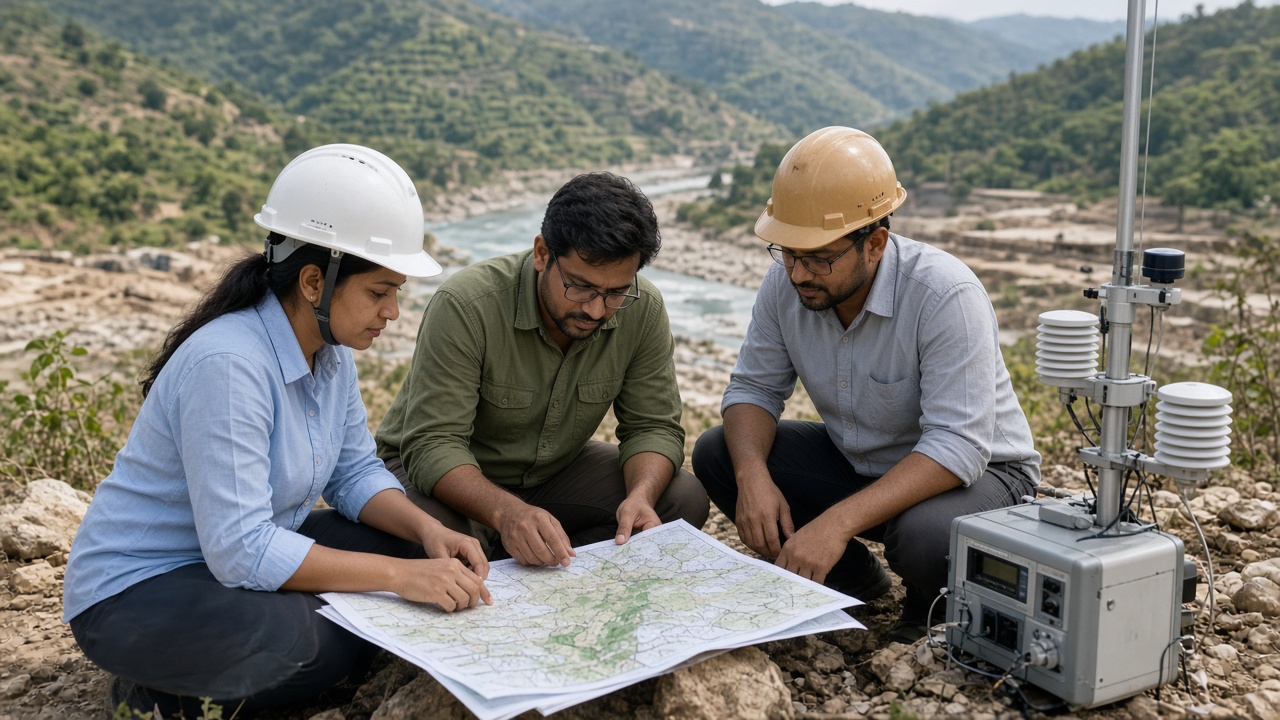
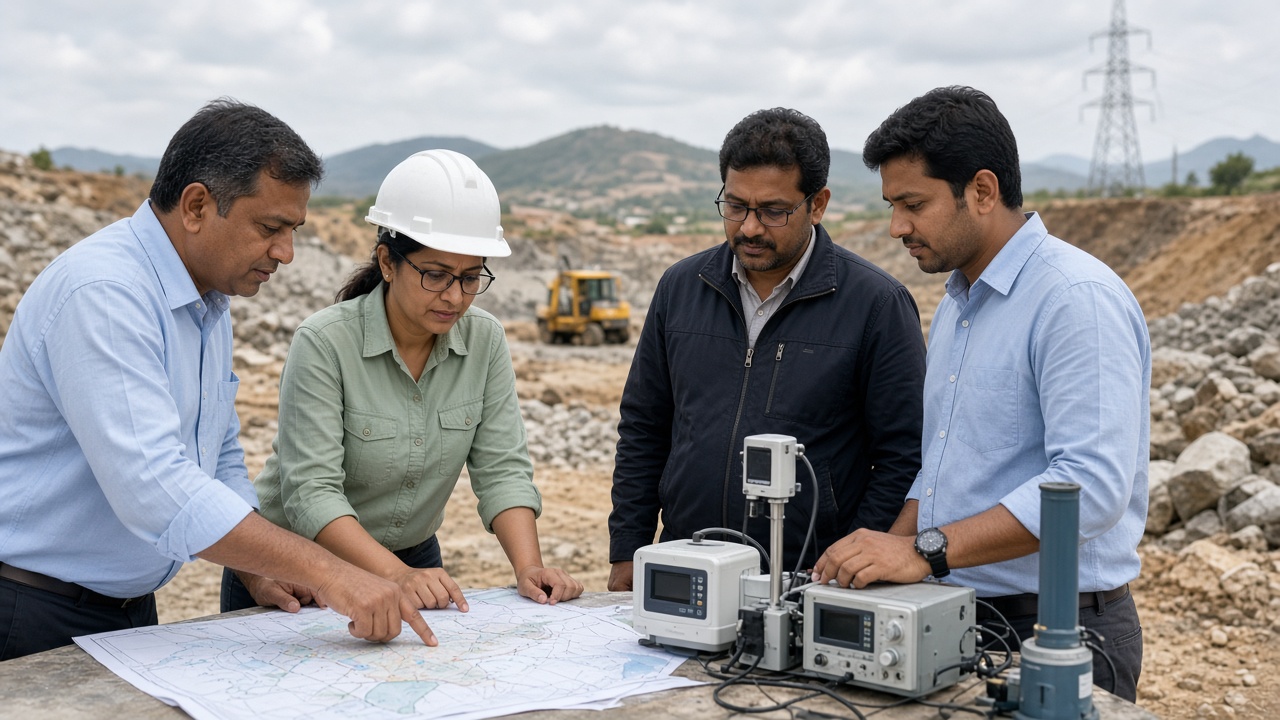
Quick answer
The Environmental Clearance (EC) process in India — the procedure project teams actually have to walk — is a staged regulatory pathway under the EIA Notification framework administered by the Ministry of Environment, Forest and Climate Change (MoEFCC). Many Category B appraisals for Karnataka projects run through SEIAA Karnataka with SEAC support. Filings and compliance reporting are commonly routed via PARIVESH.
Practical sequence: decide whether EC applies → freeze the project description → obtain ToR where applicable → complete baseline → prepare EIA/EMP → complete public consultation where required → appraisal → EC decision → post-EC compliance.
Process details, forms and calendar expectations can change. Treat this as a working map; confirm current steps on official MoEFCC / PARIVESH / SEIAA Karnataka channels before you file. This guide does not invent fixed statutory timelines, fees or thresholds.
Who needs Environmental Clearance?
EC applies when a project is a scheduled activity under the EIA Notification, 2006 (as amended) and meets the applicable capacity, area or other criteria for that entry — including location overlays that can change pathway. See When Is Environmental Clearance Required in India?.
Typical project-team contexts:
- Greenfield industry or infrastructure that appears in the schedule
- Expansions or modernisations that cross schedule thresholds
- Mining, river-valley, building & construction, area development and other schedule sectors as currently listed
- Karnataka projects that may route to SEIAA rather than central MoEFCC depending on category
Regulatory position: If the activity is scheduled and thresholds/location rules bring it into EC, clearance is a statutory prerequisite — not an optional “nice to have.”
Practical implication: Run EC screening in parallel with land, finance and KSPCB consent planning so construction is not blocked by the wrong gate.
IE-RISE recommendation: Write a one-page applicability rationale (schedule item, category pathway, location flags) before commissioning baseline seasons.
Category A vs B1 vs B2 (working framing)
| Framing (typical) | Usual appraisal route | Filing channel (as prescribed) |
|---|---|---|
| Category A | MoEFCC / Expert Appraisal Committee (EAC) | PARIVESH |
| Category B (incl. B1/B2 distinctions where the framework uses them) | SEIAA Karnataka / SEAC support for many state projects | PARIVESH |
Exact routing depends on the schedule entry and amendments in force. Confirm against current MoEFCC / PARIVESH guidance for your item — do not invent category from peer projects.
Environmental Clearance process at a glance
| Stage | What happens | Typical output |
|---|---|---|
| 1. Determine EC applicability | Schedule + threshold + location screen | Written go / no-go rationale |
| 2. Identify project category | A vs B routing | Confirmed appraisal pathway |
| 3. Submit application / project information | Coherent identity, land, process, layout | Project file ready for portal |
| 4. Screening / ToR where applicable | Pathway and study scope confirmed | ToR / scoping items owned |
| 5. Baseline environmental studies | Field and lab characterisation | Seasoned baseline dataset |
| 6. EIA / EMP preparation | Impact assessment + management plan | EIA/EMP for appraisal |
| 7. Public consultation (where required) | Formal hearing / consultation record | Issues + proponent responses |
| 8. Appraisal | EAC / SEAC review and queries | Recommendations / queries |
| 9. Decision | Grant / refuse / defer with conditions | EC letter or refusal record |
| 10. Post-EC compliance | Monitoring, EMP, reporting | Ongoing compliance evidence |
Parallel track: plan KSPCB CFE/CFO so construction and commissioning are not blocked after EC. EC and pollution-board consent are complementary, not substitutes — see CFE vs CFO.
How long does environmental clearance take?
There is no single reliable calendar that fits every project. Timelines vary with category, project type, baseline seasons and data collection, public consultation (where required), authority queries and appraisal cycles. Treat published “typical” durations as planning hints only — not contractual promises. Calendar risk usually sits in baseline seasons and query replies, not only in the final letter.
Step 1 — Applicability
Confirm whether the project is a scheduled activity and whether capacity, area or other thresholds bring it into the EC net.
Outputs:
- Clear schedule item and category pathway (central vs state)
- Written project description that matches engineering reality
- Early flag for location overlays (coastal, forest, eco-sensitive and related)
Do not start baseline monitoring on a description that finance or design will rewrite three months later.
Step 2 — Application / project information
Assemble a coherent project file before ToR or EIA drafting:
- Identity of proponent and authorised signatory
- Land / lease and survey details consistent with maps
- Process description, material and water balances where relevant
- Layout, drainage and pollution-control concept
- Expansion history and prior EC or consent orders if any
Inconsistency between land records, coordinates and layout is a frequent source of portal queries for Karnataka infrastructure and industrial proposals.
Step 3 — Screening
Where the process includes a screening step, the authority confirms pathway and documentation expectations for the activity as filed. Treat screening as validation that your applicability note and project identity are coherent — not as permission to build.
Step 4 — Scoping / Terms of Reference (ToR)
Terms of Reference define what the EIA must study. Where ToR are issued or standard ToRs apply, they steer baseline seasons, modelling, specialist studies and public consultation scope. PARIVESH and MoEFCC materials publish standard ToR packages for many sectors — use them as the baseline checklist, then own every line.
Weak ToR compliance — missing seasons, wrong study area, or unanswered specialist items — is a common reason for appraisal queries.
Step 5 — Baseline environmental studies
Baseline work characterises the existing environment in the impact zone: air, water, land, noise, ecology and socio-economic conditions as scoped. Quality depends on:
- Correct station locations tied to maps
- Seasons and frequencies required by ToR or guidance
- Defensible lab methods and chain of custody
- Socio-economic coverage of communities that will actually live with the project
Step 6 — EIA and EMP
The EIA integrates project description, baseline, impact prediction and evaluation. The Environmental Management Plan (EMP) turns mitigation into measurable actions: controls, monitoring, responsibilities and budget logic.
Appraisal committees look for internal consistency: the plant described early in the report must match the impacts modelled and the EMP budgeted.
Step 7 — Public consultation (where required)
Where public consultation is required, the process creates a formal record of issues raised and proponent responses. Ignoring fishing communities, farmers, municipal water concerns or urban fringe traffic impacts can delay or reshape approval.
Treat consultation logistics (district administration coordination, notices, venue, documentation) as a project workstream with owners and dates.
Step 8 — Appraisal
EAC or SEAC review examines the EIA, EMP, consultation record and responses to queries. Expect questions on capacity/technology clarity, water balance and pollution control, ecological and social impacts, and EMP feasibility.
Respond with evidence, revised maps or clarified design — not adjectives. Calendar risk sits in baseline seasons and query cycles — not only in the final letter.
Step 9 — EC decision
If granted, EC issues with validity and general and specific conditions. Read every condition into a register on day one: owner, evidence type, due date, linked EMP clause.
If refused or deferred, the record still matters for redesign and resubmission. EC is a decision, not a guaranteed outcome of hiring a consultant.
Post-EC compliance
After grant, post-Environmental Clearance compliance — EMP implementation, monitoring, periodic reporting as prescribed, and amendment discipline for material changes — becomes an operational duty for the life of the conditions. PARIVESH also supports EC compliance reporting workflows as prescribed — use the official channel rather than ad-hoc email trails alone.
Integrate EC monitoring with plant lab / SCADA schedules and with KSPCB consent conditions where the same parameters appear.
What documents are commonly required?
Typical documents may include the categories below. This is not an official mandatory checklist, and it is not exhaustive. PARIVESH forms, the Terms of Reference for the project, and the EIA Notification schedule entry decide what is actually required. A mining file, a building project and a factory expansion do not carry the same annexures.
The governing instruments are the EIA Notification, 2006, as amended, and the current forms and standard Terms of Reference on PARIVESH. A consolidated text of the notification, amended up to July 2026, is published on PARIVESH; if it differs from the Gazette, the Gazette prevails. SEIAA Karnataka practice for many Category B projects is on the SEIAA Karnataka site.
| Category | Why it matters | Typical contents |
|---|---|---|
| Project details | Appraisal reads one identity, not three versions | Proponent, authorised signatory, activity, capacity, investment |
| Land and site documents | Queries start when maps, survey numbers and coordinates disagree | Lease or ownership papers, survey details, geo-referenced site |
| Project proposal | Baseline and impacts are worthless if the design is still moving | Process description, material and water balance where relevant, phasing |
| Location and site information | Location overlays can change the pathway | Site setting, sensitive receptors, drainage, access |
| Project drawings | Committees ask for the drawing that matches the text | Layout, drainage, pollution-control concept |
| Environmental studies | Only where the pathway or ToR asks for them | Baseline datasets, methods, chain of custody |
| EIA-related material | The study, where a study is required | Impact prediction and evaluation tied to the frozen description |
| EMP | Turns mitigation into actions someone can audit | Controls, monitoring, responsibilities, budget logic |
| Baseline or environmental data | Season and station choices have to match the study area | Air, water, noise, land, ecology or socio-economic data as scoped |
| Supporting statutory documents | EC does not erase other permissions | Prior EC or consent orders, other approvals the form asks for |
| Consultation record | Only where public consultation is required | Notices, proceedings, issue-and-response matrix |
| Clearance record | After grant, not at first filing | EC letter, condition register, later compliance filings |
Common documents in that table are the identity, land and proposal papers almost every scheduled project is asked for. Project-specific documents — specialist studies, a full EIA, consultation proceedings — appear only when the category, ToR or location requires them. If a line is not in your ToR or the current form, do not invent it to look complete.
Keep one controlled index: one owner for map versions, one for balances, one for laboratory chain of custody. Where EC and KSPCB consent share a parameter, note which evidence will serve both files. For how long a granted clearance remains valid, see Environmental Clearance validity.
Common reasons for delay
- Project description rewritten after baseline seasons start
- Map / coordinate / land-record mismatches
- Incomplete ToR line ownership
- Generic EMP without measurable actions or budgets
- Weak responses to appraisal queries
- Ignoring parallel KSPCB CFE/CFO sequencing
- Treating public consultation logistics as an afterthought
- Assuming a neighbour’s Category A/B pathway applies without reading the schedule entry
IE-RISE observation: Most calendar slip is not “the committee was slow” — it is baseline seasons started on the wrong project description, or query replies that restate adjectives instead of attaching maps and balances.
Karnataka-specific notes
Many Category B projects in Karnataka are appraised through SEIAA Karnataka with SEAC support, with filings on PARIVESH. District administration coordination for public consultation (where required) and alignment with state pollution-control consent remain local realities even when the EC pathway is clear.
Confirm current SEIAA Karnataka practice and any state-specific instructions on official channels — do not treat this paragraph as a complete procedural manual.
EC vs KSPCB CFE/CFO
| Track | Decision | Typical focus |
|---|---|---|
| EC (MoEFCC / SEIAA) | Clearance for scheduled projects | Impacts, EMP, conditions for the life of the project |
| KSPCB CFE/CFO | Pollution-control consent | Establishment then operation within consented loads |
EC does not replace KSPCB consent. Sequence both deliberately; see What is CFE?, What is CFO? and CFE vs CFO.
Planning checklist for project teams
- One Gantt showing EIA seasons, consultation, appraisal buffer and KSPCB CFE/CFO
- Design freeze gates: no silent capacity creep after baseline
- Version control of maps and balances submitted on PARIVESH
- Board briefed: “EIA draft ready” ≠ “EC letter in hand” (EIA vs EC)
- Post-EC register template ready before grant
Related reading and service
IE-RISE supports EC roadmapping, file readiness and EMP/compliance planning through Environmental Clearance consultancy. Early-stage planning habits, as distinct from this procedure, are in the EC and EIA project-planning briefing. Sister guides: When is EC required? · What is EIA? · EMP · Post-EC compliance.
Common questions
How long does EC take?
There is no single statutory calendar that fits every project. Baseline seasons, ToR scope, public consultation (where required) and appraisal queries dominate calendar risk. Treat published “typical” durations as planning hints only.
What documents are commonly required?
Typical documents may include project identity, land and site papers, a stable proposal, drawings, and — only where the pathway requires them — environmental studies, EIA material and an EMP. The list on this page is illustrative. PARIVESH forms and the project Terms of Reference control the actual annexures.
Can we start construction after ToR?
Do not assume ToR or an EIA draft authorises construction. Construction and commissioning must align with the EC decision and any parallel KSPCB consent conditions.
Who grants environmental clearance?
Typically MoEFCC for Category A and SEIAA (with SEAC support) for many Category B projects, via processes on PARIVESH as prescribed for the schedule entry.
Official sources
PARIVESH
EC/EIA application workflow, notifications and compliance reporting
Ministry of Environment, Forest and Climate Change (MoEFCC)
EIA Notification framework and amendments
EIA Notification, 2006, consolidated as amended up to July 2026 (PARIVESH)
compilation only; the Gazette text prevails if they differ
EIA Notification, 2006, S.O. 1533(E) dated 14 September 2006, paragraph 9 as substituted by S.O. 1807(E) dated 12 April 2022 in that compilation
validity differs by project class
SEIAA Karnataka
state-level appraisal pathway where Category B applies
Confirm current schedule entries, forms and ToR practice on official channels before filing