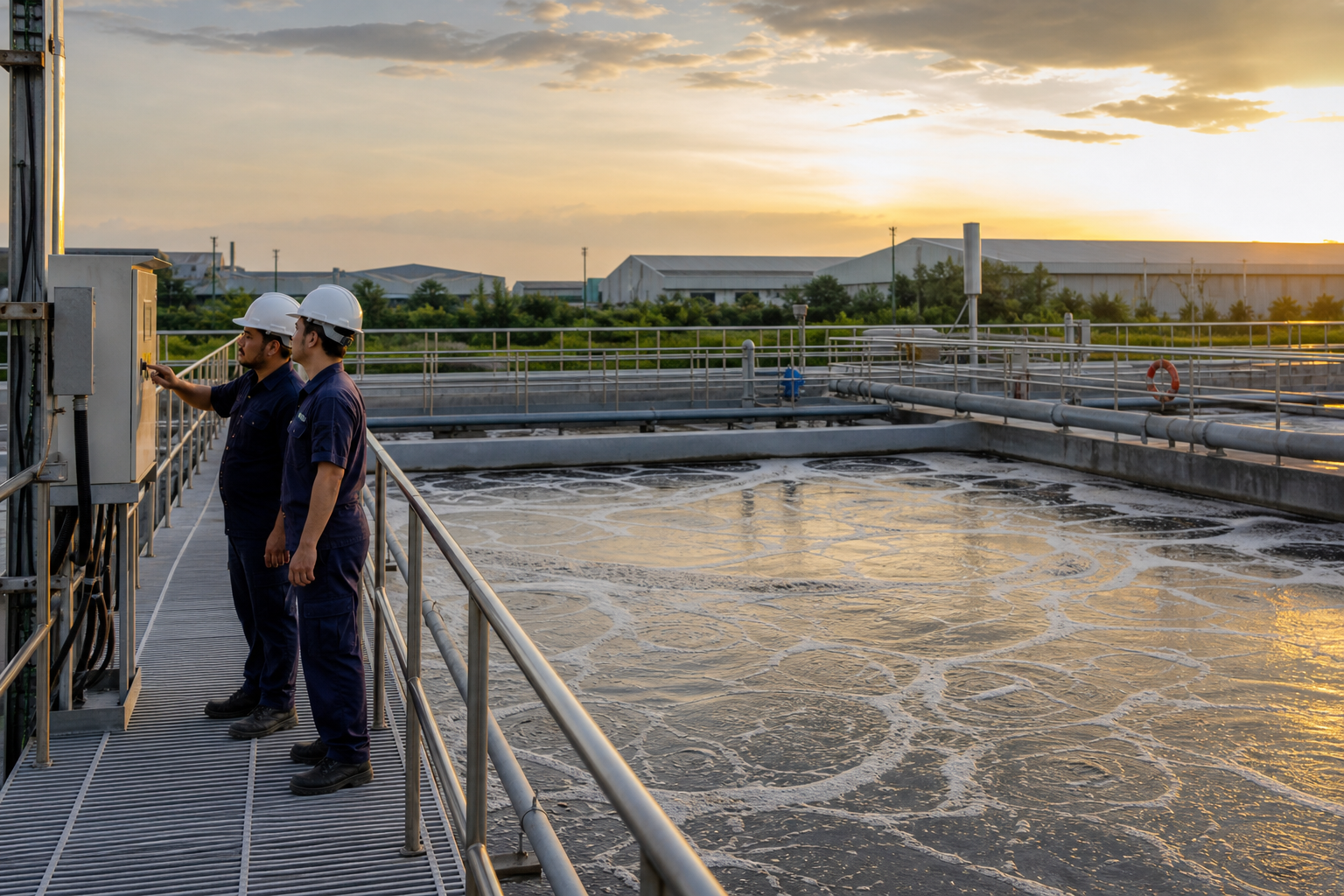
Groundwater
Assessment and management support for groundwater-related questions in project and catchment contexts.
Water Resources & Environmental Engineering
Technical assessment, planning and advisory for groundwater, urban flooding, stormwater, watersheds, water quality and related environmental water systems — framed through Integrated Water Resources Management (IWRM).
Direct answer
A water resources consultant addresses hydrology, drainage, stormwater, groundwater, watershed, water-quality, and GIS questions that feed environmental and infrastructure decisions in Karnataka. IE-RISE delivers study-based outputs—scenario analysis, design inputs, and monitoring recommendations—rather than generic environmental narrative.
Work connects upstream catchment logic to downstream STP, reuse, and compliance needs where projects require both.
IE-RISE provides Water Resources & Environmental Engineering consultancy for organisations that need clear technical assessment and planning — not isolated studies that ignore how rainfall, drainage, treatment, reuse and discharge interact.
Integrated Water Resources Management (IWRM) is the working frame: basin and site water systems are planned together. That frame supports consultancy deliverables such as technical assessment, hydrological and hydraulic analysis where scoped, GIS-based evaluation, and management recommendations that connect to environmental compliance when required.
Core technical areas for water-resource assessment, planning and advisory. Specific modelling tools, certifications or report titles are scoped per engagement — not claimed as a fixed catalogue here.
Assessment and management support for groundwater-related questions in project and catchment contexts.
Technical studies for urban flooding and stormwater drainage — conveyance, outfalls, storage and monsoon peak behaviour.
Watershed assessment, planning and management framing so land use and water systems stay connected.
Assessment, monitoring strategy and management recommendations for water-quality concerns.
Technical analysis that supports water-resource planning, drainage design dialogue and related advisory.
Spatial analysis for catchments, flood plains, drains, plants and land use on a shared decision map.
Water-resources work often connects to wastewater treatment and environmental management. These IE-RISE consultancy pages cover the related plant and compliance track — without duplicating them here.
This consultancy track is relevant when a project needs water-resources or environmental-water technical clarity — not when a generic brochure will do.
Typical audiences include infrastructure and urban development projects, industries and industrial estates, institutions and campuses, residential developments, and public-sector or civic water initiatives in Bengaluru and across Karnataka.
Infrastructure and urban development projects
Industries and industrial estates
Institutions and campuses
Residential developments and layouts
Public-sector and civic water initiatives
A generic consultancy sequence. Exact steps, site visits and deliverables are scoped to the requirement — this is not a regulatory flowchart.
Understand the requirement
Clarify the water or environmental-water question, site context, constraints and decision timeline.
Technical / site assessment
Gather available data, review site conditions and identify what must be measured or analysed.
Data and engineering analysis
Apply hydrological, hydraulic, spatial or water-quality analysis as scoped for the problem.
Recommendations / planning
Translate findings into practical planning and management recommendations the client can act on.
Implementation or consultancy support
Support follow-through — coordination with related wastewater, audit or compliance work where needed.
Dr. M. Inayathulla
Managing Director, IE-RISE
Water Resources Engineer and Environmental & Water Consultant. His technical areas include groundwater, stormwater, urban flooding, watershed management, water quality, GIS and hydrological studies.
IE-RISE connects applied consultancy with its research and knowledge work on water and environmental systems. Explore the research library for methods and framing notes that inform practice — without treating every study as a named personal publication list.
Secondary to consultancy: the same IWRM frame also informs applied practice across drainage, sensing, analysis and environmental engineering. Training remains available separately.
Basin and city water budgets, allocation, source protection, reuse and stakeholder process held together.
Network design dialogue, flood conveyance, outfalls, recharge and monsoon peak behaviour on the ground.
GIS, remote sensing and spatial analytics so catchments, drains and land use share one map.
Where scoped, sensors and analytical tools support — not replace — engineering judgement and field work.
Treatment, pollution control and consent-aligned design so engineered assets serve the water system.
Dr. M. Inayathulla leads integrated water-resources and environmental-engineering studies—groundwater, urban flooding, stormwater, watershed management, water quality, and GIS/hydrological modelling—so recommendations remain defensible in design and regulatory discussions.
When project approvals, flood risk, sizing of drainage or storage, or environmental appraisal require quantified hydrology. Triggers are project-specific.
Yes. Studies combine rainfall analysis, catchment characterisation, and intervention options—retention, conveyance, or integration with STP/reuse where relevant.
Yes where data access and study objectives are defined—recharge, drawdown, or watershed balances supported by field and GIS inputs.
GIS layers help map land use, drainage paths, sensitive receptors, and monitoring locations— improving study reproducibility.
Catchment and supply context informs realistic water balances and reuse claims before treatment plants are sized.
Site maps, topographic surveys, existing borehole or monitoring data, proposed layouts, and regulatory questions you need answered.
Deliverables are scoped per engagement—study reports, design criteria, and coordination inputs—with detailed DPR/EPC design when contracted.
Take the next step
Share the site or catchment context, the water or environmental-water question, and any timelines. The IE-RISE team will follow up.
Built for attribution, intent, and faster follow-up.
Your information is secure and used only for consultation.
What happens after you submit
A senior consultant reviews your requirement and calls you back, usually within one working day.
You get clear next steps on KSPCB consent (CFE/CFO), STP or ETP plant design, and the documents needed.
Prefer to start small? Ask for a compliance checklist, document list, or an approval timeline instead of a call.
“From compliance to cleaner operations — we help you move forward with confidence.”
Call us
+91 8088971526
Speak to our consulting team.
Email us
info@ierise.in
We'll get back to you soon.
Working hours
Mon - Sat: 10 AM - 7 PM
Office
# 3, Dr. B. R. Ambedkar Veedhi, Bengaluru-560 001
Quick queries? Chat with our team.