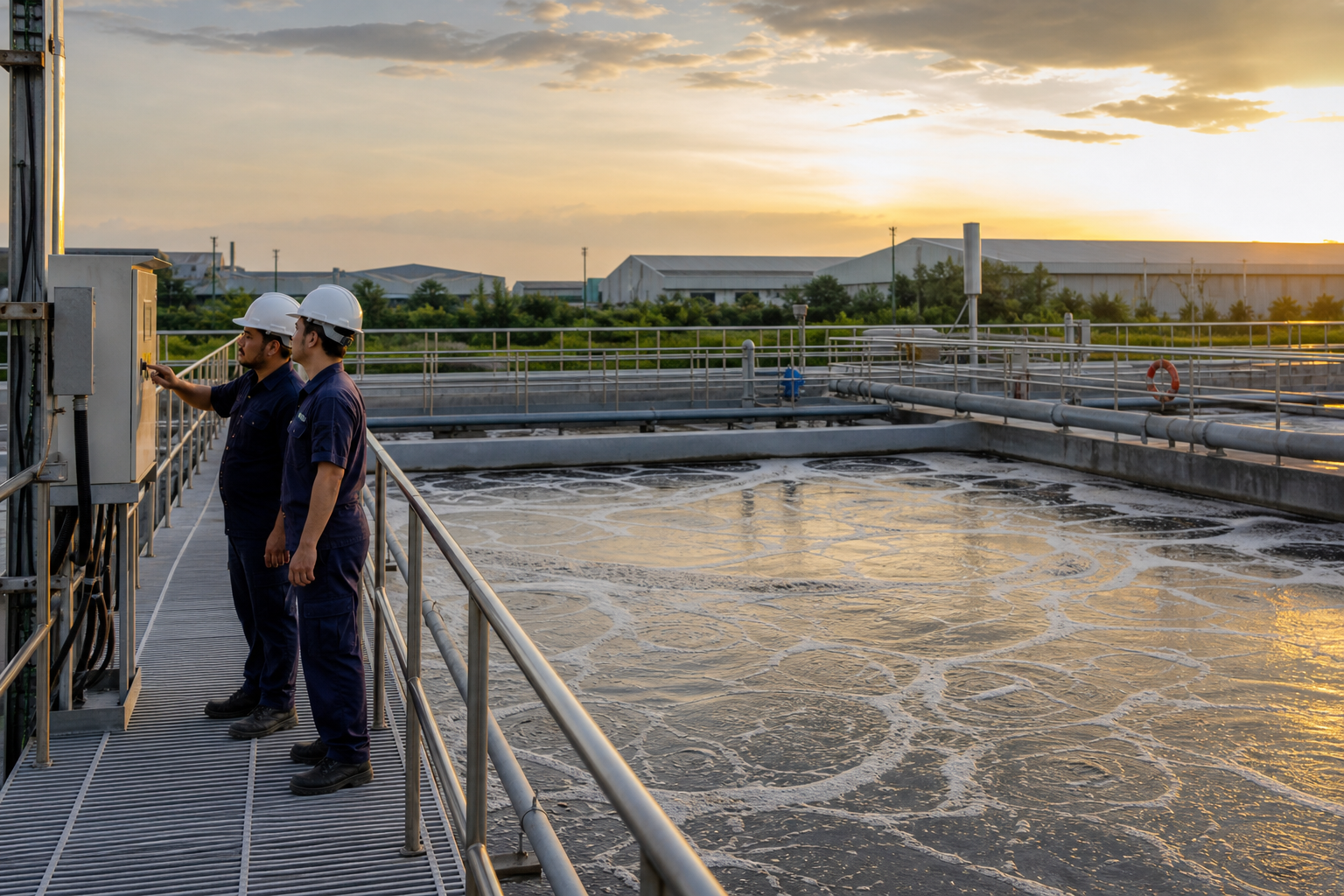
Kitchen grease overload
Weak traps and equalisation crash biological stages after banquet peaks.
Hotels combine domestic sewage, kitchen oil & grease, and laundry alkalinity—stressing STP biology if pretreatment is weak. IE-RISE designs grease traps and equalisation before biological stages and connects hospitality teams to STP/ETP and KSPCB specialist pages when filings or upgrades are needed. Environmental clearance may apply to larger hospitality developments—screened on project facts, not assumed for every property.
Consent schedules cover effluent, DG stacks, and sometimes hazardous waste from housekeeping chemicals. Renewals ask for recent outlet monitoring. Conferences and weekend peaks load STPs beyond average design; temporary exceedances become inspection issues without equalisation.
Hospitality risks
Where hospitality properties lose KSPCB and brand-audit confidence.
Weak traps and equalisation crash biological stages after banquet peaks.
Weekend and conference loads exceed average design without buffer capacity.
Sustainability marketing fails when consent language and outlet data disagree.
City hotels near residences need acoustic and stack records for inquiries.
New restaurants or banquet wings change effluent loads before go-live.
Segregation gaps trigger municipal follow-up that escalates to KSPCB.
A hotel or resort development may require Environmental Clearance depending on project scale, location and the schedule entry in force. A boutique property is not automatically in or out of that net. Construction-stage controls, STP capacity, kitchen effluent and KSPCB consent are separate obligations that can apply whether or not a clearance letter is required.
IE-RISE screens the development before design is frozen. Where clearance applies, the EMP should describe the same wastewater and site controls that consent will later enforce. Where it does not, hospitality compliance on this page stays with pretreatment, STP performance and consent.
We debottleneck aeration and clarify sludge management for occupancy swings. Reuse for landscaping must match consent language and lab proof—important for Bengaluru properties marketing sustainability authentically.
City hotels face acoustic limits near residences; stack and DG maintenance records support KSPCB inquiries. Segregation and vendor tie-ups align with municipal rules. New restaurants or banquet wings change effluent loads—triggering consent amendments before go-live. Corporate brand standards plus Karnataka enforcement require unified audit checklists—we support both.
Related services
Pretreatment, STP performance, and consent renewals.
Thresholds depend on room count, STP capacity, and DG assets. We confirm KSPCB applicability for your Bengaluru property.
Yes—we unify corporate environmental standards with KSPCB schedules and monitoring evidence.
No. Hospitality projects are screened on scale, location and the current schedule. Many hotels need STP, kitchen-effluent control and KSPCB consent without Environmental Clearance. IE-RISE confirms which duties apply to the property in front of us.
Take the next step
Share room count, STP type, and KSPCB order status.
Built for attribution, intent, and faster follow-up.
Your information is secure and used only for consultation.
What happens after you submit
A senior consultant reviews your requirement and calls you back, usually within one working day.
You get clear next steps on KSPCB consent (CFE/CFO), STP or ETP plant design, and the documents needed.
Prefer to start small? Ask for a compliance checklist, document list, or an approval timeline instead of a call.
“From compliance to cleaner operations — we help you move forward with confidence.”
Call us
+91 8088971526
Speak to our consulting team.
Email us
info@ierise.in
We'll get back to you soon.
Working hours
Mon - Sat: 10 AM - 7 PM
Office
# 3, Dr. B. R. Ambedkar Veedhi, Bengaluru-560 001
Quick queries? Chat with our team.
More industries