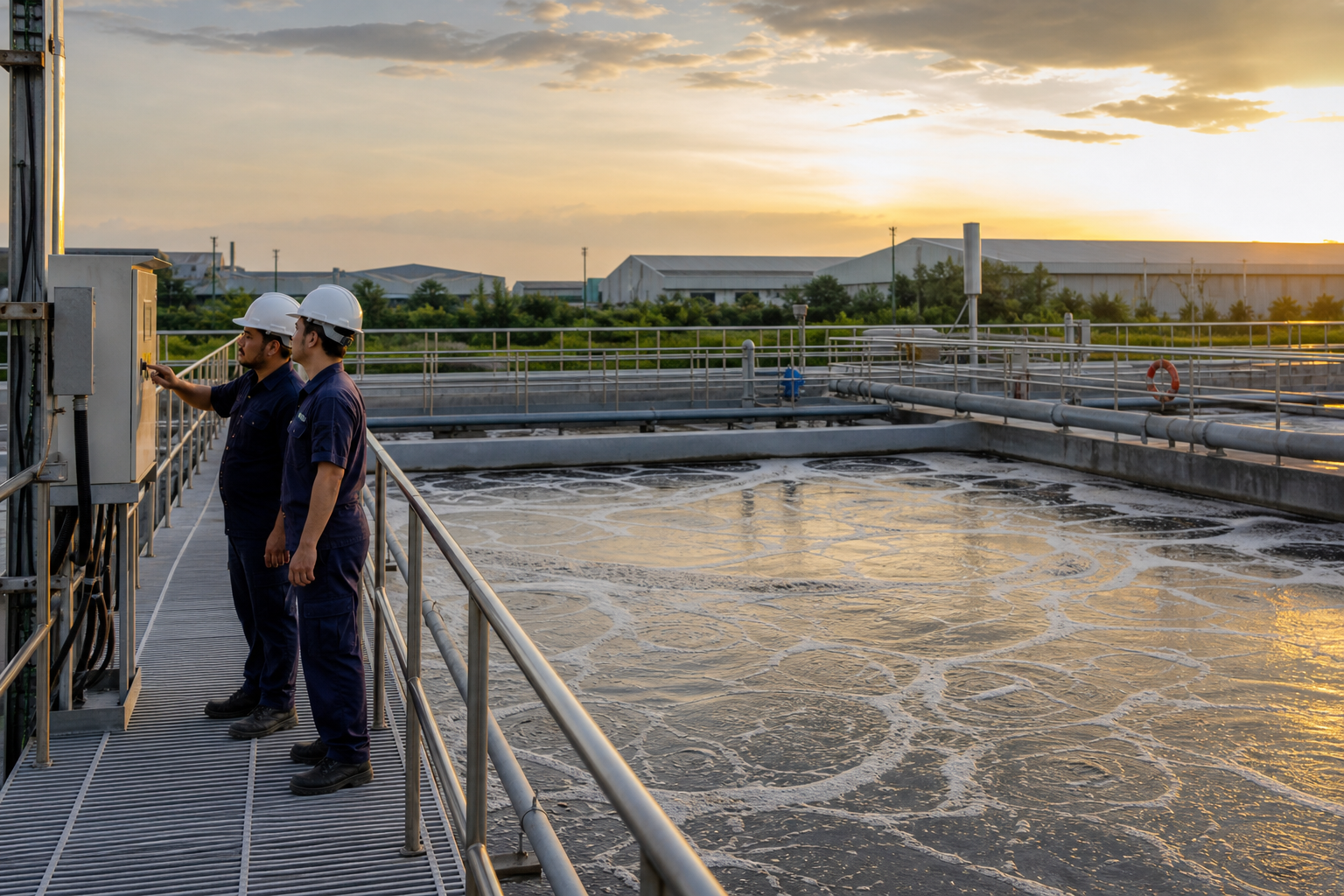
Consent vs reality
Compare CFO, CFE, and EC EMP clauses to observed ETP flows, stacks, storage, and emergency preparedness.
Regulatory content last reviewed 19 Mar 2026 · IE-RISE consultancy desk
Direct answer
An environmental audit is a facility-level gap assessment of environmental performance and compliance against KSPCB consent conditions, Environmental Clearance (EC) / Environmental Management Plan (EMP) duties, hazardous waste rules, and monitoring evidence. IE-RISE walks the site, samples records, and lists findings ranked by regulatory and operational risk—useful before renewals, acquisitions, or lender due diligence.
Audits are not certifications; outcomes depend on what your orders require and what we observe on the visit date. A KSPCB compliance audit is a narrower, Board-facing review of consent-condition evidence—see that dedicated page when your primary need is consent-order readiness rather than a multi-media facility audit.
Audit scope
Environmental audits verify whether a site operates within approved limits and records evidence accordingly. Lenders, investors, and corporate boards use audits during due diligence; operators use them to pre-empt KSPCB queries. IE-RISE audits cover air, water, waste, and management systems—not just paperwork— with walkthroughs at Bangalore plants and campuses.
Compare CFO, CFE, and EC EMP clauses to observed ETP flows, stacks, storage, and emergency preparedness.
Lab reports, calibrations, manifests, and environmental statements checked for internal consistency.
Design capacity, actual loads, sludge handling, and CETP agreements under monsoon and production peaks.
Close gaps before CFO renewal or known KSPCB visits with ranked corrective actions.
An environmental audit is a facility-level review of environmental performance and multi-media compliance gaps—consent, EC/EMP, waste, and operations. A KSPCB compliance audit focuses on consent-condition evidence and Board-facing inspection readiness. Ongoing matrices and monitoring calendars after either engagement sit with environmental compliance consultancy.
IE-RISE keeps these intents on separate URLs so searchers land on the right scope. Requirement for any audit type still depends on your orders and project circumstances—not a universal mandate.
We compare CFO and CFE conditions, EC EMP clauses, and hazardous authorisations to observed practices: ETP flows, stack visibility, storage durations, and emergency preparedness.
Findings are ranked by regulatory risk and operational severity so capital can be prioritised.
Auditors trace lab reports, calibration certificates, manifest registers, and environmental statements for internal consistency. Missing linkage between sampling points and consent conditions is a frequent Bangalore finding.
We verify that MoEFCC-recognised methods were used and that monitoring frequency matches consent and EC ToR.
Treatment plants fail audits when design capacities, actual loads, and lab results diverge—common during monsoon infiltration or production surges. Sludge handling and equalisation are scrutinised.
Our engineers review hydraulics, SOPs, and online indicators where installed, recommending fixes aligned to KSPCB discharge standards or CETP agreements.
Stack parameters, DG set operations, and fugitive emissions from solvent handling appear often in Karnataka red/orange sector audits. Fuel storage and secondary containment are checked against consent schedules.
We align findings with actionable controls—maintenance, hood design, or fuel switch documentation for amendments.
Audits verify authorised vendors, manifest continuity, label compliance, and storage time limits. Mixed municipal and hazardous waste in Bangalore estates draws complaints and inspections.
IE-RISE maps each waste stream to KSPCB and BMW rules applicable to your sector.
Before CFO renewal or known KSPCB visits, targeted audits close gaps in logbooks, training records, and physical housekeeping— reducing show-cause risk.
Deliverables include corrective action plans with owners and dates, suitable for management sign-off.
Acquisitions of Bangalore manufacturing assets require environmental liability screening—legacy dumps, groundwater impacts, and consent transfer issues.
We provide structured due diligence memoranda for legal and finance teams without speculative claims—only evidenced gaps and compliance costs.
Document and order review
Consent, EC, and waste authorisations reconciled with monitoring and statement history.
Site walkthrough
Air, water, waste, and management practices checked against approved limits—not paperwork alone.
Ranked findings
Corrective actions with owners and dates; optional re-verification before renewal or inspection responses.
Use environmental audit when you need a broader facility assessment (air, water, waste, EC/EMP, and management interfaces). Use KSPCB compliance audit when the focus is consent-condition / Board inspection readiness. Ongoing advisory after findings sits with environmental compliance consultancy—not a third “compliance audit” URL.
Environmental audit — facility performance and
multi-media compliance gaps
KSPCB compliance audit — consent-condition and Board-facing evidence
Environmental compliance consultant — ongoing matrices
and monitoring calendars
Auditors separate observation from interpretation—each finding ties to a specific condition or rule reference where possible. Engagements start from the consent order, clearance letter, or notice text, then reconcile filed data with on-site equipment, monitoring records, and process reality before any submission is drafted.
Before CFO renewal, after process changes, ahead of KSPCB inspections, or when acquiring a facility with unknown compliance history.
Environmental audit is broader—EC/EMP, multi-media, and management system interfaces. KSPCB-focused audits emphasise Board orders and inspection checklists.
Meaningful audits require access to processes, treatment systems, stacks, storage areas, and records. Scope is agreed in advance for safety and confidentiality.
No. Reports go to the client unless you commission regulator-facing submissions from the findings.
Yes when those streams exist and authorisations apply—manifests, storage, and treatment contracts are reviewed.
Consent and EC orders, monitoring reports, waste manifests, calibration certificates, and prior inspection notes accelerate the review.
Yes. Closure verification scope is defined separately from the initial audit.
Take the next step
Tell us your site type, consent status, and whether the audit is for renewal, M&A, or inspection readiness.
Built for attribution, intent, and faster follow-up.
Your information is secure and used only for consultation.
What happens after you submit
A senior consultant reviews your requirement and calls you back, usually within one working day.
You get clear next steps on KSPCB consent (CFE/CFO), STP or ETP plant design, and the documents needed.
Prefer to start small? Ask for a compliance checklist, document list, or an approval timeline instead of a call.
“From compliance to cleaner operations — we help you move forward with confidence.”
Call us
+91 8088971526
Speak to our consulting team.
Email us
info@ierise.in
We'll get back to you soon.
Working hours
Mon - Sat: 10 AM - 7 PM
Office
# 3, Dr. B. R. Ambedkar Veedhi, Bengaluru-560 001
Quick queries? Chat with our team.