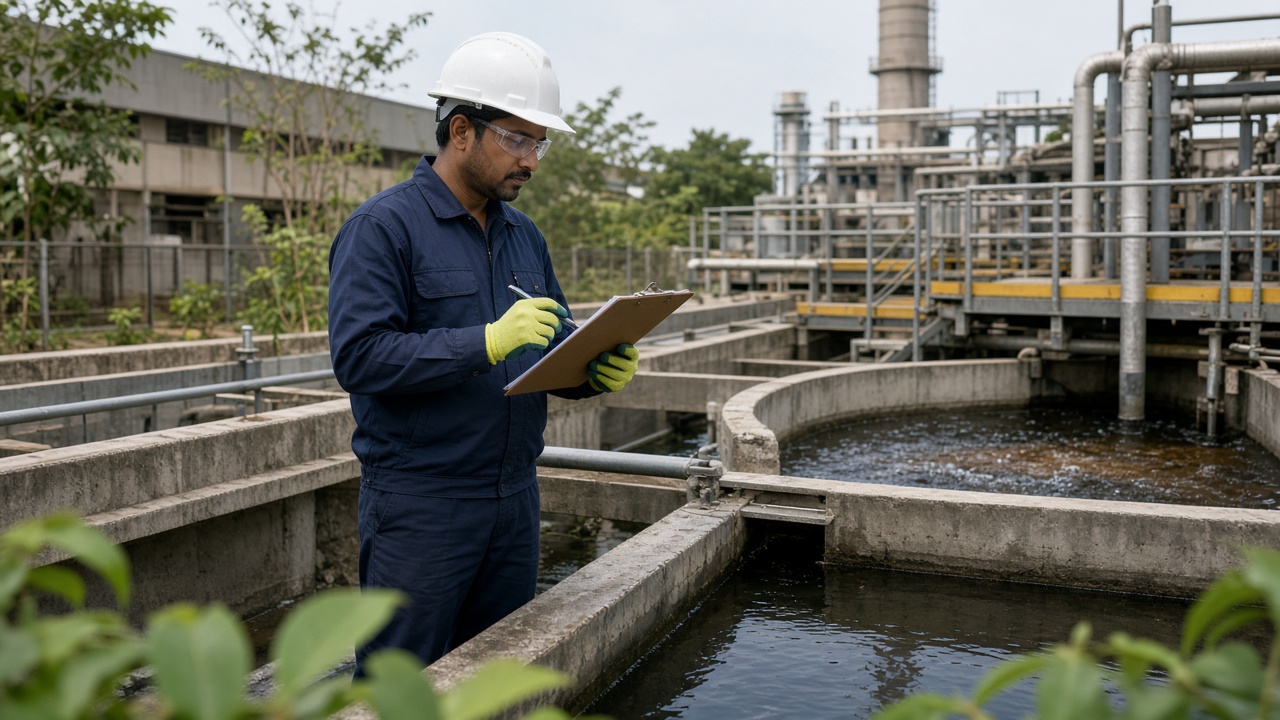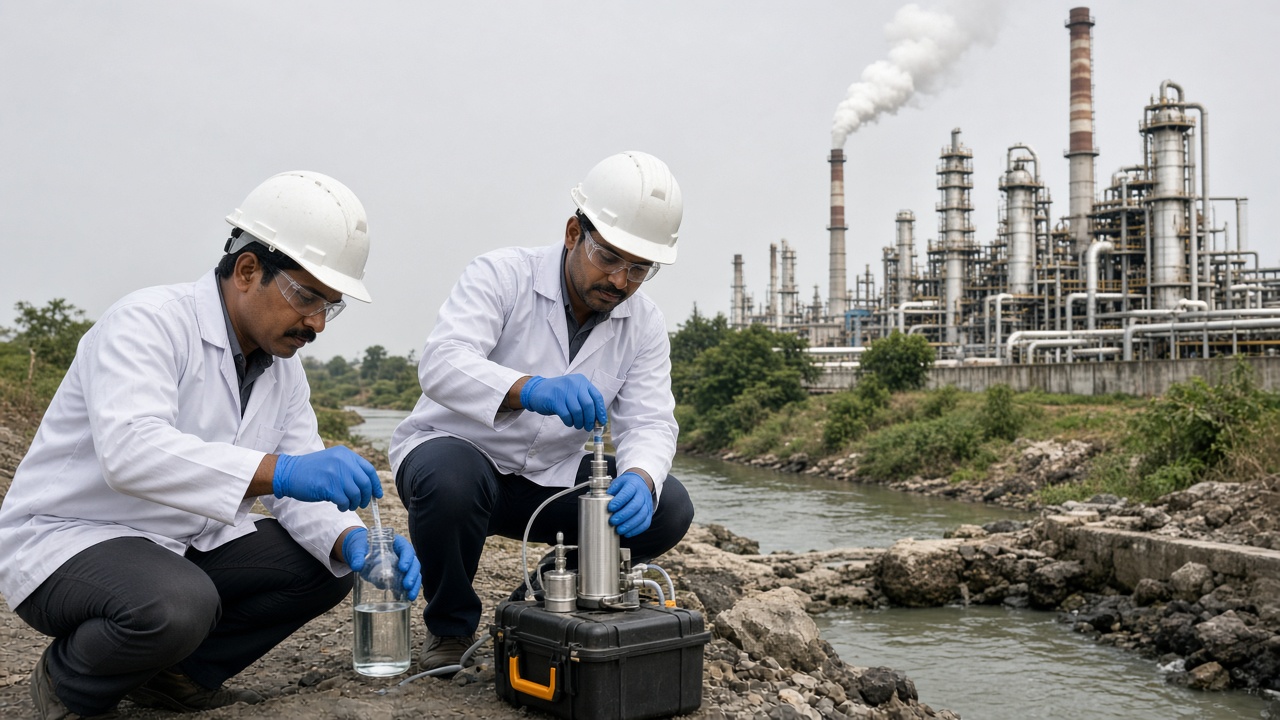
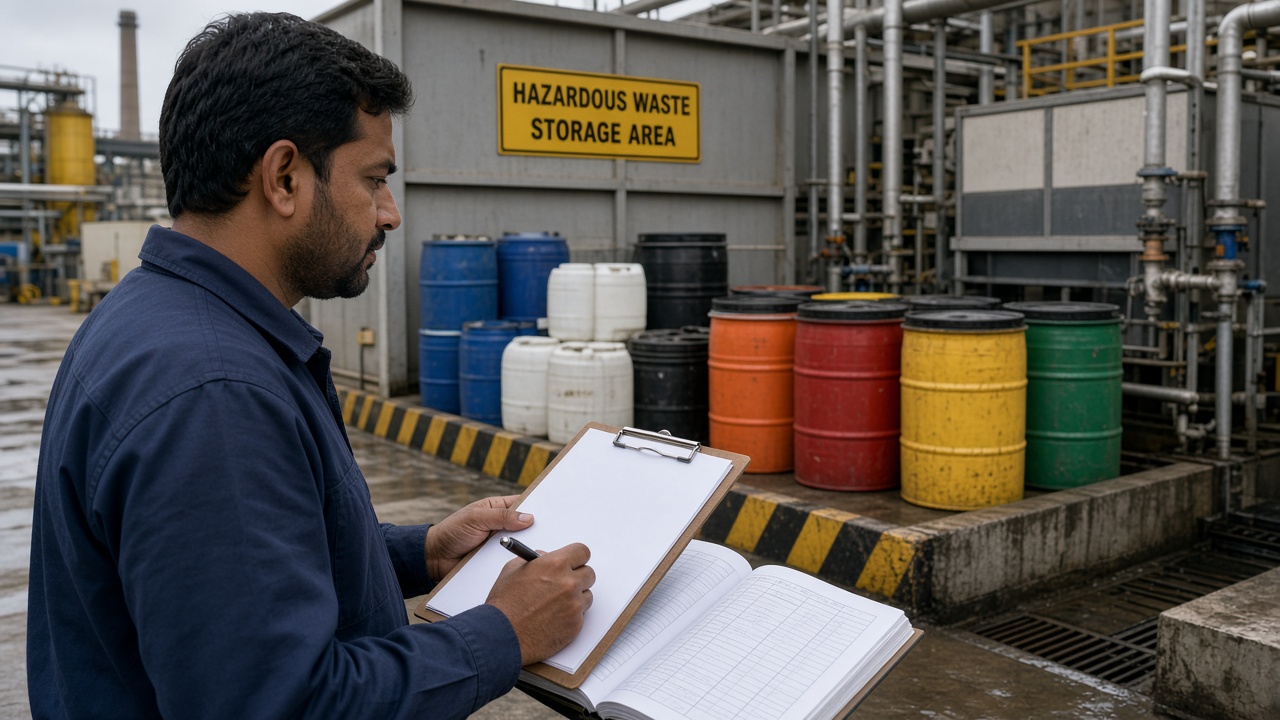
An environmental audit — whether statutory direction, lender due diligence, or internal prep before KSPCB renewal — asks one question repeatedly: can you prove compliance? This checklist helps Karnataka industries structure that proof across consent, Environmental Clearance (where applicable), water, air, waste, monitoring and records.
It is a self-assessment aid, not a substitute for a formal audit opinion or legal advice. Adapt rows to your category, consent conditions and processes. For how auditors work week-to-week, see Environmental Audit for Industries: Process, Checklist and Compliance.
Environmental audit checklist — on-page version
Use these nine blocks in order (tables below):
- Legal & consent documents
- Water & wastewater
- Air emissions
- Hazardous waste
- Solid waste
- Monitoring
- Emergency preparedness
- Records
- Previous audit findings
How to Use This Environmental Audit Checklist
- Assign an owner for each section (EHS, maintenance, production, stores)
- Mark each item Yes / No / NA with a date and evidence reference
- Walk the plant at representative load — not only on a quiet shift
- Log gaps with corrective action, owner and target date
- Re-check before renewal, inspection or investor visits
| Status | Meaning |
|---|---|
| Yes | Evidence viewed and current |
| No | Gap — needs action |
| NA | Not applicable to this facility |
Permissions and Regulatory Documents
| Check | Y/N/NA | Evidence | Common finding |
|---|---|---|---|
| Valid CFE / CFO (or applicable consent) on site | Order copy | Expired / missing amendment | |
| Conditions register maintained | Register | Conditions not tracked | |
| Expiry tracked with renewal lead time | Calendar | Last-week scramble | |
| Amendments filed for material process changes | Amendment papers | Silent capacity creep | |
| Hazardous waste authorisation current where required | Authorisation | Expired linkage | |
| Category / activity matches actual operations | Application vs walk-through | Undeclared processes |
See documents required for KSPCB consent and inspection process.
Environmental Clearance and Conditions
| Check | Y/N/NA | Evidence | Common finding |
|---|---|---|---|
| EC applicable and letter available (if scheduled project) | EC letter | Letter filed, never opened | |
| Condition-wise compliance register | Register | No owners | |
| Periodic compliance reports filed as directed | Portal receipts | Missed cycles | |
| EMP measures implemented | Photos / O&M logs | Construction EMP ignored | |
| Material changes screened for amendment need | Change notes | Technology drift |
More: post-EC compliance.
Air Emissions Checklist
| Check | Y/N/NA | Evidence | Common finding |
|---|---|---|---|
| Stack inventory matches consent | Stack list | Missing DG/boiler | |
| Air pollution control equipment maintained | Maintenance log | Idle scrubbers / bag filters | |
| Fuel records available | Receipts | Incomplete period | |
| Fugitive controls in solvent / powder areas | SOP / observation | Uncontrolled fugitives | |
| DG sets logged; acoustic measures where required | DG log | Night complaints |
Water and Wastewater Checklist
| Check | Y/N/NA | Evidence | Common finding |
|---|---|---|---|
| Water sources and consumption logged | Bills / meters | No reconciliation | |
| Effluent path from source to outlet walked | Sketch / photos | Undeclared taps | |
| No unauthorised bypass of treatment | Walk-through | Storm mixing / bypass | |
| Equalisation and treatment stages functional | O&M log | Idle at peak load | |
| Outlet quality vs consent standards tracked | Lab reports | Unexplained exceedances | |
| CETP membership / inlet norms met if applicable | Agreement / data | Inlet violations |
Hazardous Waste Checklist
| Check | Y/N/NA | Evidence | Common finding |
|---|---|---|---|
| Segregation and labelling correct | Photos | Mixed streams | |
| Storage within authorised period | Dates on containers | Over-stored drums | |
| Manifests / returns complete | Manifest file | Gaps | |
| Spill kits and training in place | Training record | Kits empty / missing | |
| Authorised recycler / TSDF linkage | Contracts | Informal disposal |
Solid Waste Checklist
| Check | Y/N/NA | Evidence | Common finding |
|---|---|---|---|
| Domestic / canteen / packaging streams segregated | Yard walk | Mixed yard | |
| Sludge disposal pathway documented | Receipt / invoices | Undeclared sludge | |
| No open burning or illegal dumping | Observation | Ash / burn marks |
Noise Checklist
| Check | Y/N/NA | Evidence | Common finding |
|---|---|---|---|
| Sensitive receptors identified | Map | Boundary sources ignored | |
| Monitoring as conditioned | Reports | Schedule missed | |
| DG / compressor enclosures intact | Photos | Broken enclosures |
Chemical Storage Checklist
| Check | Y/N/NA | Evidence | Common finding |
|---|---|---|---|
| Compatibility and secondary containment | Bund inspection | Mixed incompatibles | |
| SDS available and current | SDS file | Outdated sheets | |
| Inventory matches purchase vs use | Stock register | Shadow stocks |
Monitoring and Laboratory Records
| Check | Y/N/NA | Evidence | Common finding |
|---|---|---|---|
| Schedule matches consent / EC | Calendar | Wrong parameters | |
| Methods and labs appropriate | Report headers | Unclear CoC | |
| Outliers investigated | CAPA notes | Only “pass” sheets filed | |
| Online monitor calibration current if required | Certificates | Expired calibration |
STP / ETP Performance
| Check | Y/N/NA | Evidence | Common finding |
|---|---|---|---|
| Design vs actual hydraulic load understood | Flow data | Chronic overload | |
| Critical equipment redundancy / spares | Spares list | Single-point failures | |
| Operator competency and shift coverage | Training / roster | Night-shift gaps | |
| Desludging / sludge handling on schedule | Log | Sludge backlog | |
| Reuse claims match actual routing | Water balance | Paper reuse only |
See What is STP? and What is ETP?.
Environmental Records and Reporting
| Check | Y/N/NA | Evidence | Common finding |
|---|---|---|---|
| Incident / spill register | Register | Verbal only | |
| Grievance / complaint log | Log | Unlogged complaints | |
| Training calendar executed | Attendance | Paper training | |
| Prior audit / inspection actions closed | Closure proof | Open CAPAs | |
| Drawings and SOPs version-controlled | Document control | Multiple “latest” drawings |
Emergency preparedness
| Check | Y/N/NA | Evidence | Common finding |
|---|---|---|---|
| Spill kits stocked at risk points | Kit inspection | Empty kits | |
| Emergency contacts current | Contact list | Outdated numbers | |
| Drill / briefing for treatment failure | Drill note | Never practised | |
| Night-shift knows shut-off / call tree | Briefing | Day-shift only knowledge |
Previous audit findings
| Check | Y/N/NA | Evidence | Common finding |
|---|---|---|---|
| Last audit / inspection findings listed | Report | Lost report | |
| CAPAs closed with dated evidence | Closure pack | Open items | |
| Recurring findings flagged to leadership | Tracker | Same finding repeats |
Weekly fifteen-minute walks beat annual heroics. When you want an external gap assessment rather than self-check alone, request support through environmental audit consultancy or IE-RISE compliance advisory.
Common questions
Can this checklist replace a formal audit?
No. It is a self-assessment aid. Adapt rows to your category, consent conditions and processes.
Official sources
Karnataka State Pollution Control Board (KSPCB)
consent, inspection and compliance communications
Central Pollution Control Board (CPCB)
industry categorisation and national guidance referenced by state boards
Water (Prevention and Control of Pollution) Act, 1974 and Air (Prevention and Control of Pollution) Act, 1981
primary statutory frameworks for consent (verify current text and rules)
Environment (Protection) Act, 1986
umbrella framework for related rules where cited
Always verify current application fields, fees and checklists on the live KSPCB portal for your category