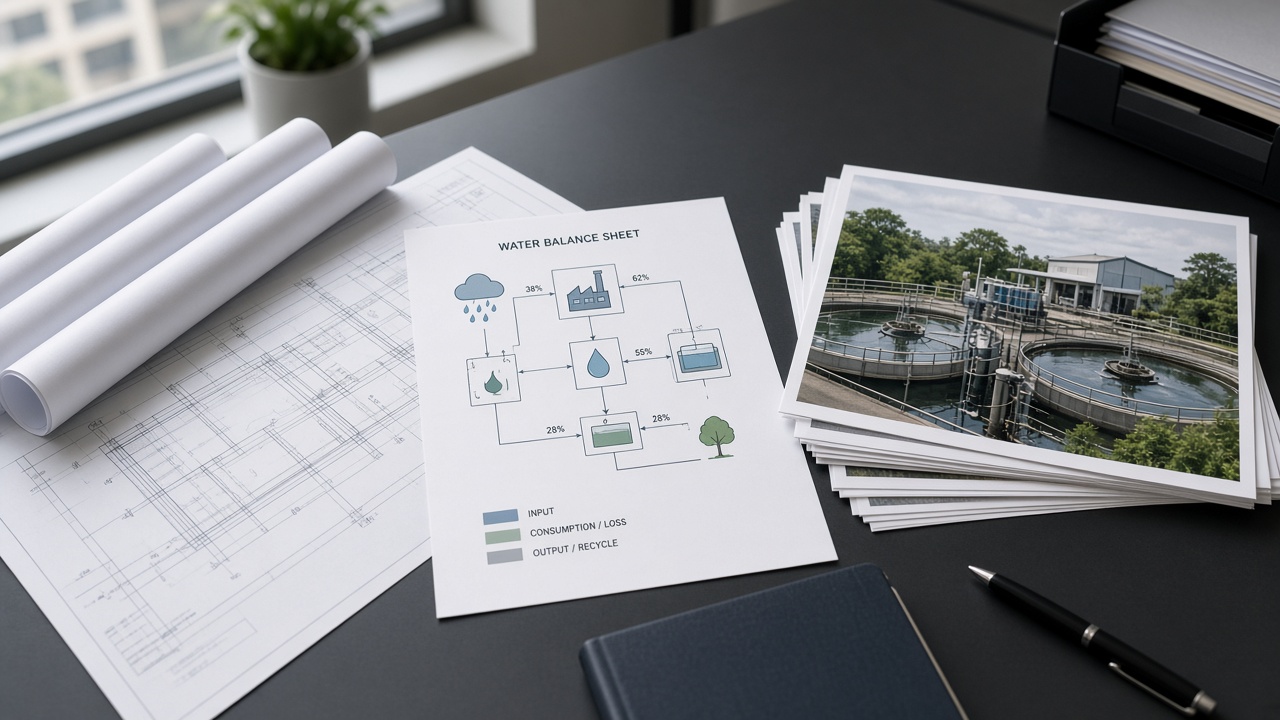
KSPCB consent applications — Consent for Establishment (CFE), Consent for Operation (CFO) and renewals — ask for a predictable core of identity, land, process and pollution-control documents. Gaps appear when teams treat consent as administration rather than engineering: drawings, water balances and waste pathways must match what the plant will actually be.
This page is the master documents hub for Karnataka facilities. Use it for the broad question “What documents do I need for KSPCB consent?” — then open specialised pages for depth:
| Stage | Deep-dive guide |
|---|---|
| CFE documents | What is CFE? · CFE vs CFO |
| CFO documents | KSPCB CFO documents required · What is CFO? |
| Renewal documents | KSPCB consent renewal process |
| Amendment documents | See amendment section below · CFE vs CFO |
| Industry-specific documents | Category and waste/sector notes below · Industry categorisation |
Do not treat this hub as a duplicate of the CFO checklist. The CFO page answers “what additional documents are needed specifically for CFO?”; this page maps the full consent documentation journey.
Always verify current portal fields, fee schedules and category-specific annexures on the KSPCB portal and official KSPCB channels before filing — this guide does not invent fees or fixed timelines.
Consent register vs application documents
Search queries for “KSPCB consent register” often mean the board’s online register of granted consents — a public lookup of existing orders — not the annexure checklist you assemble for a new CFE, CFO or renewal filing. This article covers application documents for your file. For definitions of each consent stage, see What is CFE?, What is CFO? and CFE vs CFO. Confirm register access and fields on official KSPCB channels; they can change without notice.
KSPCB Consent Documents at a Glance
| Document | CFE | CFO | Renewal |
|---|---|---|---|
| Consent order / prior history | EC linkage if any | ✓ | ✓ |
| Layout / site plan | Proposed | As-built / updated | Updated if changed |
| Water balance | Design estimates | Reconciled | Current period |
| Material balance | Proposed | As installed | Current |
| ETP / STP details | Proposed | As-built + commissioning | Current performance |
| Monitoring reports | Planned | Calibration + readiness | Period covered |
| Compliance / condition reports | — | ✓ vs CFE | ✓ vs last CFO |
| Identity & land papers | ✓ | ✓ | ✓ if changed |
| Cluster | Typical contents | Relevant mainly to |
|---|---|---|
| Identity & legal | Registration, PAN, authorised signatory, undertakings | CFE, CFO, renewal |
| Land & location | Property/lease, location map, industrial estate allotment if any | CFE, CFO |
| Process & capacity | Products, raw materials, fuels, flow diagrams, investment/employment | CFE, CFO, renewal |
| Waste | Hazardous/solid waste estimates, storage, authorised disposal linkage | CFE, CFO, renewal |
| Prior orders | Previous CFE/CFO/EC copies and condition compliance | CFO, renewal, expansion |
Documents for CFE
CFE focuses on the proposal to establish. Common expectations include:
- Statutory application form and fee proof as currently prescribed
- Company / unit identity and authorised signatory papers
- Land documents or lease; site and location maps
- Industry classification aligned with the scheduled activity
- Project report covering products, capacity, investment and employment
- Process flow diagrams; material and water balances
- Proposed layout showing treatment units, stacks, drains and waste storage
- Pollution-control design basis (ETP/STP/air) matched to estimated loads
- Hazardous waste generation estimates and storage concept where applicable
- Linkage to Environmental Clearance where the project is scheduled under the EIA framework
CFE quality depends on honesty of design. Understated water use or omitted DG sets become CFO inspection findings later. See What is CFE? and CFE vs CFO.
Documents for CFO
CFO adds as-built and commissioning evidence on top of the CFE chain:
- Valid CFE order and conditions (where the unit followed a CFE stage)
- Updated layout and elevations reflecting what was built
- Commissioning or readiness proof for treatment and control systems
- Recent lab analysis for relevant outlets where applicable
- Calibration certificates for online monitors if conditioned
- Hazardous waste authorisation linkage, labels and storage readiness
- Monitoring plan aligned with consent conditions
Detail: KSPCB CFO documents required and What is CFO?.
Documents for Consent Renewal
Renewal emphasises performance during the prior period plus continuity of identity and capacity declarations:
- Current CFO (or operating consent) and expiry tracking
- Updated balances if production or utilities changed
- Monitoring summaries and compliance reports required by conditions
- Waste returns / manifests as applicable
- Disclosure of process changes, new boilers, or additional waste streams
- Closure proof for earlier inspection observations where relevant
Plan renewal ahead of expiry; see KSPCB consent renewal process.
Documents for Amendment
Amendment files sit between renewal and a fresh application. Typical additions include:
- Clear description of what changed (capacity, product, fuel, treatment, layout)
- Updated water / material balances and layout reflecting the change
- Justification that the change is continuous with the existing unit (not a silent new plant)
- Prior consent orders and condition status
- Any parallel EC / other clearance implications if the change is scheduled
If continuity breaks (major relocation, new unit, or a story that no longer matches the last order), evaluate a fresh CFE/CFO pathway instead of forcing an amendment label.
Industry-specific documents
Category and sector change the annexure set. Examples of additional themes (not an exhaustive official list):
- Hazardous-waste-intensive units — authorisation, storage layout, manifests
- Air-intensive stacks / fuel changes — stack details, APC, fuel rates
- Apartments / institutions with STP — sewage design basis, occupancy, reuse claims
- Healthcare — biomedical waste tie-ups where applicable
- Units with EC — EC order and condition-compliance summaries
Confirm the live KSPCB portal checklist for your industry category before upload. Classification context: KSPCB industry categorisation.
Technical Documents
Technical annexes are where files most often fail consistency checks:
| Document | Purpose | Common mistake |
|---|---|---|
| Process description | Match nameplates and shift reality | Brochure language only |
| Water balance | Source to outlet / reuse | Wash-down / blowdown omitted |
| Material balance | Products and by-products | By-products undeclared |
| ETP/STP design or as-built | Hydraulic + process truth | Peak load ignored |
| Stack / APC details | Air consent narrative | DG/boiler omitted |
| Drainage sketch | Storm vs process segregation | Illegal-looking taps |
Environmental and Waste Documents
- Hazardous waste category estimates, storage layout and authorised TSDF/recycler pathway
- Solid waste and sludge disposal arrangements
- Biomedical or other specialised waste tie-ups for healthcare and related activities
- Environmental management or condition-compliance tables that map how each condition will be met
- EC compliance summaries where the project also holds Environmental Clearance
Documents That Commonly Cause Delays
- Capacity figures that differ across form, project report and drawings
- Layouts that omit stacks, ETP, or hazardous-waste sheds visible on site
- Water balance that ignores wash-down, cooling blowdown or monsoon infiltration
- CFE conditions never closed before CFO filing
- Name or ownership changes not reflected in identity papers
- Lab reports without clear sample points or dates
- Missing authorisation linkage for hazardous waste
- Uploading an old drawing set after a redesign
CFE vs CFO Documentation
| Theme | CFE emphasis | CFO emphasis |
|---|---|---|
| Design vs reality | Proposed scheme | As-built scheme |
| Treatment | Design basis and sizing | Commissioned performance readiness |
| Monitoring | Planned programme | Evidence and calibration |
| Prior order | EC / other clearances if any | CFE order + condition closure |
| Change control | Freeze description before grant | Disclose deviations; amend if required |
Master document checklist
- Identity / signatory consistent across stages
- Land papers current
- Process + balances + layout tell one story
- Pollution-control annexures match stage (proposed vs as-built)
- Waste pathway named
- Monitoring pack ready for CFO/renewal
- Prior orders and condition closures attached
- Indexed PDF set version-controlled
Keep one indexed master PDF set plus controlled originals for inspection. Version-control every resubmission so “latest drawing” is unambiguous.
For document readiness or gap review before a Karnataka filing, IE-RISE can walk your file against typical KSPCB expectations via KSPCB consultancy and CFE/CFO support.
Common questions
Official sources
Karnataka State Pollution Control Board (KSPCB)
consent, inspection and compliance communications
Central Pollution Control Board (CPCB)
industry categorisation and national guidance referenced by state boards
Water (Prevention and Control of Pollution) Act, 1974 and Air (Prevention and Control of Pollution) Act, 1981
primary statutory frameworks for consent (verify current text and rules)
Environment (Protection) Act, 1986
umbrella framework for related rules where cited
Always verify current application fields, fees and checklists on the live KSPCB portal for your category