
Consent for Operation (CFO) from the Karnataka State Pollution Control Board (KSPCB) is where application paperwork meets site reality. Officers review whether the facility ready to operate matches earlier Consent for Establishment (CFE) or prior consent, and whether pollution-control arrangements are credible. This page is a practical document checklist for Karnataka CFO filings — not a substitute for the current official schedule, fee notice, or portal checklist for your industry category. Confirm current fields on the KSPCB portal before upload.
Document map: CFE vs CFO vs Renewal
Use this extractable comparison when preparing a CFO file or explaining gaps to plant leadership. Cells describe typical emphasis — always verify the live KSPCB checklist for your category.
| Document | CFE | CFO | Renewal |
|---|---|---|---|
| Application | ✓ | ✓ | ✓ |
| Consent order | — | ✓ | ✓ |
| Approved CFE | — | ✓ | ✓ |
| As-built layout | — | ✓ | ✓ if changed |
| Water balance | ✓ | ✓ | ✓ |
| Material balance | ✓ | ✓ | ✓ |
| ETP/STP details | ✓ | ✓ | ✓ |
| Lab reports | Proposed | ✓ | ✓ |
| Calibration records | Where applicable | ✓ | ✓ |
| Waste records | Proposed | ✓ | ✓ |
What Is a CFO?
CFO is KSPCB’s consent to operate a facility within stated capacity, pollution loads, and conditions. It typically follows CFE for greenfield projects and sits at the centre of inspections, renewals, and customer due diligence. For the conceptual difference from CFE, see KSPCB CFE vs CFO and What is CFO?.
CFO Document Checklist
Use this as a gap-review table. Exact requirements vary by category, location, and consent conditions — verify against current KSPCB guidance for your unit.
| Document | Purpose | Required for | Common mistake |
|---|---|---|---|
| Application form and fee proof (as applicable) | Opens the statutory filing | All CFO filings | Wrong category or incomplete fields |
| Company / legal identity papers | Confirms who is responsible | All | Name or signatory mismatch with earlier consent |
| Land / lease / allotment documents | Confirms site entitlement | New units; updates if changed | Expired lease or KIADB papers not updated |
| Site location map and layout | Shows process and control areas | All | Layout scale/legend unclear; areas missing |
| Process description and flow diagram | Explains pollution sources | All | Brochure text that does not match shop floor |
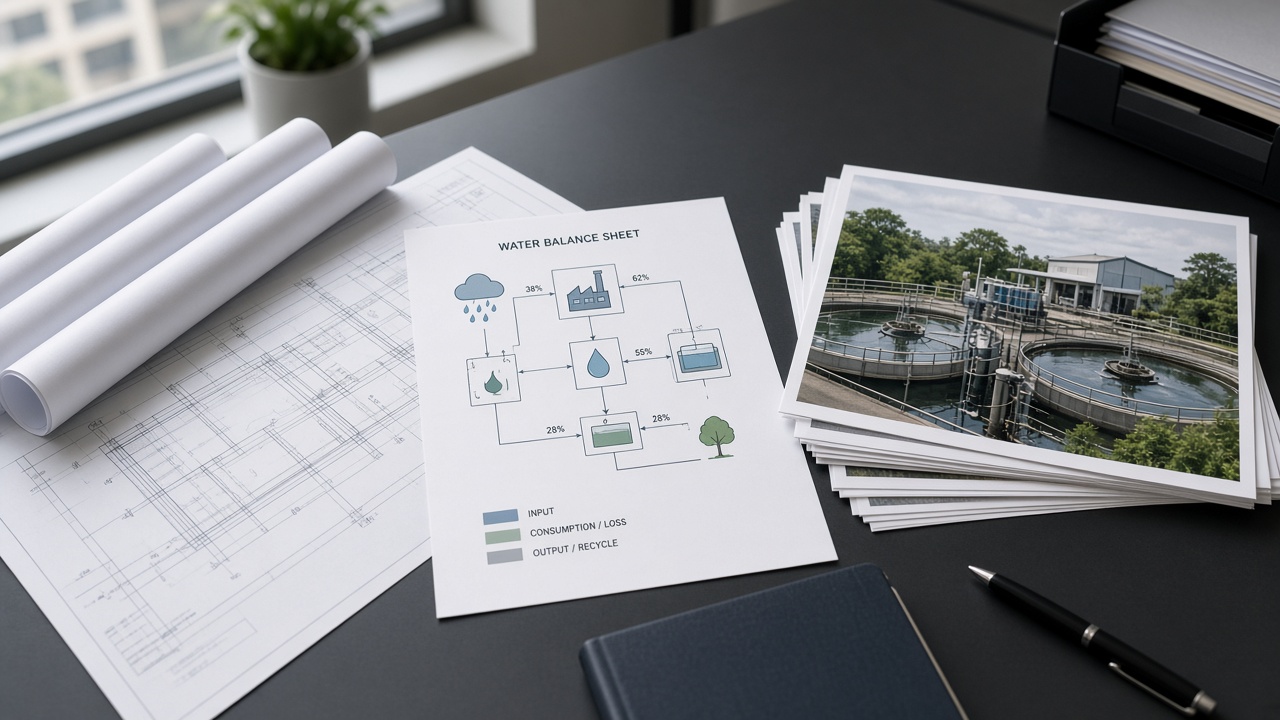
| Water balance and material balance | Quantifies effluent and emissions | Most process industries | Peak loads omitted; reuse claims unsupported |
| Air emission / stack details | Supports air consent conditions | Units with stacks / fuel / DG | DG, boiler, or fugitive sources left out |
| ETP / STP design and status | Shows wastewater control readiness | Units with process/domestic effluent | Capacity understated vs actual wash-down |
| Hazardous / other waste inventory and storage plan | Links waste rules to site practice | Generators of HW / other waste | Storage period or labelling unclear |
| Monitoring plan and lab / calibration records | Shows how limits will be verified | Where conditioned / relevant | Calibration expired; wrong sampling points |
| Previous CFE / CFO order and condition status | Establishes continuity | Units with prior consent | Conditions ignored or “closed” without evidence |
| As-built drawings / equipment lists | Proves establishment matches paper | First CFO after CFE; major changes | CFE-stage drawings filed as if as-built |
| Commissioning / performance evidence | Supports readiness to operate | New or upgraded treatment/APC | Photos without dates; no outlet data where relevant |
| EC / other clearance linkage (if applicable) | Aligns parallel statutory conditions | Scheduled / multi-clearance projects | EC conditions omitted from CFO narrative |
Company / legal
Registration details, PAN where required, board authorisation or power of attorney for the signatory, and consistency with earlier KSPCB filings.
Land / site
Title, lease, or industrial allotment; site plan; approach and surrounding land use notes that match the application narrative.
Project / layout
Plot layout with process buildings, utilities, drains, stacks, ETP/STP, and waste storage clearly marked.
CFE linkage
CFE order copy and a condition-wise compliance table showing what was built versus what was approved.
Process
Products, by-products, raw materials, fuels, shifts, and capacities that match nameplates and production plans.
Water balance
Source, consumption, recycling, effluent generation, and disposal / reuse pathway (sewer, surface, tanker, CETP, on-site reuse) as actually intended.
Air emissions
Stack parameters, control equipment, fuel rates, and fugitive sources (solvents, powders, welding, kitchens where relevant).
ETP / STP
Design basis, unit operations, sludge handling, outlet quality targets, and power backup for critical equipment.
Waste
Hazardous and other waste categories, quantities, storage, and authorised disposal / recycling pathway.
Monitoring
Parameters, frequencies, accredited lab arrangements, and online monitors where conditioned — with calibration trail.
Compliance / previous consent
Earlier inspection closures, waste returns, and any amendment history that explains the current plant.
Documents That Commonly Cause Delays
- Water balance that does not reconcile with bills, flow meters, or ETP design
- Layout missing storm vs process drains or illegal-looking overflow paths
- CFE capacity vs installed equipment mismatch
- Hazardous waste storage without labels, secondary containment, or time limit clarity
- Online monitor installation claimed but calibration certificates missing
- Multiple versions of “latest drawing” without a controlled index
- Name / ownership change not reflected across form and attachments
KSPCB CFO documents checklist — before you submit
- Single indexed PDF set with controlled filenames
- Form figures match water balance and layout
- CFE condition table attached with evidence refs
- As-built vs proposed differences listed honestly
- Lab reports show sample points and dates
- Waste authorisation pathway named
- Signatory consistent with earlier filings
- Site walk completed against the draft file
- Calibration certificates current for instruments claimed
- Portal category and fee fields checked against live KSPCB schedule
How IE-RISE Reviews a CFO File
IE-RISE typically walks the site against the draft file: reconcile balances to drains and tanks, check that CFE conditions have evidence, index annexures so officers can find them, and flag amendments needed before upload. The goal is a coherent engineering story — not a guaranteed grant.
For the broader CFE + CFO + renewal master list, see Documents required for KSPCB consent. For renewal timing, see KSPCB consent renewal.
Need CFO document-gap support? See CFE CFO consultancy.
Common questions
Is there one universal CFO document list?
No. Category, location, prior CFE conditions and parallel clearances change the annexure set. Use this checklist as a gap-review aid against the current KSPCB portal schedule for your industry.
What usually delays CFO files?
Inconsistent figures across form, layout and water balance; CFE-stage drawings filed as as-built; missing condition-closure evidence; and waste or monitoring trails that do not match site practice.
Official sources
Karnataka State Pollution Control Board (KSPCB)
consent, inspection and compliance communications
Central Pollution Control Board (CPCB)
industry categorisation and national guidance referenced by state boards
Water (Prevention and Control of Pollution) Act, 1974 and Air (Prevention and Control of Pollution) Act, 1981
primary statutory frameworks for consent (verify current text and rules)
Environment (Protection) Act, 1986
umbrella framework for related rules where cited
Always verify current application fields, fees and checklists on the live KSPCB portal for your category