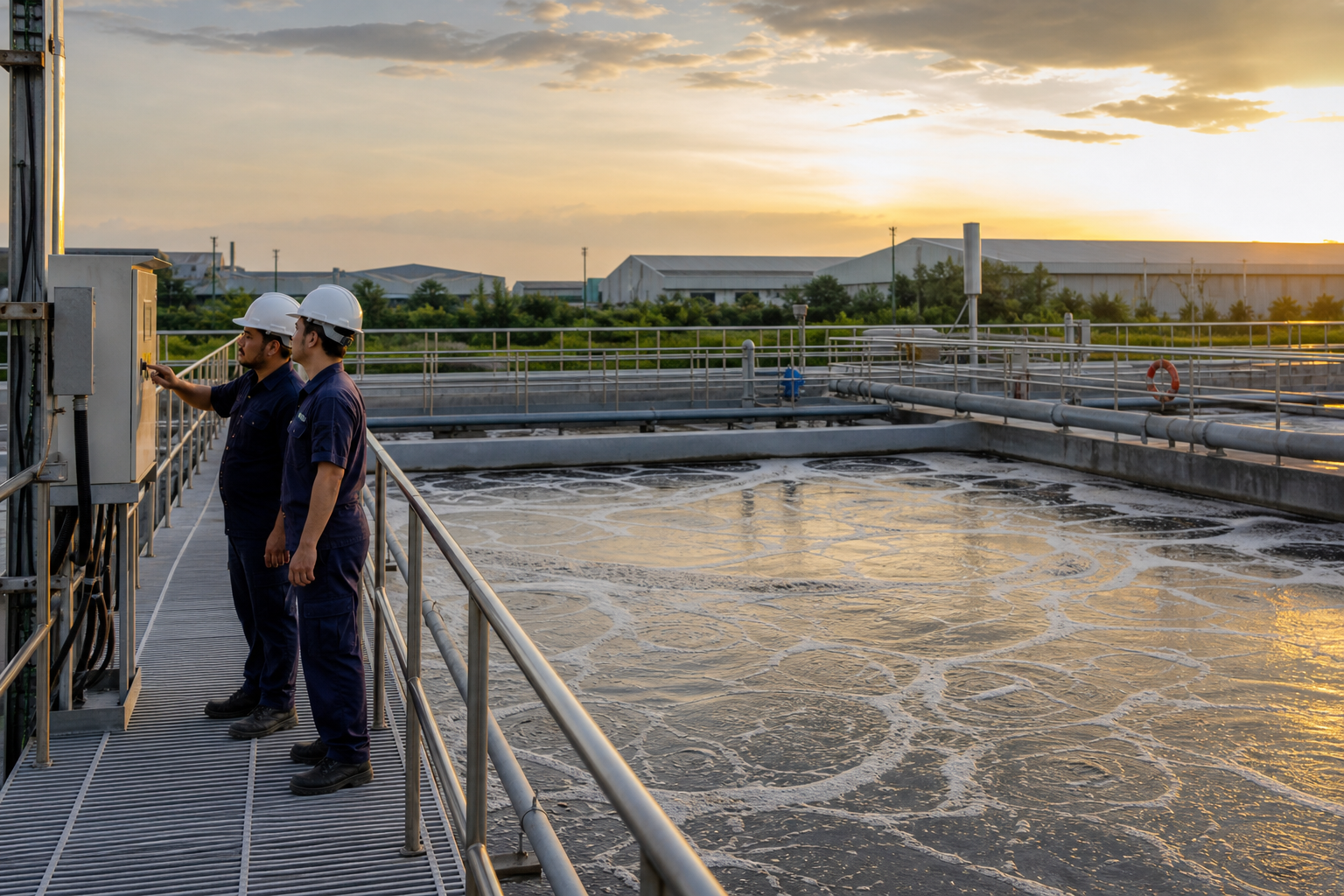
STP load and infection interfaces
Ward and kitchen swings stress biology; O&M gaps show up at CFO renewals.
Hospitals combine domestic sewage (STP), process and laboratory effluent interfaces (ETP where applicable), biomedical waste, hazardous chemicals, and backup power stacks—each regulated under KSPCB and BMW rules. IE-RISE supports NABH-aligned environmental records where facilities pursue accreditation and links campus teams to specialist STP, ETP, and KSPCB consultancy when needed.
STP hydraulics must handle variable loads from wards and kitchens. Effluent quality affects reuse decisions and consent limits in Bengaluru. Colour-coded segregation, storage durations, and authorised CBWTF vendors must match consent schedules—inspections check manifests meticulously.
Healthcare risks
Where healthcare campuses most often fail consent or inspection expectations.
Ward and kitchen swings stress biology; O&M gaps show up at CFO renewals.
Segregation, storage time, or CBWTF vendor mismatches fail manifest checks.
Emergency power without updated air consent draws neighbourhood complaints.
Expired drugs and chemicals routed to municipal waste fail Karnataka HW rules.
New blocks or bed capacity increases need KSPCB updates before commissioning.
Neighbour complaints escalate fast without monitoring SOPs and trained staff.
A new hospital, medical college or major healthcare expansion may need an Environmental Clearance screening when project category, scale or location brings it within the EIA Notification. That is not the same as saying every hospital needs clearance. Many healthcare sites are governed first by KSPCB consent, STP performance, biomedical waste authorisation and hazardous-waste routing.
IE-RISE assesses the development proposal before assuming a clearance file is required. If clearance does apply, wastewater and biomedical-waste arrangements still have to be described consistently in the EMP and in the consent application. If it does not, this page’s consent, STP and waste work remains the operating scope.
We review STP designs and O&M for CFO renewals and audit BMW rooms and training records. Hospital DG stacks are critical during outages—air consent must reflect fuel, hours, and acoustic controls near residential zones in Bangalore.
Expired pharmaceuticals and lab chemicals require proper hazardous waste routing—not municipal mixed waste. Some tertiary centres treat lab effluents separately; stream segregation prevents cross-contamination of domestic STP biology. New blocks, incineration policy changes, or bed capacity increases may need KSPCB amendments before commissioning.
Related services
Consent, treatment, BMW discipline, and inspection readiness.
We provide concise training aids and audit checklists tailored to Bengaluru hospital shift patterns.
Often yes for STP and BMW, with added lab-hazard interfaces—we confirm schedules for your Karnataka campus.
No. Applicability depends on the healthcare project’s category, scale and location. STP, biomedical waste and KSPCB consent can apply even when Environmental Clearance does not. IE-RISE screens the proposal instead of treating all hospitals as one case.
Take the next step
Share bed capacity, STP/BMW status, and location in Karnataka.
Built for attribution, intent, and faster follow-up.
Your information is secure and used only for consultation.
What happens after you submit
A senior consultant reviews your requirement and calls you back, usually within one working day.
You get clear next steps on KSPCB consent (CFE/CFO), STP or ETP plant design, and the documents needed.
Prefer to start small? Ask for a compliance checklist, document list, or an approval timeline instead of a call.
“From compliance to cleaner operations — we help you move forward with confidence.”
Call us
+91 8088971526
Speak to our consulting team.
Email us
info@ierise.in
We'll get back to you soon.
Working hours
Mon - Sat: 10 AM - 7 PM
Office
# 3, Dr. B. R. Ambedkar Veedhi, Bengaluru-560 001
Quick queries? Chat with our team.
More industries