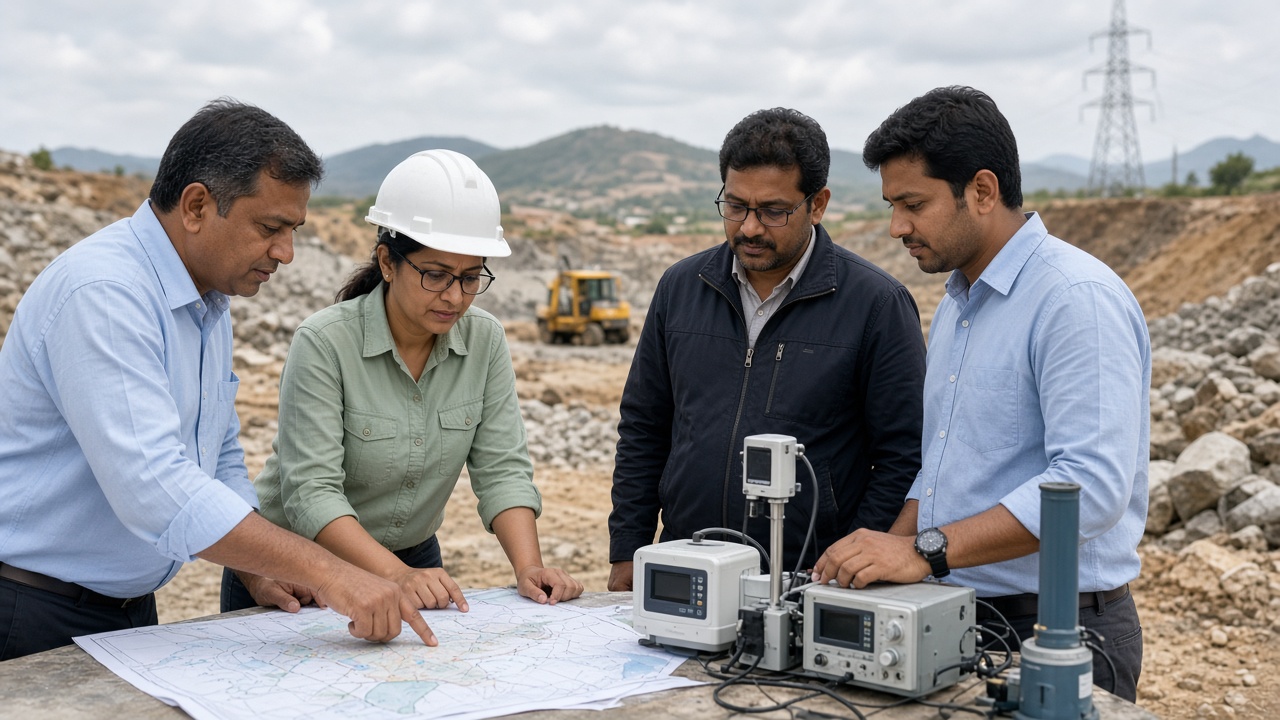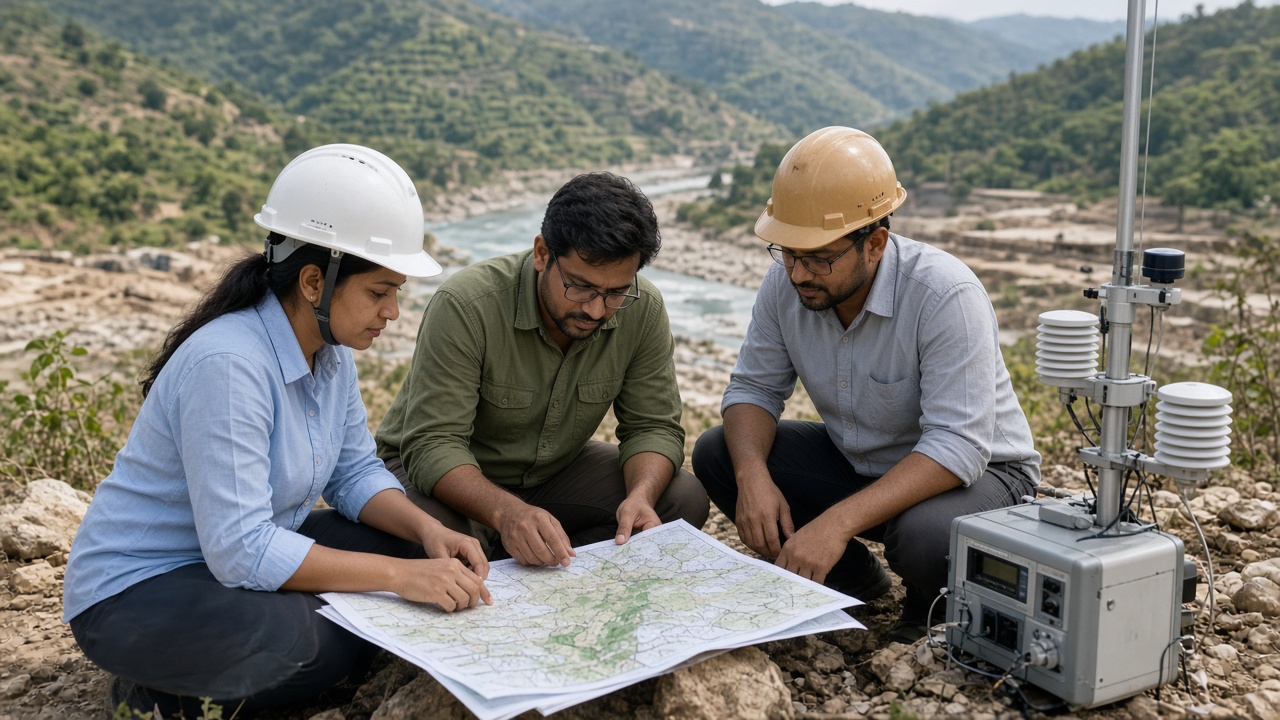

Environmental Clearance (EC) may be required in India when a proposed project falls within the scheduled activities and thresholds under the Environmental Impact Assessment framework notified by the Ministry of Environment, Forest and Climate Change (MoEFCC). Applicability is driven by project type, capacity or area, and often location — not by informal judgments about whether a site “looks polluting.”
This guide explains how project teams decide whether prior EC is needed, how Karnataka projects typically interact with SEIAA Karnataka, MoEFCC, and filings on PARIVESH, and how to check applicability before irreversible commitments. It does not invent numeric thresholds or substitute for reading the current schedule and portal guidance on PARIVESH.
What Is Environmental Clearance?
Environmental Clearance is a regulatory decision that allows a scheduled project to proceed subject to conditions. It is distinct from:
- An Environmental Impact Assessment (EIA) study, which is the evidence base for many EC decisions
- State pollution-control consent such as KSPCB Consent for Establishment (CFE) or Consent for Operation (CFO), which regulate operational discharges and emissions under water and air frameworks
EC is typically granted by MoEFCC for Category A projects and by SEIAA Karnataka (with appraisal support from the State Expert Appraisal Committee) for many Category B projects, following the process visible on PARIVESH. Exact routing depends on the project schedule entry and any general or specific conditions in force.
Treat the EC letter as a binding set of obligations — monitoring, reporting, Environmental Management Plan (EMP) implementation — not a one-time certificate to file away.
Which Projects May Require EC?
Projects that may require EC are those listed in the EIA Notification schedule and its amendments. Broad sectors commonly encountered by industry and infrastructure teams include:
- Mining and extraction-related activities
- Industrial manufacturing and processing units above scheduled capacity bands
- Thermal power and certain energy projects
- Infrastructure such as highways, ports, airports and selected linear projects
- Building and construction / township and area development above built-up or area thresholds where scheduled
- Other sector entries as listed in the current notification
Important: Whether your unit needs EC depends on the specific schedule item, capacity or area figures, and any exemptions or conditions that apply. Do not assume that “industry always needs EC” or that “small sites never need EC.” Verify against the current schedule and, where useful, a structured EC applicability review before freezing design.
Activities that are not scheduled, or that fall below applicable thresholds, may still need KSPCB consent, local body permissions, groundwater or forest clearances, or coastal regulation approvals. Absence of EC does not mean absence of environmental regulation.
How Project Category and Thresholds Affect EC
Under the EIA framework, projects are commonly distinguished by category (often described as Category A and Category B) and by capacity, production, area or investment thresholds defined for each schedule item.
| Decision factor | What teams should clarify early |
|---|---|
| Schedule item | Exact activity wording that matches the project description |
| Capacity / area | Units used in the schedule (e.g. TPA, MW, ha, built-up area) vs your design basis |
| New vs expansion | Whether expansion, modernisation or change in product mix triggers a fresh or amended process |
| Category routing | Central (MoEFCC) vs state (SEIAA Karnataka) appraisal pathway |
Freezing the project description early matters. If capacity, fuel, technology or footprint changes after baseline work begins, the applicability answer — and the EIA scope — may change.
For a walkthrough of stages after applicability is confirmed, see the Environmental Clearance process in India.
How Location Can Affect Applicability
Location can affect:
- Which authority appraises the proposal
- Whether additional clearances (forest, wildlife, coastal) apply in parallel
- Whether general or specific conditions for sensitive settings apply
- What baseline and public consultation issues will dominate the file
Sensitive or constrained settings often discussed in Indian project practice include coastal regulation zones, eco-sensitive zones, proximity to protected areas, critically polluted areas identified by CPCB / MoEFCC processes where relevant, and water-stressed or densely settled urban edges. Location does not replace the schedule test; it layers on top of it.
EC Applicability in Karnataka
For many Category B projects in Karnataka, proponents interact with SEIAA Karnataka and related appraisal mechanisms, with filings routed through PARIVESH as currently prescribed. Category A projects typically engage MoEFCC pathways. State pollution control (KSPCB) consent remains a parallel track for establishment and operation; EC and KSPCB consent answer different legal questions.
Practical Karnataka sequencing for project teams:
- Confirm EC applicability against the current schedule and project description
- Map SEIAA / MoEFCC pathway and any parallel forest, coastal or other clearances
- Plan KSPCB CFE/CFO so construction and commissioning are not blocked after EC
- Align land documents, survey numbers and site maps before baseline seasons start
EC Applicability Decision Tree
Step 1 — Freeze a one-page project description
- Activity / process in plain language
- Capacity or area with units
- Location (survey numbers / coordinates)
- New project vs expansion / modernisation
Step 2 — Is the activity listed in the current EIA schedule?
- If no: EC may not apply under the schedule test; still check KSPCB consent and other permissions.
- If yes: Continue to Step 3.
Step 3 — Compare design capacity / area with schedule thresholds
- Align units with the schedule entry.
- Include expansion math across phases, not only the next civil package.
- If below threshold / exempt under current rules: Document the rationale; re-check if design changes.
- If within / above scheduled band: Continue to Step 4.
Step 4 — Identify Category A vs Category B routing
- Category A (typical): MoEFCC appraisal pathway via PARIVESH as prescribed.
- Category B (typical): SEIAA Karnataka pathway via PARIVESH as prescribed.
- Confirm any general or specific conditions that change routing.
Step 5 — Screen location overlays
- Coastal (CRZ) and related coastal regulation questions
- Forest / wildlife / eco-sensitive context
- Critically polluted area notes where relevant
- Dense urban fringe / water-stress considerations that shape baseline and consultation
Step 6 — Decide next process step
- Proceed to ToR / EIA / appraisal pathway on PARIVESH as applicable
- Or document “EC not required under current reading” with schedule citation — and re-screen on design change
Evidence pack for an applicability review
- Project description matching what will be built (not a marketing brochure)
- Capacity, area and product mix with units aligned to the schedule
- Site coordinates, survey numbers and layout
- Expansion history and prior EC / consent orders if any
- Known location constraints (forest, coastal, water body, eco-sensitive context)
If the answer is uncertain, stop civil and financial commitments that assume “no EC” until the schedule reading is confirmed.
Category A vs Category B
| Framing (typical) | Usual appraisal route | Filing channel (as prescribed) |
|---|---|---|
| Category A | MoEFCC / Expert Appraisal Committee (EAC) | PARIVESH |
| Category B | SEIAA Karnataka / SEAC support for many state projects | PARIVESH |
Exact routing depends on the schedule entry and amendments in force. Confirm against current MoEFCC / PARIVESH guidance — do not invent category from peer projects.
Does my project need EC and KSPCB consent?
Often both — they answer different legal questions. EC (MoEFCC / SEIAA via PARIVESH where applicable) addresses scheduled project clearance. KSPCB CFE/CFO addresses pollution-control consent for establishment and operation. Sequence them deliberately so construction and commissioning are not blocked by the wrong gate.
What happens if work starts without EC?
Where prior EC is required, starting construction or establishing the scheduled activity without clearance creates serious regulatory and commercial risk — including stoppage, enforcement and lender exposure. Do not treat “EIA submitted,” “ToR issued,” or “KSPCB CFE filed” as substitutes for an EC grant. If work has already begun under an uncertain applicability reading, stop irreversible commitments and obtain a documented schedule check before continuing.
Common EC Applicability Mistakes
- Confusing pollution intensity with schedule listing — A clean-looking campus can still be scheduled; a dusty workshop may not be.
- Using outdated threshold memory — Amendments change entries; always check current MoEFCC / PARIVESH materials.
- Ignoring expansion math — Incremental capacity added over years can cross a threshold even if each phase felt “small.”
- Treating KSPCB CFE as a substitute for EC — Consent does not replace prior Environmental Clearance where EC is required.
- Copying a neighbour’s conclusion — Different schedule items, capacities and locations produce different answers.
- Changing design after “no EC” advice — Re-screen whenever capacity, fuel, technology or footprint changes.
- Skipping location overlays — Coastal, forest and eco-sensitive settings can reshape process and conditions.
Related reading and next step
- EIA vs Environmental Clearance — study vs decision
- What Is EIA? — what the assessment covers
- Environmental Clearance and EIA briefing — project-team planning view
- Environmental Clearance consultancy — IE-RISE service pathway
For project-specific applicability, share type, location, capacity and stage with IE-RISE rather than relying on informal peer advice.
Common questions
Is EC the same as KSPCB consent?
No. EC (MoEFCC / SEIAA via PARIVESH where applicable) and KSPCB pollution-control consent are complementary tracks. Many projects need both sequenced deliberately.
When is environmental clearance required?
When the project is a scheduled activity under the EIA Notification framework and crosses applicable capacity/area thresholds — often with location overlays. Confirm against the current official schedule, not peer memory.
How do I know if my project is scheduled?
Applicability depends on project type, capacity/area thresholds and location overlays in the EIA Notification schedule as amended. Confirm against current official schedule text — do not rely on informal peer lists.
What happens if work starts without EC?
Where prior EC is required, starting without clearance creates serious regulatory and commercial risk. Do not treat EIA submission or KSPCB CFE as substitutes for an EC grant.
Official sources
PARIVESH
EC/EIA application workflow, notifications and compliance reporting
Ministry of Environment, Forest and Climate Change (MoEFCC)
EIA Notification framework and amendments
EIA Notification, 2006, consolidated as amended up to July 2026 (PARIVESH)
compilation only; the Gazette text prevails if they differ
EIA Notification, 2006, S.O. 1533(E) dated 14 September 2006, paragraph 9 as substituted by S.O. 1807(E) dated 12 April 2022 in that compilation
validity differs by project class
SEIAA Karnataka
state-level appraisal pathway where Category B applies
Confirm current schedule entries, forms and ToR practice on official channels before filing