Environmental Impact Assessment (EIA) is a systematic process to identify, predict and evaluate the likely environmental — and related social — impacts of a proposed project before major irreversible decisions are made. In India, scheduled projects under the MoEFCC EIA framework prepare EIA documentation for appraisal by MoEFCC (Category A) or SEIAA Karnataka and related mechanisms (many Category B projects), typically via PARIVESH.
EIA is not the same as Environmental Clearance. EIA informs the decision; authorities grant or refuse EC with conditions. EIA also differs from KSPCB consent, which regulates routine operational discharge and emissions under state pollution-control frameworks.
What Is Environmental Impact Assessment?
At its core, EIA answers four questions:
- What is the project and where will it sit?
- What is the baseline environment today?
- What changes will construction and operation cause?
- How will those changes be avoided, reduced, restored or compensated — and monitored?
The written EIA report is the organised evidence for those answers, usually including an Environmental Management Plan (EMP).
Why Is EIA Conducted?
EIA exists so that decision-makers, affected communities and project owners see impacts before land use and pollution load are locked in. Practically, it:
- Supports lawful appraisal under the EIA Notification framework
- Forces site-specific thinking instead of brochure claims
- Creates a mitigation and monitoring plan that can become EC conditions
- Gives lenders and boards a structured risk picture
Skipping or template-copying EIA does not save time if appraisal returns months of queries.
What Does an EIA Study Cover?
Coverage follows Terms of Reference / scoping and the project type, but commonly includes:
- Project description and alternatives considered
- Legal and regulatory setting
- Baseline environment
- Impact identification and prediction (air, water, land, noise, ecology, socio-economics, risk where material)
- Mitigation measures and EMP
- Environmental monitoring programme
- Public consultation inputs where applicable
- Disclosure and mapping consistent with the narrative
Specialist chapters — hydrology, traffic, marine ecology, and others — appear when ToR or site context require them.
Baseline Environmental Studies
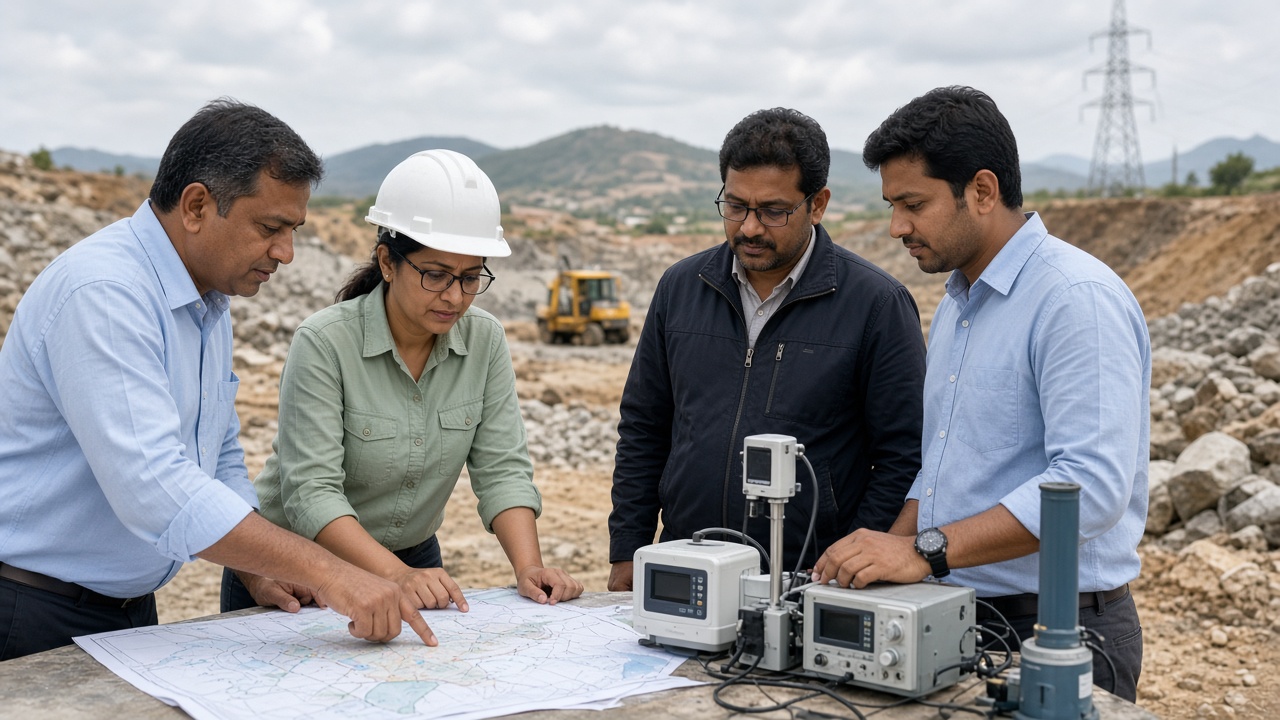
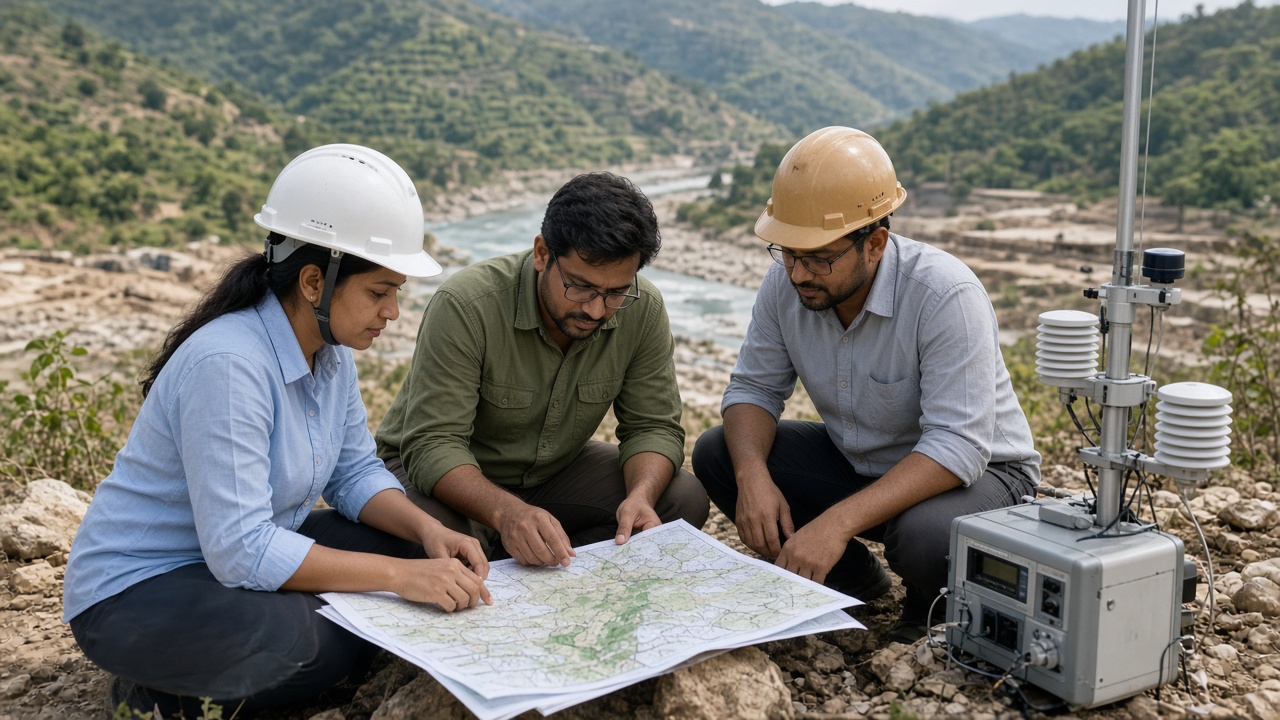
Baseline work measures existing conditions in the study area across required seasons and stations. Quality markers:
- Stations on maps that match text
- Methods suited to the parameters
- Socio-economic surveys that reach communities living with the gate, dust and traffic — not only the nearest town
Weak baseline is the most common reason strong-looking PDFs fail expert reading.
Impact Assessment
Impact assessment links project activities (construction, operation, and where relevant decommissioning) to changes in baseline. It should be transparent about uncertainty and about residual impacts after mitigation. Modelling and expert judgment must be reconcilable with the project description — capacity, fuel and layout cannot silently differ from Chapter 2.
Mitigation and EMP
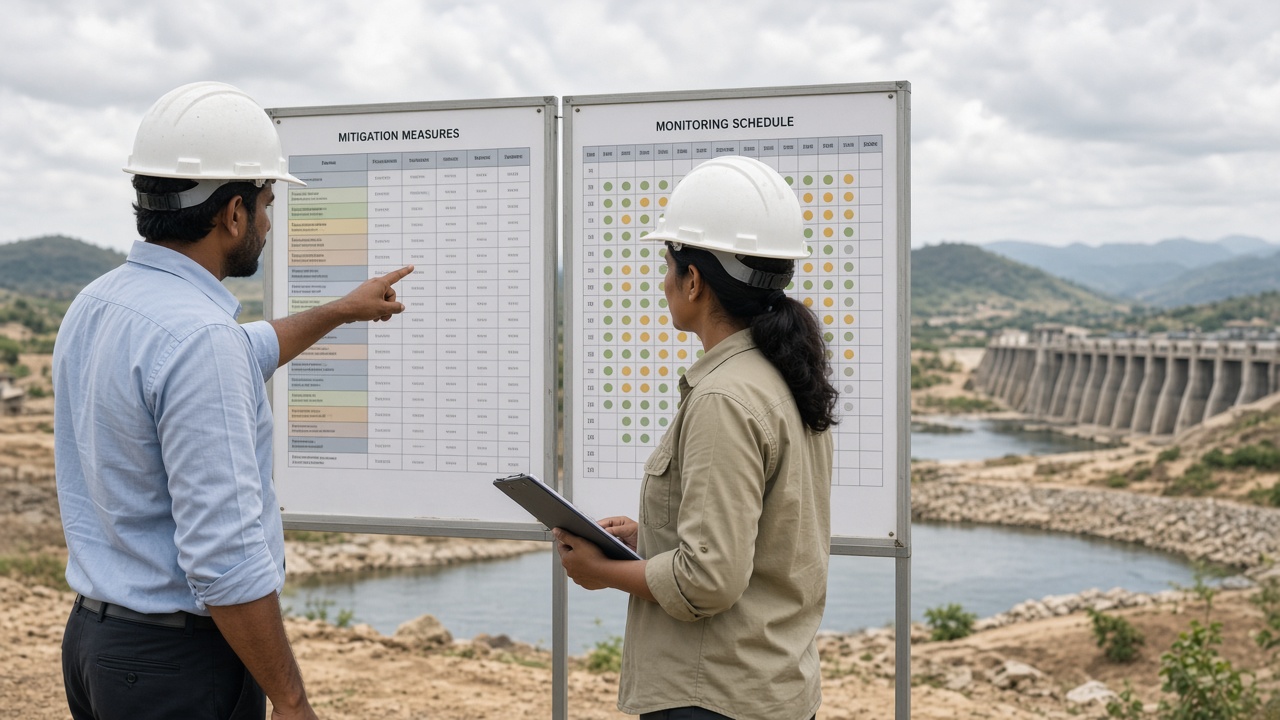
Mitigation follows a hierarchy: avoid, minimise, restore, compensate. The EMP assigns owners, locations, frequencies and indicators so post-grant teams can prove compliance. See EMP components and implementation and post-EC compliance.
What is an EMP?
An Environmental Management Plan turns EIA mitigation into assigned controls, monitoring, responsibilities and budget. Appraisal committees look for EMPs auditors can verify — not slogans.
EIA vs environmental clearance
| EIA | Environmental Clearance | |
|---|---|---|
| Nature | Study / assessment | Regulatory decision |
| Output | EIA report + EMP | EC grant / refusal with conditions |
| Authorises construction? | No | Yes, if granted — subject to conditions |
Full comparison: EIA vs Environmental Clearance. Applicability: When is Environmental Clearance required?. Process: Environmental Clearance process in India.
Who prepares an EIA?
Accredited consultants typically prepare EIA/EMP under the applicable accreditation framework; the project proponent remains responsible for the truth of the project description and for post-EC duties. Confirm any accreditation claims against the issuing authority’s current register.
How EIA Relates to Environmental Clearance
| Stage | Role of EIA |
|---|---|
| Applicability | Confirms whether a full or scoped assessment pathway applies (when is EC required) |
| Preparation | EIA + EMP produced against ToR |
| Consultation | Concerns and responses enter the final record |
| Appraisal | Committees test EIA integrity |
| EC grant | Conditions often bind EMP and monitoring from the EIA |
| After grant | EIA sits on the shelf; compliance evidence takes over |
EIA Process Overview
A simplified overview aligned with the EC process guide:
- Screen applicability and category pathway
- Obtain / follow ToR where applicable
- Collect baseline and specialist data
- Predict impacts and draft EMP
- Complete public consultation where required
- Submit for appraisal and answer queries
- Receive EC decision and shift to compliance
For project-team planning habits, see the Environmental Clearance and EIA briefing. For hands-on support: Environmental Clearance consultancy.
Common questions
Who prepares an EIA?
Accredited consultants typically prepare EIA/EMP under the applicable accreditation framework; the project proponent remains responsible for the truth of the project description and for post-EC duties.
What is the difference between EIA and EC?
EIA is the study; EC is the authority decision. See the EIA vs Environmental Clearance comparison page for the full table.
Official sources
PARIVESH
EC/EIA application workflow, notifications and compliance reporting
Ministry of Environment, Forest and Climate Change (MoEFCC)
EIA Notification framework and amendments
EIA Notification, 2006, consolidated as amended up to July 2026 (PARIVESH)
compilation only; the Gazette text prevails if they differ
EIA Notification, 2006, S.O. 1533(E) dated 14 September 2006, paragraph 9 as substituted by S.O. 1807(E) dated 12 April 2022 in that compilation
validity differs by project class
SEIAA Karnataka
state-level appraisal pathway where Category B applies
Confirm current schedule entries, forms and ToR practice on official channels before filing