An Environmental Management Plan (EMP) is the part of an EIA — and often a standalone compliance document — that says exactly how predicted impacts will be managed during construction and operation. Where the EIA predicts effects, the EMP assigns methods, schedules, responsibilities, monitoring and budget logic to control them.
Appraisal committees (including SEAC pathways supporting SEIAA Karnataka, and central EAC routes under MoEFCC) look for EMPs that auditors can verify. Boilerplate — “adequate measures shall be taken” — invites queries, weak conditions or failed post-EC compliance.
What Is an Environmental Management Plan?
An EMP is the operating plan for environmental mitigation and monitoring. It typically covers:
- Construction-phase controls (erosion, dust, noise, camp waste, drainage)
- Operation-phase controls (air, effluent, waste, resource use, emergencies)
- Institutional arrangements (who owns what)
- Monitoring programme and reporting chain
- Indicative budget / provision for O&M of controls
Facilities without EC still use EMP logic internally — treatment SOPs, inspection checklists, emergency drills — because KSPCB consent conditions often read in a similar “prove it” style. For scheduled projects, the EMP is also the bridge between EIA and the EC letter.
Why EMP Matters in EIA and Environmental Clearance
- Appraisal: Committees test whether mitigation is specific enough to believe
- EC conditions: Many conditions explicitly require EMP implementation
- Operations: Named owners and frequencies prevent “environment is the consultant’s job” culture
- Finance / ESG: Lenders compare reports against EMP promises
- Integration: Aligning EMP monitoring with later KSPCB consent schedules reduces duplicate or conflicting programmes
EMP Structure Table
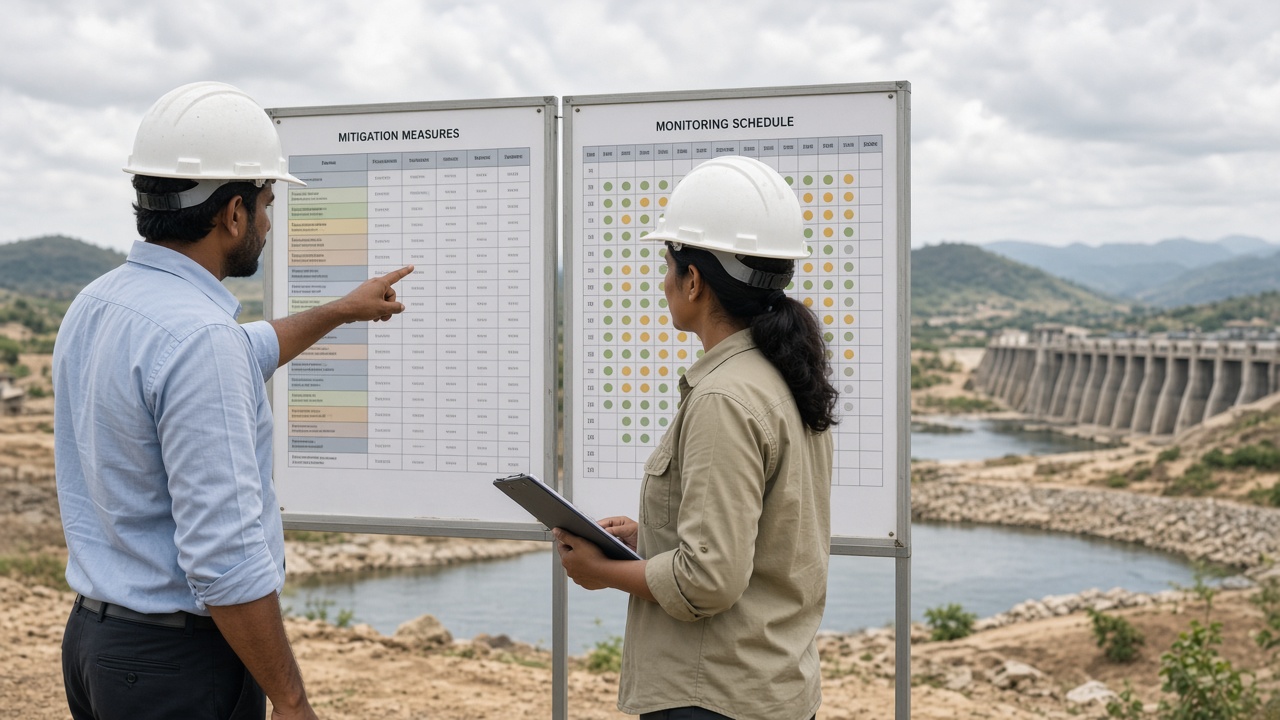
Use a row-per-impact format reviewers can audit. Replace examples with parameters from your ToR, EIA and EC.
Sample EMP monitoring table (illustrative)
| Aspect | Impact | Mitigation | Parameter | Frequency | Responsibility |
|---|---|---|---|---|---|
| Air | Dust | Water spraying | PM | Daily | Site EHS |
| Water | Effluent | ETP | pH/BOD/COD | As applicable | Environment team |
| Waste | Improper disposal | Segregation | Quantity | Weekly | Facility team |
Fuller EMP control table
| Impact | Mitigation | Parameter | Location | Frequency | Responsibility | Budget | Record |
|---|---|---|---|---|---|---|---|
| Construction dust | Water spray, covered trucks, wind breaks | PM / dust (as scoped) | Boundary / sensitive receptor | As per ToR / EC | Site EHS | CapEx/OPEX line for suppression | Log + photos |
| Process effluent | Collect without bypass; operate ETP | Outlet quality (as consented) | ETP outlet | As per EC / consent | Lab coordinator + O&M | Treatment O&M | Lab reports |
| Stack emissions | Maintain APC; fuel discipline | Stack parameter (as scoped) | Named stack | As ordered | Utilities / EHS | APC maintenance | Maintenance + stack reports |
| Hazardous waste | Segregate, label, authorised disposal | Storage period / manifests | HW shed | Weekly check + manifests | Stores in-charge | Disposal contracts | Manifest file |
| Noise near settlements | Enclosures; schedule noisy works | Leq / as ordered | Nearest receptor | As scheduled | Site EHS | Acoustic treatment | Noise reports |
| Greenbelt / plantation | Plant + aftercare for survival | Survival % / area | Greenbelt plots | Seasonal / annual | Facilities | Plantation aftercare | Count sheets |
| Stormwater contamination | Segregate storm vs process drains | Visual / oil sheen checks | Drain network | Shift / weekly | Maintenance | Drain works | Walk logs |
Control hierarchy for each impact: avoid → minimise → restore → compensate.
Key Components of an EMP
Air
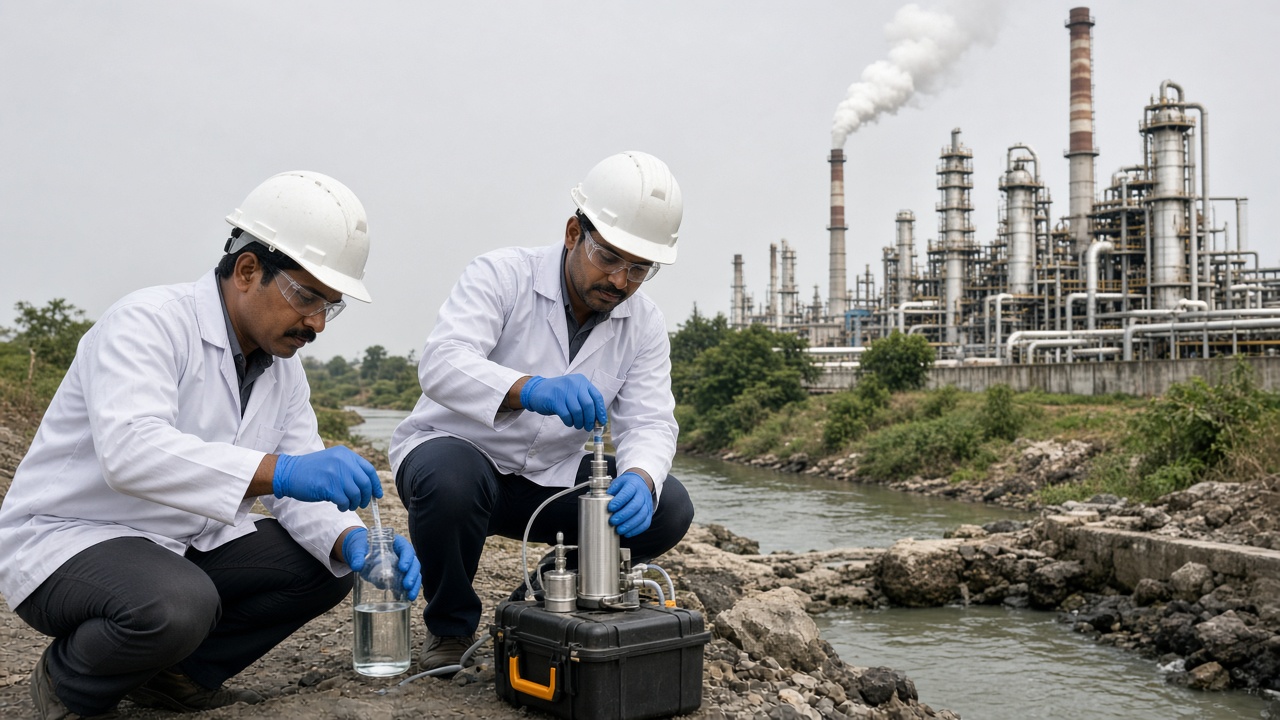
Fugitive dust control; stack and process emission controls; fuel and DG management; maintenance of air pollution control equipment; calibration where continuous monitors are conditioned.
Water
Stormwater segregation; effluent collection without bypass; ETP/STP design and O&M; reuse commitments; groundwater protection where relevant; spill containment.
Waste
Segregation, storage time limits, labelling, authorised disposal or recycling pathways; sludge handling from treatment plants.
Noise
Source controls, barriers or enclosures near sensitive receptors, DG acoustic treatment, construction timing near settlements.
Ecology
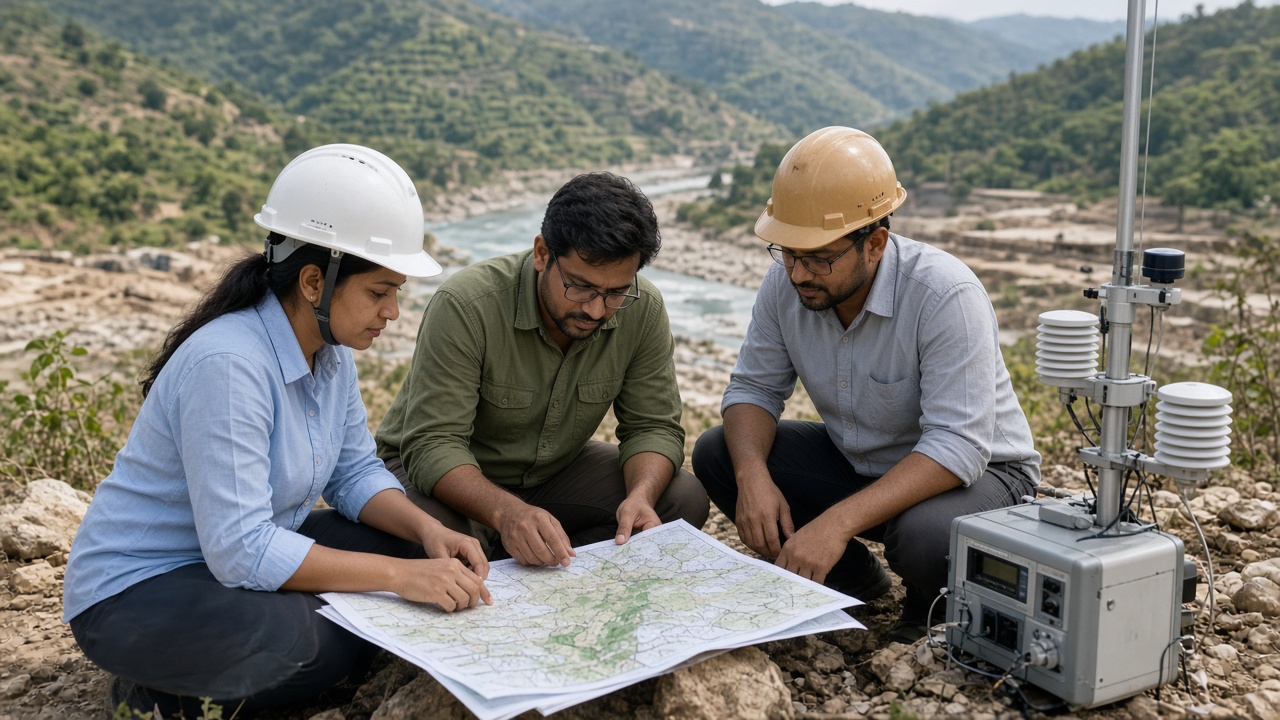
Avoidance of unnecessary clearing; greenbelt / plantation with survival-rate thinking; wildlife or habitat measures where ToR required them.
Monitoring and responsibilities
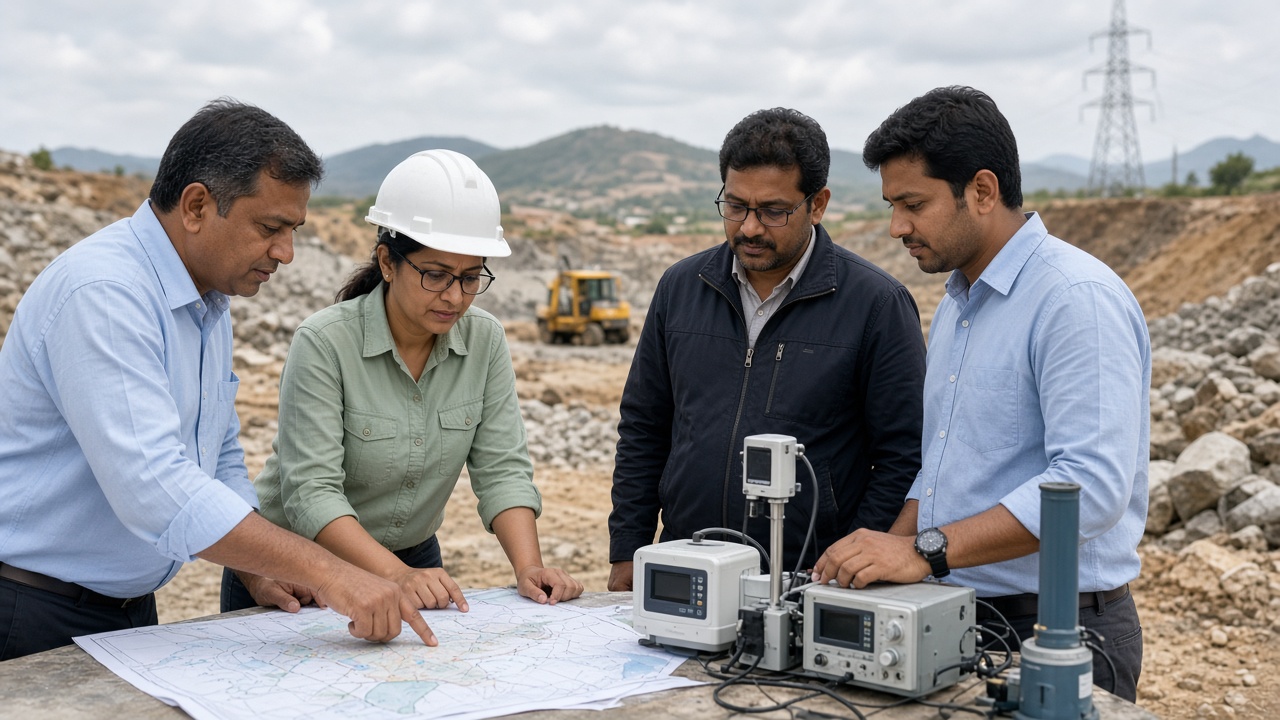
Tables that list parameter, method, location, frequency, responsible agency and reporting chain. Organogram for the environment cell; contractor clauses that reference EMP — not generic SLAs.
Budget
Indicative capital and recurring costs for controls, lab, plantation and staffing so EMP is not an unfunded annex.
Common EMP Problems
- Generic language without parameters, locations or frequencies
- Construction EMP ignored once civil contractor is mobilised
- Treatment plants commissioned months after trial production
- No budget line for O&M, lab or plantation aftercare
- Monitoring table copied from another project’s district
- Public consultation commitments missing from EMP actions
- Vendor contracts that never reference EMP clauses
- No link between EMP rows and the post-EC condition register
EMP readiness checklist
- Every significant impact has a mitigation row
- Parameters, locations and frequencies filled
- Named responsibilities (not only “contractor”)
- Budget lines for CapEx and recurring O&M
- Record type defined for each row
- Linked to post-EC condition register template
How IE-RISE Supports EMP Preparation and Review
IE-RISE helps project teams and consultants:
- Structure EMP chapters so construction and operation phases are separable and owned
- Stress-test monitoring tables against appraisal and audit questions
- Align EMP with EC condition registers and KSPCB consent schedules
- Train site teams so EMP clauses become shift-level practice
See Environmental Clearance consultancy and related reading: post-EC compliance, EC process, What Is EIA?.
Common questions
Is an EMP only for EC projects?
EC appraisals expect a usable EMP. Facilities without EC still use EMP-style control, monitoring and emergency logic because consent conditions often demand the same “prove it” discipline.
Official sources
PARIVESH
EC/EIA application workflow, notifications and compliance reporting
Ministry of Environment, Forest and Climate Change (MoEFCC)
EIA Notification framework and amendments
EIA Notification, 2006, consolidated as amended up to July 2026 (PARIVESH)
compilation only; the Gazette text prevails if they differ
EIA Notification, 2006, S.O. 1533(E) dated 14 September 2006, paragraph 9 as substituted by S.O. 1807(E) dated 12 April 2022 in that compilation
validity differs by project class
SEIAA Karnataka
state-level appraisal pathway where Category B applies
Confirm current schedule entries, forms and ToR practice on official channels before filing