
Project teams in India often use “EIA” and “Environmental Clearance” as if they were the same document. They are not. Environmental Impact Assessment (EIA) is the structured study. Environmental Clearance (EC) is the regulatory decision — typically with conditions — issued after appraisal under the MoEFCC EIA framework, including SEIAA Karnataka pathways for many state-level projects.
Conflating them leads to two expensive mistakes: starting construction because “the EIA is done,” or treating the EC letter as a finished study with nothing left to implement.
EIA vs Environmental Clearance — Comparison Table
| EIA | Environmental Clearance | |
|---|---|---|
| Nature | Technical assessment | Regulatory decision |
| Role | Studies impacts | Decides whether project may proceed subject to conditions |
| Output | EIA report (+ EMP) | EC decision / order |
| Place in process | Input to appraisal | Outcome of appraisal |
| Who acts | Prepared by consultants / project team | Granted or refused by competent authority |
What Is EIA?
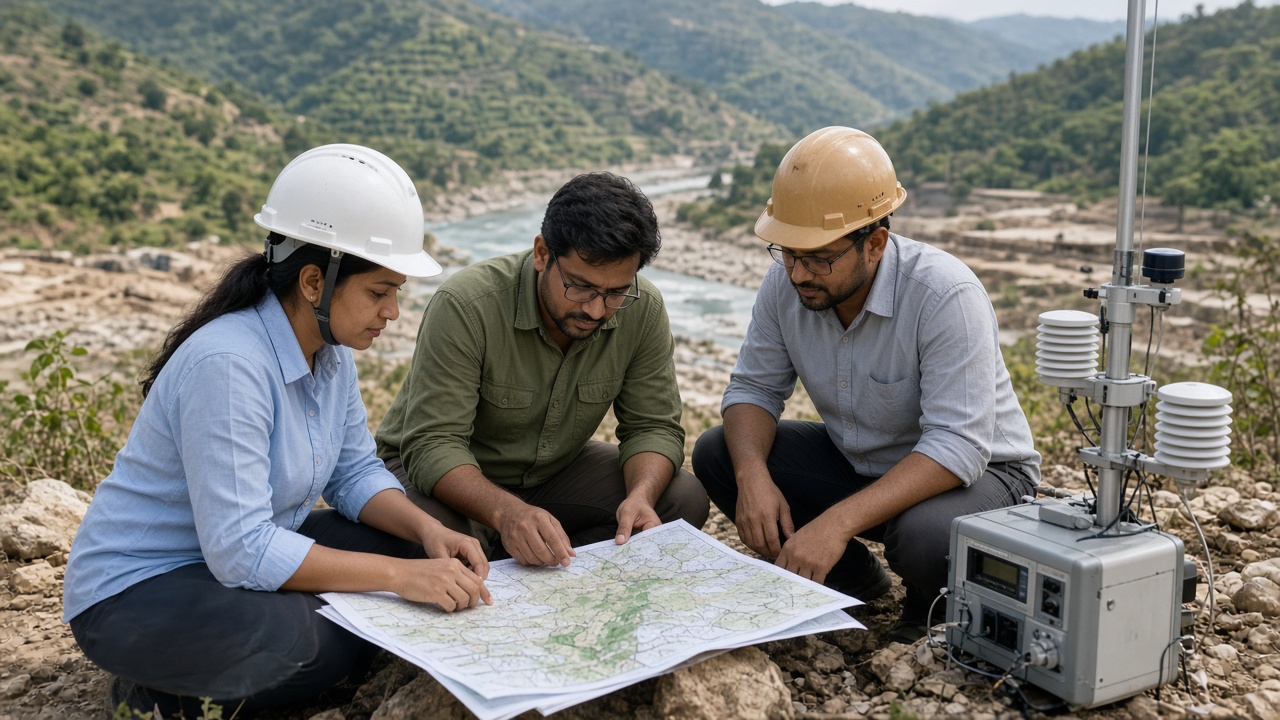
Environmental Impact Assessment identifies, predicts and evaluates likely impacts of a project on air, water, land, noise, ecology and people in the study area, then proposes mitigation and monitoring. It answers: If we build this, what changes, and how will we manage those changes?
EIA quality varies. Strong reports tie claims to maps, methods and site-specific data. Weak reports recycle generic paragraphs and fail expert scrutiny.
What Is Environmental Clearance?
Environmental Clearance is the administrative outcome. After reviewing the EIA (where required), public consultation record (where applicable) and responses to queries, the competent authority grants or refuses clearance. Without EC, an EIA is an engineering study — not a permit to establish a scheduled project.
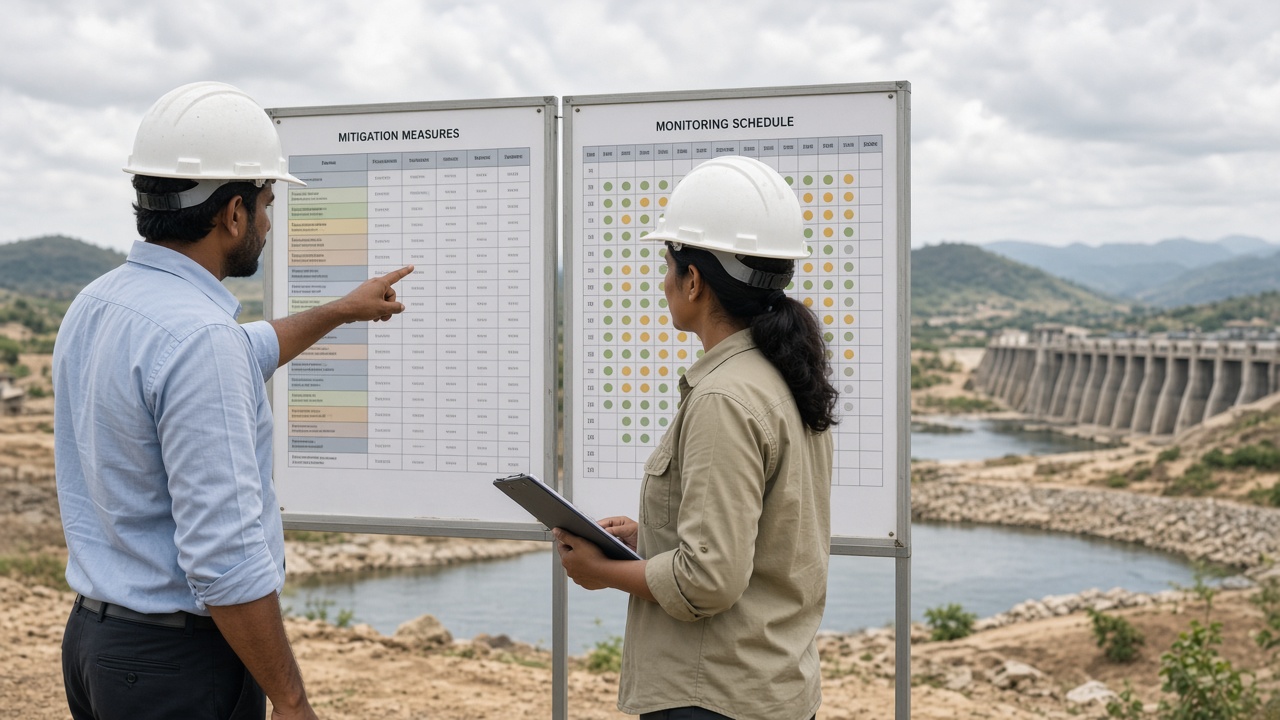
EC conditions typically bind the proponent to pollution control, plantation, monitoring frequencies, reporting cycles and other EMP-linked duties for the validity period or until formally amended.
How EIA and EC Are Connected
- Confirm when EC is required
- Obtain ToR / scoping where applicable
- Conduct baseline and prepare EIA + EMP
- Complete public consultation where required
- Undergo appraisal
- Receive EC decision
- Implement and report under post-EC compliance
EIA without EC is incomplete permission. EC without a usable EMP is a compliance trap. For the staged map, see the Environmental Clearance process in India.
Does Every EC Project Require the Same EIA Process?
No. Depth and formality depend on project category, schedule entry, ToR and current rules. Some pathways emphasise fuller EIA; others use shorter or differently scoped documentation as prescribed. Location and general/specific conditions can also change study emphasis.
Do not invent a one-size process from memory. Verify current applicability and documentation requirements against MoEFCC / PARIVESH / SEIAA Karnataka guidance for your schedule item.
Simple Example
A proposed industrial expansion in Karnataka is checked against the EIA schedule. The capacity increase falls within a scheduled band requiring prior EC through the state pathway.
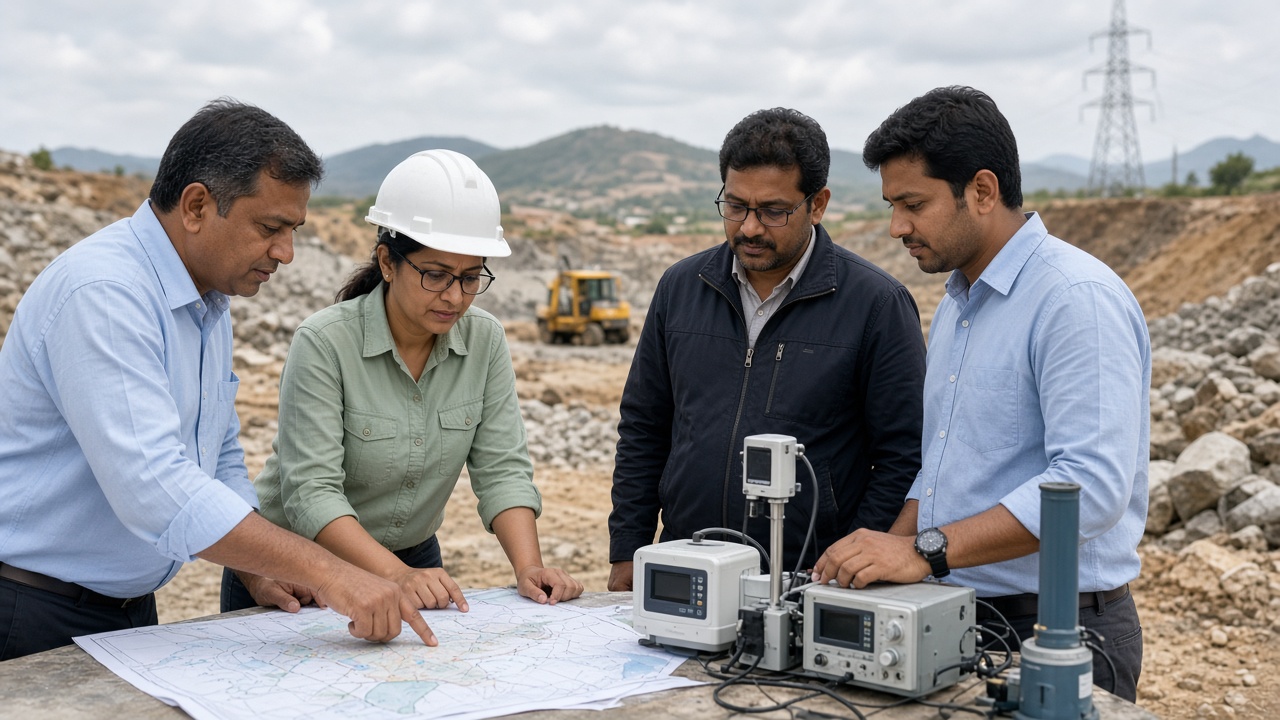
- The consultant prepares an EIA with seasonal baseline, impact prediction and an EMP naming treatment, monitoring and plantation actions
- After consultation (where required) and SEAC appraisal, SEIAA Karnataka grants EC with conditions
- Only then does the board treat the expansion as cleared for establishment sequencing — while still pursuing KSPCB CFE/CFO for operational consent
- Periodic compliance reports and EMP evidence become ongoing duties — the EIA PDF is no longer the main artefact
If management had treated “EIA submitted” as “cleared to build,” civil works could have begun without the EC letter — a regulatory and lender risk.
EIA/EC Project Planning Checklist
- Written project description frozen (capacity, technology, footprint)
- Applicability screened against current schedule
- Authority pathway identified (MoEFCC / SEIAA Karnataka)
- ToR / scoping items mapped to owners
- Baseline seasons and stations planned on maps
- EMP drafted with parameters, frequencies and responsibilities — not slogans
- Public consultation logistics owned (where applicable)
- Appraisal query buffer on the Gantt
- Post-EC register template ready before grant
- KSPCB consent track parallel, not forgotten
- Board briefed: EIA ≠ EC letter
Related reading
Common questions
Is EIA the same as EC?
No. EIA is the assessment study and evidence base; EC is the regulatory decision (grant/refuse/defer with conditions).
Is EIA mandatory for every project?
No. Depth and formality depend on whether EC applies and on the pathway prescribed for the schedule item. Confirm applicability first.
Official sources
PARIVESH
EC/EIA application workflow, notifications and compliance reporting
Ministry of Environment, Forest and Climate Change (MoEFCC)
EIA Notification framework and amendments
EIA Notification, 2006, consolidated as amended up to July 2026 (PARIVESH)
compilation only; the Gazette text prevails if they differ
EIA Notification, 2006, S.O. 1533(E) dated 14 September 2006, paragraph 9 as substituted by S.O. 1807(E) dated 12 April 2022 in that compilation
validity differs by project class
SEIAA Karnataka
state-level appraisal pathway where Category B applies
Confirm current schedule entries, forms and ToR practice on official channels before filing