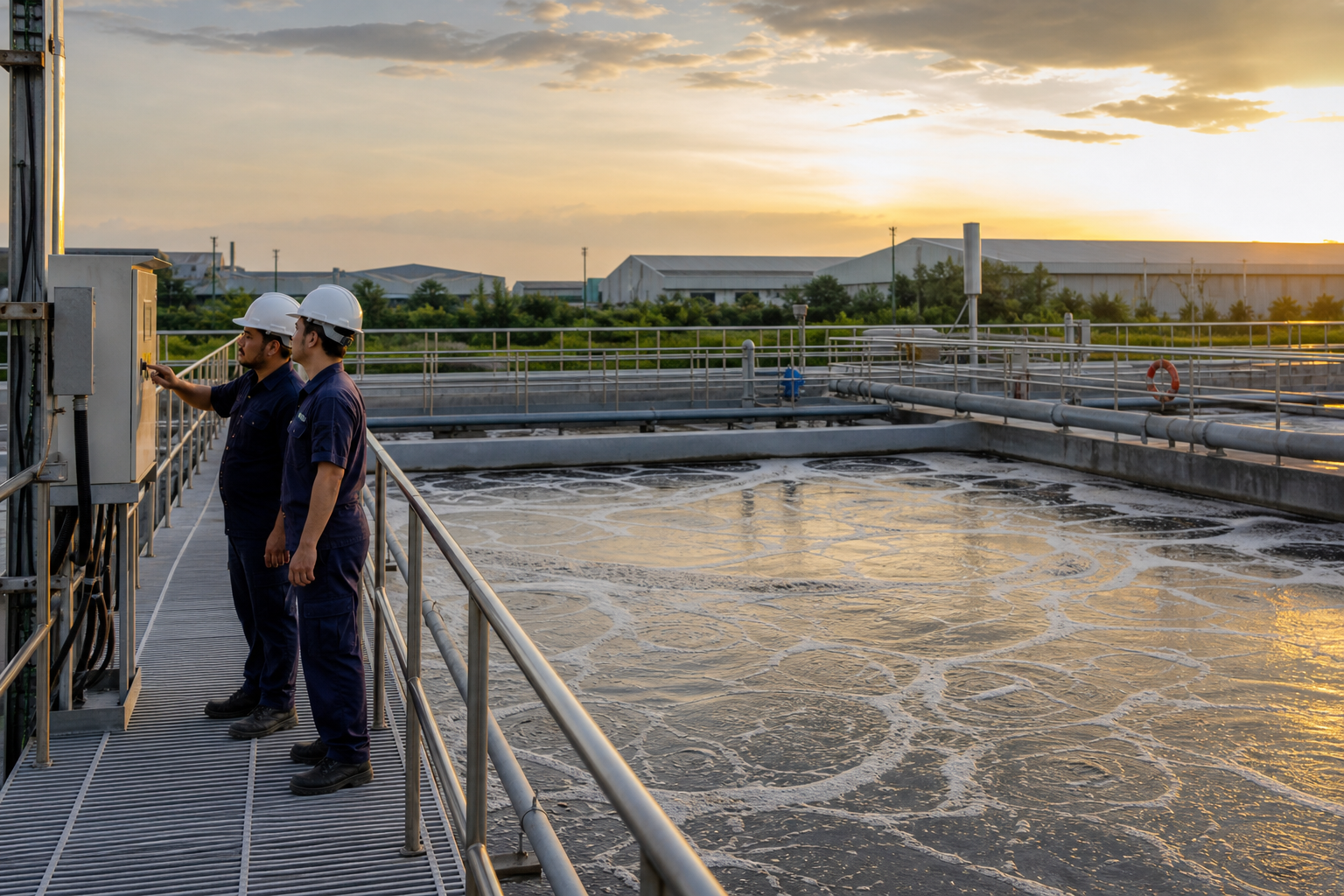
Phased occupancy vs STP design
Early towers underload biology; late phases overload—both create chronic exceedances.
Large residential projects trigger STP mandates, DG set stack conditions, and periodic CFO renewals. Odour, sludge disposal, and reuse quality drive complaints to KSPCB regional offices. RWAs and developers need an environmental consultant who can connect apartment STP performance with KSPCB consent and ongoing compliance—not only a vendor brochure.
STPs must handle phased tower occupancy without chronic exceedances. Consent drawings should match as-built MEP—critical for CFO and renewal. IE-RISE reviews hydraulics, sludge routes, and tertiary reuse before submission, and supports retainers, STP recovery projects, or full renewal packages across Bangalore Urban and Karnataka. For dedicated sewage-plant design and upgrades, see STP Consultant Bangalore.
Residential pain points
Where Bengaluru residential projects most often lose renewal or inspection confidence.
Early towers underload biology; late phases overload—both create chronic exceedances.
Flushing and landscaping reuse need monitoring, signage, and KSPCB-aligned quality records.
Missing O&M contracts, spares, and consent ownership create post-handover failures.
Outlet testing and logbooks reconstructed after complaints fail inspection scrutiny.
Backup power changes without air consent updates invite neighbourhood complaints.
Segregation and vendor gaps cross-check badly against STP sludge disposal narratives.
Some residential developments raise an Environmental Clearance question at layout or building stage, based on project category, scale and location. That is a developer-stage screening, not an automatic rule for every apartment. Once a project is occupied, the usual environmental duties are different: STP performance, wastewater and reuse, solid waste, DG sets and KSPCB consent.
IE-RISE separates those tracks. If the layout itself may need clearance, the construction page and the Environmental Clearance consultancy page are the right next step. If the building is already up, this page stays focused on operating compliance rather than restating the clearance process.
Flushing and landscaping reuse reduce Cauvery dependency when executed with clear monitoring and signage. Consent conditions often specify quality parameters—we document reuse in KSPCB filings and RWA SOPs. Rainwater harvesting complements STP reuse; integration must avoid cross-connection risks and satisfy planning conditions where applicable.
On-site segregation, composting where feasible, and vendor documentation reduce enforcement attention. KSPCB inspections may cross-check waste handling with STP sludge routes. Regular STP outlet testing with recognised labs and sustained logbooks for flow, power, and dosing build inspection credibility.
Backup power stacks appear in air consent schedules. Acoustic enclosures and stack heights matter in dense Bengaluru neighbourhoods—we update schedules when DG capacity changes.
KSPCB visits follow neighbour complaints or renewal cycles. Prepared document rooms and operator briefings reduce escalation to show-cause notices. Early RWA engagement ensures O&M contracts, spare parts, and consent responsibilities transfer cleanly—avoiding orphan STP failures common in new townships.
Related services
From STP recovery to consent renewals and inspection prep.
Yes—we set technical performance targets and review AMC reports while keeping the RWA informed on KSPCB obligations.
Thresholds depend on size, STP capacity, and DG assets. We confirm applicability for your Bengaluru project rather than guessing.
No. Clearance depends on the project category, scale and location under the EIA Notification. Many occupied apartments need STP and KSPCB consent without a new EC file. IE-RISE screens the specific scheme rather than treating residential projects as one case.
Take the next step
Share towers, STP status, occupancy phase, and any KSPCB correspondence.
Built for attribution, intent, and faster follow-up.
Your information is secure and used only for consultation.
What happens after you submit
A senior consultant reviews your requirement and calls you back, usually within one working day.
You get clear next steps on KSPCB consent (CFE/CFO), STP or ETP plant design, and the documents needed.
Prefer to start small? Ask for a compliance checklist, document list, or an approval timeline instead of a call.
“From compliance to cleaner operations — we help you move forward with confidence.”
Call us
+91 8088971526
Speak to our consulting team.
Email us
info@ierise.in
We'll get back to you soon.
Working hours
Mon - Sat: 10 AM - 7 PM
Office
# 3, Dr. B. R. Ambedkar Veedhi, Bengaluru-560 001
Quick queries? Chat with our team.
More industries