Treatability
Waste characterisation before major capex.
Direct answer
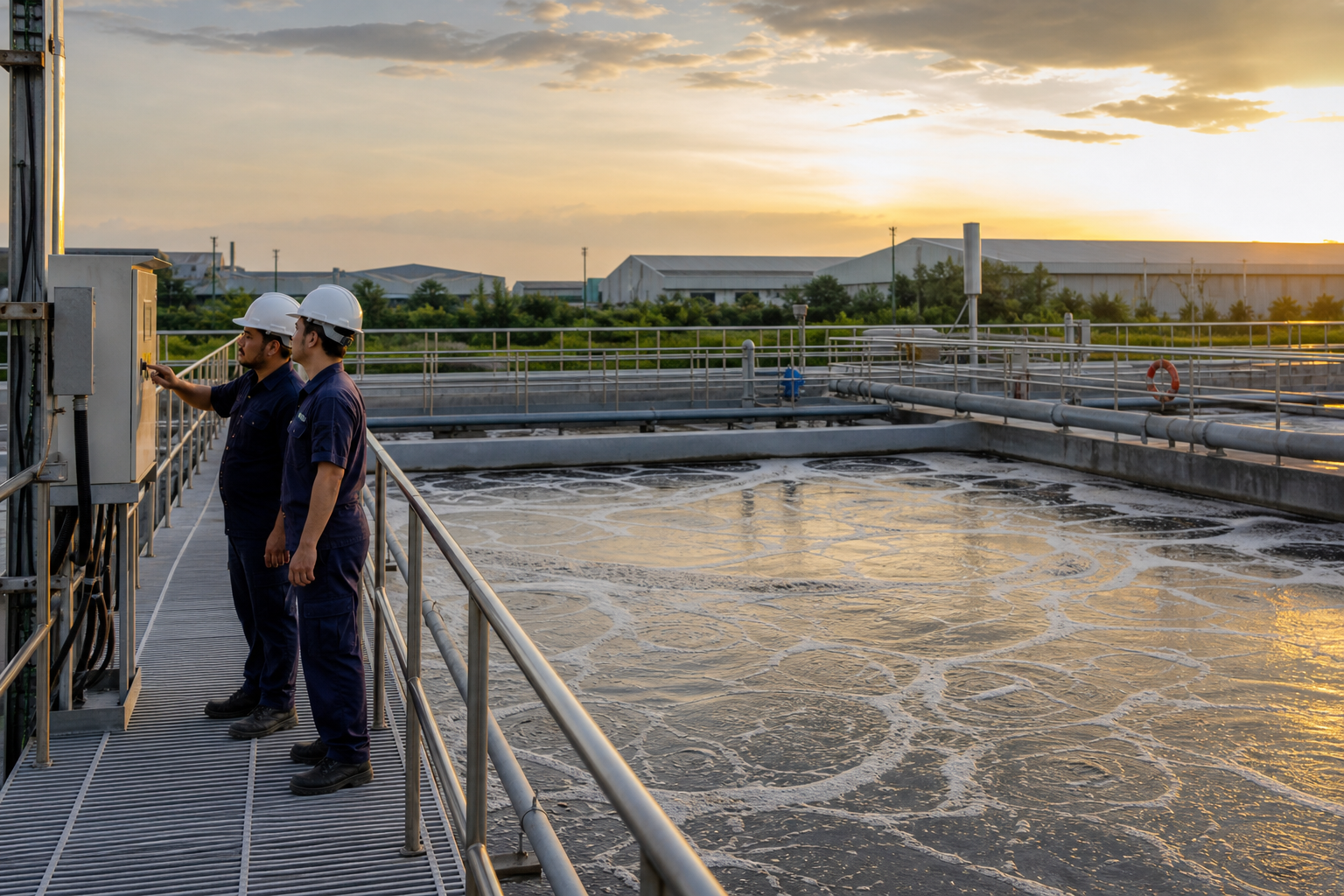
An effluent treatment plant (ETP) consultant diagnoses influent variability, unit operation sizing, and compliance with KSPCB consent and common effluent treatment plant (CETP) acceptance criteria. IE-RISE supports greenfield design review, brownfield modification and upgradation, and performance troubleshooting for Bengaluru industry—food, metal finishing, pharma, hospitals with process effluent, and general manufacturing—where oil, COD, or metals drive treatment complexity.
Treatability tests and mass balances precede major capital changes.
Metal finishing, food, pharma, textiles, and printing around Bangalore produce diverse COD, TDS, and metals loads. Treatability must be proven—not assumed from vendor datasheets.
IE-RISE runs structured waste characterisation plans.
Industrial effluent treatment and CETP pre-treatment for Karnataka factories.
Waste characterisation before major capex.
P&ID and stage peer review against consent limits.
Inlet charter protection and estate coordination.
KSPCB documentation when treatment trains change.
We review P&IDs, equalisation, DAF, biological stages, and tertiary polishing against consent limits and CETP charters.
Designs must survive monsoon dilution and production peaks.
Pre-treatment before Karnataka CETPs protects membership. Repeated inlet violations risk consent action.
We negotiate technical schedules with estate operators and KSPCB.
ZLD may be driven by policy, locality, or corporate targets. We assess RO/evaporator loads honestly—avoiding impossible O&M promises.
Bangalore power and scaling constraints factor into feasibility.
ETP changes trigger KSPCB amendments with updated balances and commissioning protocols.
Our dossiers match as-built installations for CFO.
High TDS, poor nitrification, or oil carryover need root-cause work—not chemical over-dosing alone.
We stabilise plants before inspection or show-cause deadlines.
ETP sludges may be hazardous depending on process. Storage and manifests must align with Karnataka rules.
SME plants near Bengaluru benefit from simplified SOPs and dosing charts tied to production shifts.
Review influent logs, grab samples, stage-wise performance, chemical consumption, and sludge generation versus design basis before specifying upgrades or consent amendments.
Design review and physico-chemical / biological stage optimisation
CETP pre-treatment and consent-amendment documentation
Industrial ETP modification when processes or throughput change
ETP work starts from characterisation and mass balance, then aligns unit operations with consent limits and receiver requirements. Dr. M. Inayathulla leads water-resources and environmental-engineering work at IE-RISE, grounding plant sizing, balances, and compliance narratives in hydraulics, treatability, and defensible monitoring rather than catalogue specifications.
Dr. M. Inayathulla — water resources & environmental engineering
Causes include shock loads, poor equalisation, inadequate nutrient balance, chemical dosing errors, or sludge carryover. IE-RISE stages testing to isolate the bottleneck.
An effluent treatment plant (ETP) treats industrial process wastewater through pretreatment, separation, and biological or advanced stages before discharge or reuse.
Yes. Pre-treatment must meet member bylaws and your CFO conditions; we document both in consent files.
When new processes, chemicals, or throughput change effluent quality or volume beyond approved limits.
Feasibility reviews cover salts balance, energy, and O&M before RO or evaporator capital is specified.
Yes when agreed—trial protocols should mirror expected operating variability.
Hourly flow, pH, COD or BOD spot checks, chemical dosing records, and maintenance notes for aeration and pumps.
Take the next step
Share sector, effluent characteristics, and discharge route (CETP, reuse, or ZLD).
Built for attribution, intent, and faster follow-up.
Your information is secure and used only for consultation.
What happens after you submit
A senior consultant reviews your requirement and calls you back, usually within one working day.
You get clear next steps on KSPCB consent (CFE/CFO), STP or ETP plant design, and the documents needed.
Prefer to start small? Ask for a compliance checklist, document list, or an approval timeline instead of a call.
“From compliance to cleaner operations — we help you move forward with confidence.”
Call us
+91 8088971526
Speak to our consulting team.
Email us
info@ierise.in
We'll get back to you soon.
Working hours
Mon - Sat: 10 AM - 7 PM
Office
# 3, Dr. B. R. Ambedkar Veedhi, Bengaluru-560 001
Quick queries? Chat with our team.