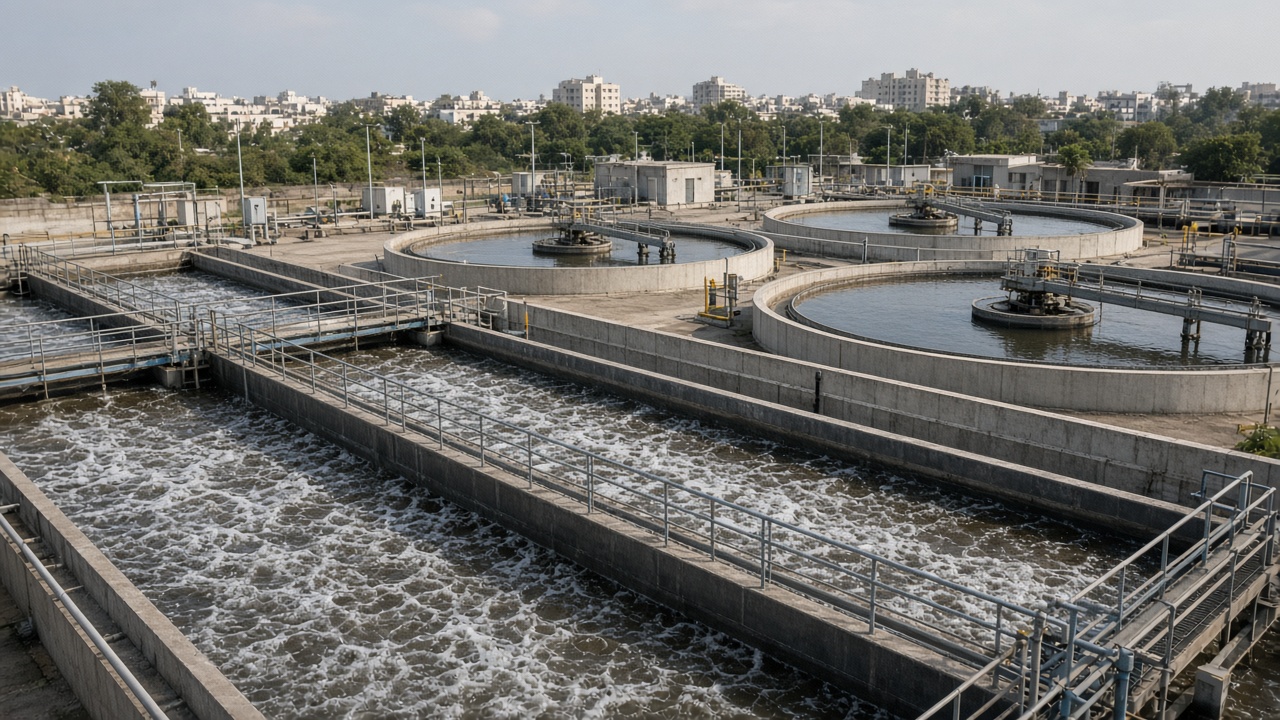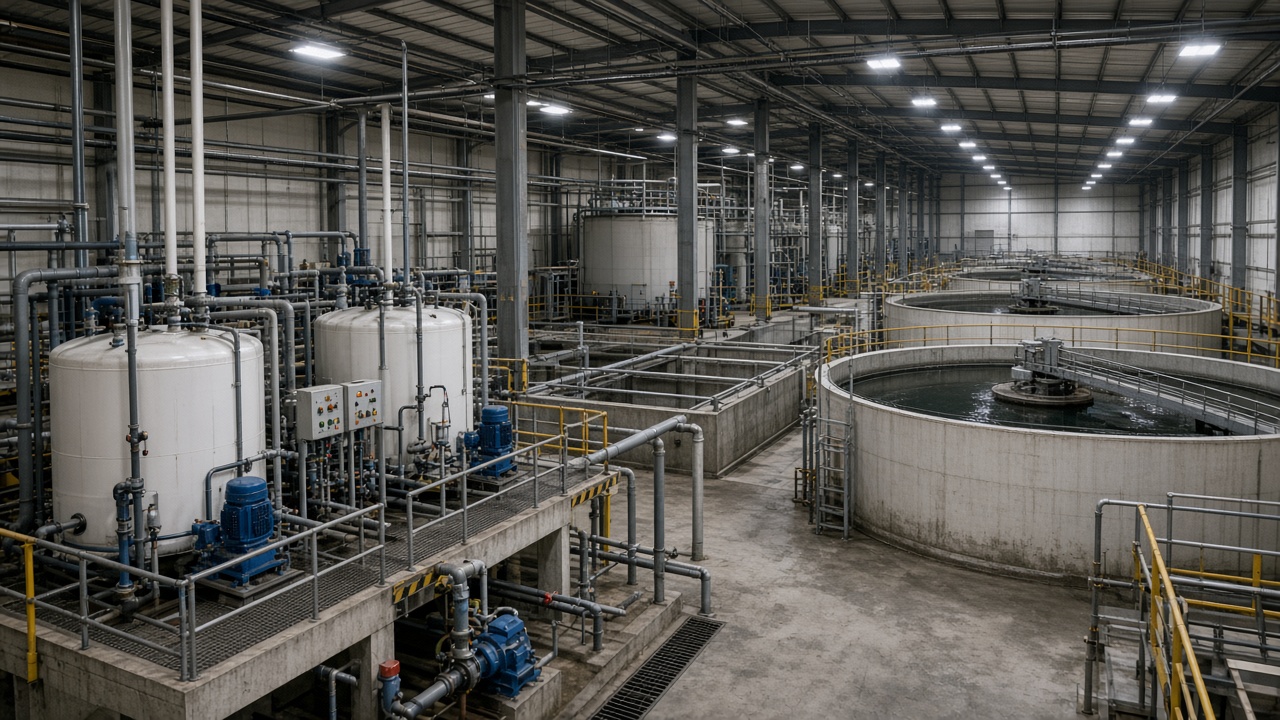
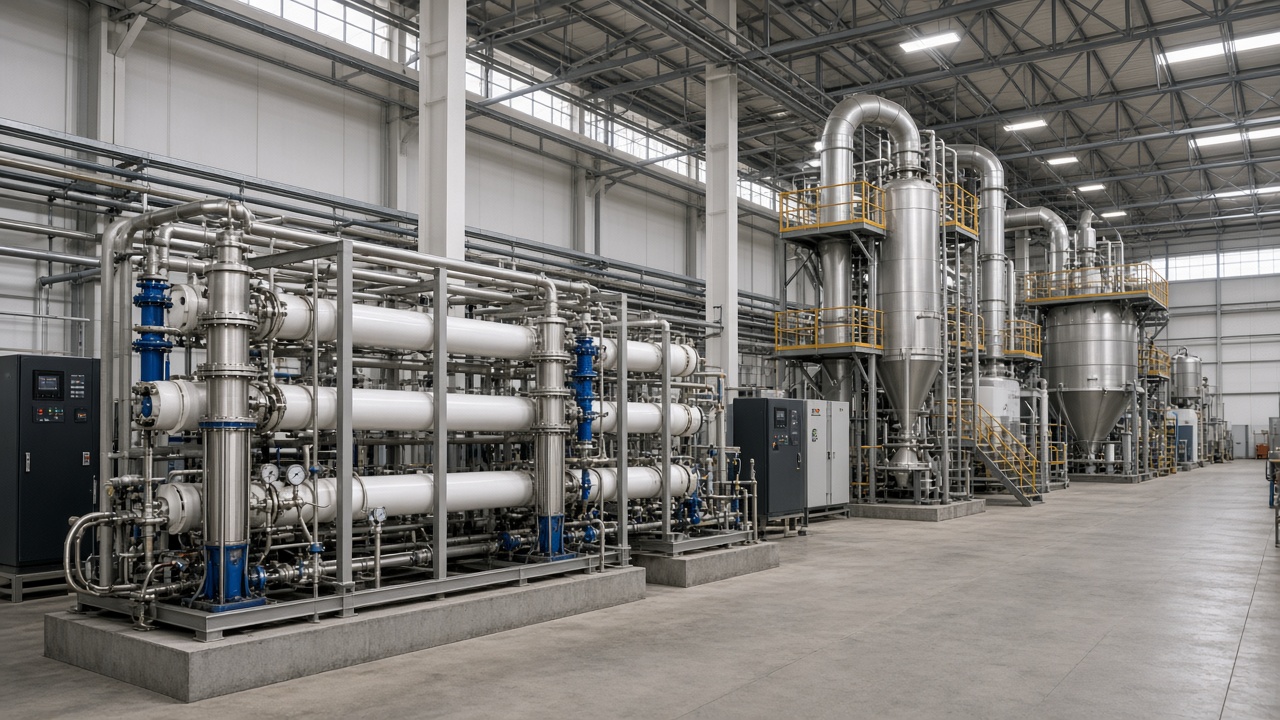
Zero Liquid Discharge (ZLD) means designing and operating a wastewater system so that, for practical compliance purposes, liquid effluent does not leave the site as an uncontrolled discharge. Recovered water returns to process or utility use; salts and concentrates are managed as solids or authorised residual streams. Exact wording in a consent order or Environmental Clearance may define what “zero” means for your facility — always read your own conditions.
ZLD is not a single machine brand. It is a capability: influent characterisation, pretreatment, membrane recovery, concentrate management, energy and chemical discipline, and monitoring that still makes sense on a night shift. Vendor brochures describe equipment; capability describes whether the train still works when production recipes change, wash days spike, or a heat exchanger fouls on a holiday weekend.
What Is Zero Liquid Discharge?
In engineering terms, ZLD aims for maximum water recovery from industrial effluent with controlled handling of the residual brine or salt cake. Upstream treatment must make the stream suitable for membranes and thermal units. Downstream, solids handling, packaging and authorised disposal complete the mass balance.
ZLD is often written into tenders and ESG notes as if it were a switch. On a working site it is a chain. When that chain breaks, the failure is rarely “the membrane alone”. It is usually missing samples, overloaded equalisation, chemistry that no longer matches the influent, or a recovery unit commissioned for brochure TDS instead of real chemistry.
Benefits of a well-run ZLD capability include reduced dependence on freshwater intake, tighter control of fence-line discharge risk, and a clearer mass balance for salts. Limitations are equally real: high energy use, skilled O&M demand, sensitivity to influent swings, and the need for an authorised residual pathway. Cost is driven by CapEx for membranes and thermal units plus ongoing power, chemicals, cleaning and disposal — evaluated site-specifically. This article does not invent rupee CapEx/OPEX figures.
Related definitions: a Sewage Treatment Plant (STP) treats domestic sewage; an Effluent Treatment Plant (ETP) treats industrial process wastewater. ZLD typically sits after — or integrated with — industrial pretreatment and high-recovery membrane stages.
How a ZLD System Works
Every plant is site-specific, but industrial ZLD trains usually share these stages.
Pretreatment
Remove solids, oils, free chlorine where harmful, and extremes of pH or temperature. Stabilise COD and suspended solids enough that membranes and evaporators see a predictable feed. Without equalisation and reliable primary or secondary treatment, fouling and scaling destroy both recovery and economics. Stream segregation — keeping strong rinses, spent baths or oily pockets off the main train — often does more for ZLD reliability than adding another polishing skid at the end.
Membrane recovery (RO / NF)
Reverse osmosis (and sometimes nanofiltration) recovers a large fraction of water as permeate. Recovery percentage is a design choice constrained by osmotic pressure, scaling salts, organics and temperature — not a marketing target. Antiscalant selection, cartridge filtration and clean-in-place discipline decide whether RO stays online. Design teams should document cleaning triggers (delta pressure, normalised flux) so operations do not wait until irreversible fouling.
Concentrate / reject management
RO reject is not “almost finished water”. It is a concentrated stream that must be accounted for in the water balance. Intermediate storage, further concentration, or thermal feed preparation belong here. Silent overflow of reject into storm drains is a classic compliance failure mode. Volume of reject shrinks as recovery rises, but concentration and scaling tendency rise with it — plan storage and heat-exchange surfaces accordingly.
Evaporation
Thermal evaporators further concentrate brine when membranes alone cannot meet recovery goals. Energy intensity, heat-transfer fouling and materials of construction dominate OPEX and reliability. Design against the actual boiling-point elevation and fouling species of your brine, not a generic data sheet.
Crystallisation / solids handling
Crystallisers or related solidification steps convert residual liquor into salts or a handleable cake. Product quality, hygroscopic behaviour and disposal pathway must be planned before commissioning — not after the first drum fills the yard.
Water recovery and reuse
Permeate and condensate return to process, cooling, boiler make-up (with polishing where needed) or other approved uses. Recovery only “counts” if quality stays inside the specification the process can accept and the consent allows.
Who May Need ZLD?
ZLD appears most often where water is scarce, discharge standards are tight, estate inlet norms are strict, or consent / clearance conditions explicitly require high recovery or no liquid discharge. Typical contexts include certain chemical, pharmaceutical, textile, dye, metal-finishing and food-processing facilities — and industrial estates that push members toward high reuse.
Need is driven by site conditions and regulatory instruments, not by industry name alone. Two plants in the same sector can have different obligations. Confirm applicability from your category, location, consent conditions and any Environmental Clearance text.
Key Components Checklist
| Component | Role | Failure if neglected |
|---|---|---|
| Characterisation & segregation | Honest feed chemistry | Wrong recovery set-points |
| Equalisation / pretreatment | Stable membrane feed | Chronic fouling |
| RO / NF train | Water recovery | Forced recovery cutbacks |
| Reject storage & transfer | Contain concentrate | Undeclared overflow |
| Evaporator / MEE | Further concentration | Energy shock / fouling |
| Crystalliser / dryer | Solids product | Yard filled with wet salt |
| Utilities (power/steam/cooling) | Keep thermal duty alive | Intermittent “ZLD” |
| Monitoring & calibration | Defend consent narrative | Paper logs only |
| Authorised residual outlet | Close the mass balance | Compliance risk |
When Does ZLD Make Sense?
ZLD makes engineering sense when:
- discharge options are constrained or unavailable at the quality and volume you generate
- water purchase or scarcity costs justify recovery CapEx and energy
- upstream streams can be segregated so high-TDS or toxic pockets do not contaminate the whole train
- the organisation will fund O&M, spares, chemicals and trained operators for thermal and membrane units
- utilities (power, steam, cooling water, spare parts logistics) can support continuous thermal duty where needed
ZLD is a poor fit when influent is undefined, production recipes change weekly without resampling, or management expects “set and forget”. In those cases, fix characterisation and pretreatment first. A staged approach — harden the ETP, then raise membrane recovery, then evaluate thermal steps — often reduces stranded CapEx compared with buying a full ZLD package on incomplete data.
ZLD vs High-Recovery RO
High-recovery RO maximises permeate without necessarily eliminating liquid reject. ZLD closes the loop by managing remaining concentrate to solids or authorised residual forms.
Choosing high recovery instead of full ZLD can be rational where law and consent allow a controlled liquid outlet — for example to a Common Effluent Treatment Plant (CETP) within inlet norms, or another approved pathway. Do not assume; verify. Over-claiming “ZLD” while tankering or discharging reject is both an engineering and a compliance problem.
Practically, compare options on three axes: permitted outlet quality and volume, lifetime energy and chemical cost, and residual solids logistics. The “cheapest” RO skid that leaves an unmanageable brine problem is not cheaper.
Key Parameters That Determine ZLD Performance
| Parameter | Why it matters | Practical note |
|---|---|---|
| TDS / salinity | Sets osmotic pressure, boiling-point rise and salt load | Design on measured ranges, including peaks |
| COD / organics | Fouls membranes and thermal surfaces | May need biological or advanced oxidation upstream |
| Scaling ions | Limit RO recovery and foul evaporators | Softening, antiscalant and recovery set-points |
| Recovery target | Drives CapEx, energy and concentrate volume | Higher recovery is not always better |
| Energy | Dominates ZLD OPEX | Heat integration and availability matter |
| Reject characteristics | Decide crystalliser design and disposal | Hygroscopic salts need storage discipline |
| Temperature, silica, hardness, O&G | Site-specific fouling / scaling | Track in the monitoring schedule |
ZLD vs conventional wastewater treatment
| Conventional ETP / discharge or CETP path | ZLD | |
|---|---|---|
| Goal | Meet outlet standards for an authorised discharge / CETP inlet | Maximise recovery; manage residual brine / salts as solids or authorised residuals |
| Liquid outlet | Usually retained (within standards) | Minimised / eliminated per consent definition of “zero” |
| Complexity | Lower thermal duty | Membranes + often thermal concentration |
| OPEX profile | Chemicals, power, sludge | Higher energy; skilled O&M; salt logistics |
High-recovery RO is not automatically ZLD. Choosing conventional treatment or high recovery instead of full ZLD can be rational where law and consent allow a controlled liquid outlet — verify; do not assume.
Common ZLD Failure Points
- Influent variability ignored — wash days and campaign production shock the train
- Equalisation undersized or bypassed
- RO recovery pushed beyond stable chemistry
- Chemical dosing based on last year’s jar test
- Evaporator fouling with no cleaning programme
- Crystalliser product with nowhere authorised to go
- Online instruments uncalibrated; paper logs filled at month-end
- Night-shift emergency overflows that never appear in the daytime tour
- Shared drains that mix incompatible streams after the design was frozen
- Spare-parts and antiscalant stockouts that force recovery cutbacks without updating the compliance narrative
- Calling tankering “temporary ZLD” without documenting receivers and end points
IE-RISE treats ZLD as operations: process units, monitoring points, and the decisions that keep recovered water inside specification. Training operators to recognise early fouling and reject-tank level risk prevents many “sudden” failures.
ZLD and KSPCB compliance
For Karnataka facilities, KSPCB consent language and any linked Environmental Clearance conditions are the binding reference — not vendor brochures. Consent and clearance conditions — where they apply — may specify recovery expectations, monitoring points, online parameters such as conductivity, and reporting. Align sample points with the actual hydraulic path: inlet to ZLD train, permeate, condensate, reject and final solid/residual streams.
Keep calibration certificates current for flow and online quality meters. Investigation notes for outliers belong in the file before an inspector asks. Build a simple water-and-salt balance that production, EHS and the control room can all read. When production recipes change, update the balance and resampling plan — do not wait for the next consent renewal crisis.
See also ETP, STP and CFO documents.
ZLD Feasibility Assessment
A feasibility assessment should answer whether ZLD is technically and economically appropriate for this facility, not whether a brochure looks impressive. Do not expect a universal cost number from a blog article.
| Issue | Engineering implication | What should be assessed |
|---|---|---|
| Undefined influent | Membranes and evaporators cannot be sized honestly | Campaign sampling, peak vs average, segregation options |
| High organics / oils | Fouling and poor RO flux | Pretreatment train and COD reduction path |
| Scaling salts | Recovery capped; cleaning frequency rises | Softening, antiscalant strategy, realistic recovery |
| Energy / utilities | OPEX dominates lifetime cost | Steam, power, heat recovery, standby |
| Reject / salt outlet | Compliance risk if disposal path is weak | Authorised disposal, storage, transport |
| Operations maturity | ZLD fails without ownership | Staffing, SOPs, night-shift accountability |
| Consent / EC wording | Legal definition of “zero” | Condition-by-condition gap review |
Feasibility questions before a vendor presentation
- Who owns influent variability when recipes change?
- What happens to reject when recovery is down?
- Which parameters are logged often enough to defend a consent condition?
- Can utilities support thermal duty continuously, not only on demonstration day?
- Is the residual solids pathway authorised and logistically real?
Those questions belong in the control room as much as in the boardroom.
Need a structured look at ZLD for your site? See ZLD consultancy and related wastewater support for ETP and STP systems.
Common questions
Is ZLD the same as high-recovery RO?
No. High-recovery RO maximises permeate; ZLD also manages remaining concentrate to solids or authorised residual forms per consent definition.
Does ZLD replace KSPCB consent?
No. ZLD is a treatment capability. Consent and any EC conditions remain the binding compliance reference.
Official sources
Karnataka State Pollution Control Board (KSPCB)
consent, inspection and compliance communications
Central Pollution Control Board (CPCB)
industry categorisation and national guidance referenced by state boards
Water (Prevention and Control of Pollution) Act, 1974 and Air (Prevention and Control of Pollution) Act, 1981
primary statutory frameworks for consent (verify current text and rules)
Environment (Protection) Act, 1986
umbrella framework for related rules where cited
Always verify current application fields, fees and checklists on the live KSPCB portal for your category