KSPCB inspections turn Consent for Establishment (CFE) and Consent for Operation (CFO) into site verification. Whether the visit is routine, renewal-linked, complaint-driven, or part of a special drive, the pattern across Karnataka is consistent: confirm identity and consent, review records, walk pollution paths, observe wastewater, air, and waste controls, and record findings that may lead to advice, queries, or formal notices.
This page follows a practical before → documents → site → media → sampling → post-visit flow, plus a readiness checklist. Always verify current expectations against your consent order and any notice you receive.
What does KSPCB check during an inspection?
| Area | What may be checked |
|---|---|
| Consent | Validity and conditions |
| Production | Actual vs approved |
| Water | Consumption and balance |
| ETP/STP | Operation and capacity |
| Air emissions | Stacks / control equipment |
| Waste | Storage and disposal |
| Records | Logs, reports, manifests |
| Sampling | Effluent / emission parameters |
Why KSPCB Conducts Inspections
Inspections help the board verify that facilities operate within consented capacity and conditions under the Water Act, Air Act, and related rules administered through KSPCB. Triggers include surveillance programmes, renewal or CFO assessment, public complaints, accident follow-up, and verification after earlier directions. The visit is an evidence exercise — not a debating contest.
How to prepare for a KSPCB inspection
- Locate the latest CFO / CFE orders, amendments and authorisations at a known place
- Assign a spokesperson plus escorts for ETP/STP, stacks and waste areas
- Index monitoring packs, calibration certificates and waste manifests for the period of interest
- Walk the plant yourself for bypass lines, overflowing pits and unlabelled drums
- Verify ETP/STP runs at representative production load — not only on a quiet shift
- Confirm stack / DG / boiler sources match the consent inventory
- Close or honestly status prior open observations
- Brief management: factual answers only; no speculation on unsupported numbers
- Prepare PPE and safe access for confined or elevated sampling points
- Keep a notes / photo plan for your own record of the visit
If the visit is tied to consent renewal, treat the pre-walk as a mock inspection.
Before the Inspection
Before officers arrive (or as soon as a visit is notified), complete the ten-point list above and keep originals or controlled copies ready — scrambling for “the soft copy on someone’s laptop” is a common failure mode.
Documents and Records Review
Inspectors commonly ask for:
| Record | What they look for | Common issue |
|---|---|---|
| Consent orders & amendments | Validity, capacity, conditions | Missing amendments |
| Condition register | Evidence against each condition | Register not maintained |
| Process description | Match to shop floor | Brochure vs reality |
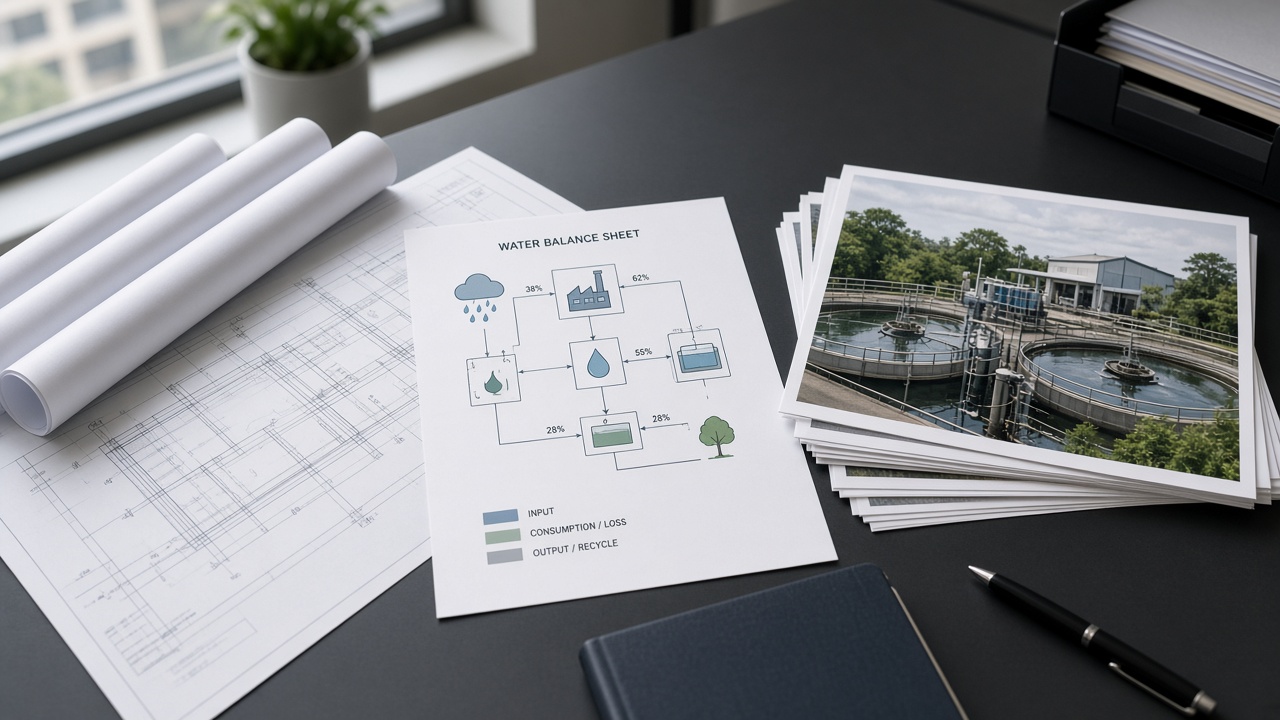
| Water / material balances | Load credibility | Unreconciled figures |
| Lab reports & online data | Schedule, outliers, calibration | Gaps / expired certificates |
| Hazardous waste manifests | Trail and storage period | Incomplete returns |
| Prior replies / closures | Follow-through | Open observations |
Keep originals or controlled copies ready at a known location — scrambling for “the soft copy on someone’s laptop” is a common failure mode.
Site Walk-Through
A typical walk moves from process areas to drains, treatment, stacks, DG sets, and waste storage. Officers may photograph observations. Escort safely, provide requested documents promptly, and do not conceal areas. Argument without evidence rarely helps; calm factual clarification does.
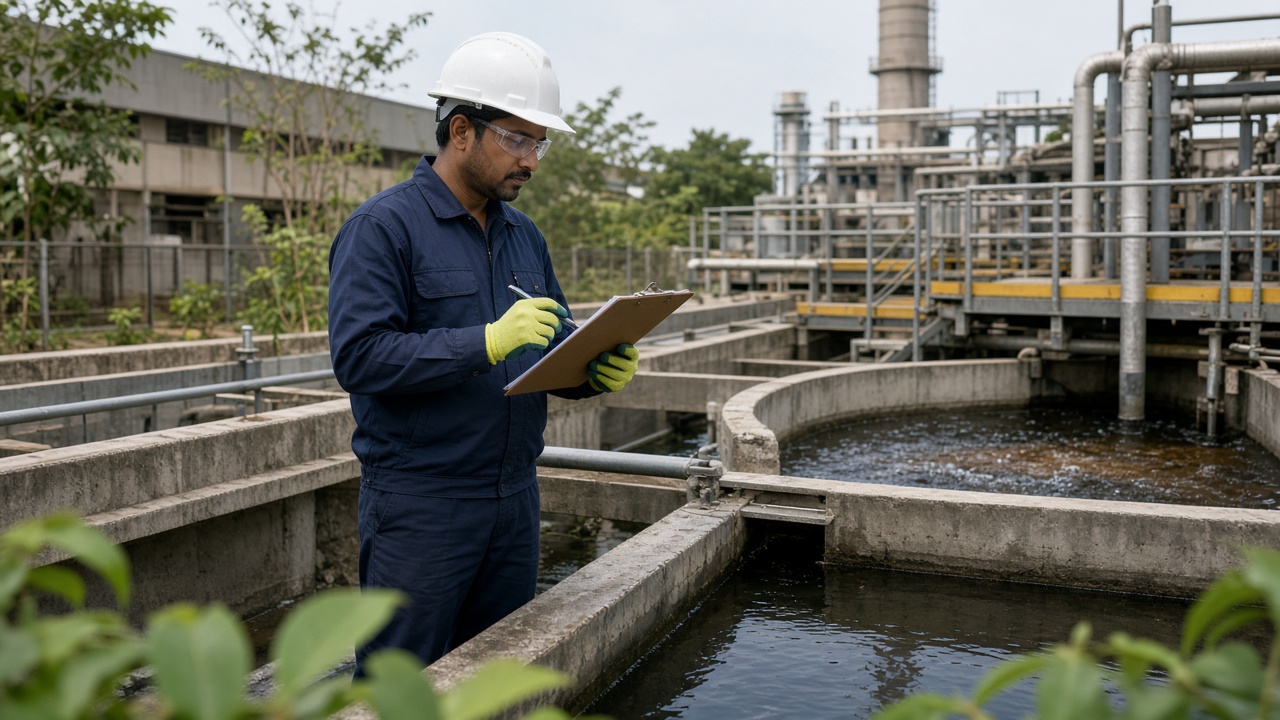
Wastewater Path Check
Trace colour, odour, foam, and flow from shop floor to equalisation and treatment stages. Confirm sludge handling and whether the plant runs at representative production — not only on a quiet shift. Watch for bypass, storm mixing, and idle treatment at peak load.
| Check | Ready if… |
|---|---|
| Source → treatment path | Walkable without unexplained taps |
| Equalisation / treatment | Running at representative load |
| Outlet / reuse | Matches consent narrative |
| Sludge | Handling and disposal trail clear |
Air Emissions Check
Check control equipment status, stack access safety, fuel records, and fugitive sources in solvent or powder areas. Confirm DG / boiler sources are listed and maintained.
| Check | Ready if… |
|---|---|
| Stack inventory | Matches consent |
| APC equipment | Maintained; accessible safely |
| Fuel / DG logs | Available for the period |
| Fugitives | Controls visible in problem areas |
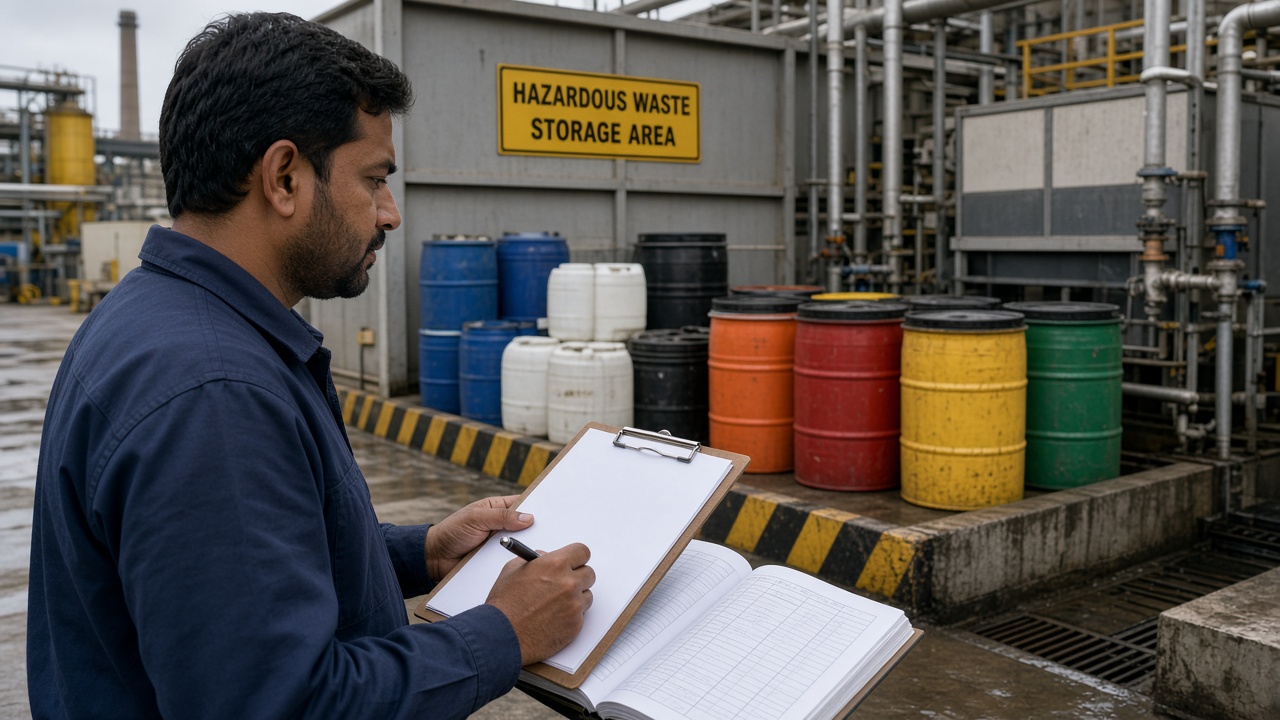
Waste Storage Check
Verify segregation, labelling, secondary containment, authorised disposal pathways, and storage period discipline.
| Check | Ready if… |
|---|---|
| Segregation & labels | Correct and current |
| Containment | Bunds intact; no mixed HW |
| Manifests | Complete for recent movements |
| Storage time | Within authorised practice |
ETP / STP Performance Check
Inspectors often ask whether treatment works when the plant is busy. Have O&M logs, power backup notes, and recent outlet data ready. Design capacity claims without sludge handling or spare critical parts invite findings.
Sampling During Inspection
When sampling is done — effluent, emissions, or other media — cooperate with labelling and custody discipline. Note sample points, times, and who was present. Your own duplicate observations (where allowed and safe) help later replies.
After the Inspection
Outcomes range from verbal advice to written observations, compliance timelines, or escalation toward show-cause or other enforcement — depending on severity and history, subject to due process. After the visit:
- Document what was shown and said while memory is fresh
- Close easy gaps immediately with photo evidence
- Prepare a factual reply if a report or notice arrives (see How to respond to a KSPCB show-cause notice)
- Update the condition register so the next visit starts cleaner
Inspection readiness checklist (full)
- Valid CFO/CFE and amendments available at gate / environment office
- Authorised spokesperson and technical escorts named
- Condition register printed with evidence folders
- Monitoring pack (period covered + calibration) indexed
- Waste storage walk completed; labels and manifests current
- ETP/STP run status verified at normal production load
- Storm and process drains checked for illegal connections
- Stack / DG / boiler sources listed and accessible safely
- PPE and access arrangements for confined or elevated areas
- Camera / notes plan for your own record of the visit
- Prior open observations closed or status explained honestly
- Emergency contacts for lab and treatment vendors available
Inspections reward plants that already operate this way every week. Last-minute painting without records does not survive sampling.
Expecting a KSPCB inspection? Request readiness support via KSPCB inspection consultancy.
Common questions
What is a KSPCB inspection really checking?
Evidence that the plant matches consented capacity, pollution controls, monitoring and waste practice — not only whether a consent PDF exists in a filing cabinet.
How should we prepare?
Walk the site against the consent order, fix obvious mismatches, index key records, and brief people who will speak to officers. Preparation is operational, not theatrical.
Official sources
Karnataka State Pollution Control Board (KSPCB)
consent, inspection and compliance communications
Central Pollution Control Board (CPCB)
industry categorisation and national guidance referenced by state boards
Water (Prevention and Control of Pollution) Act, 1974 and Air (Prevention and Control of Pollution) Act, 1981
primary statutory frameworks for consent (verify current text and rules)
Environment (Protection) Act, 1986
umbrella framework for related rules where cited
Always verify current application fields, fees and checklists on the live KSPCB portal for your category