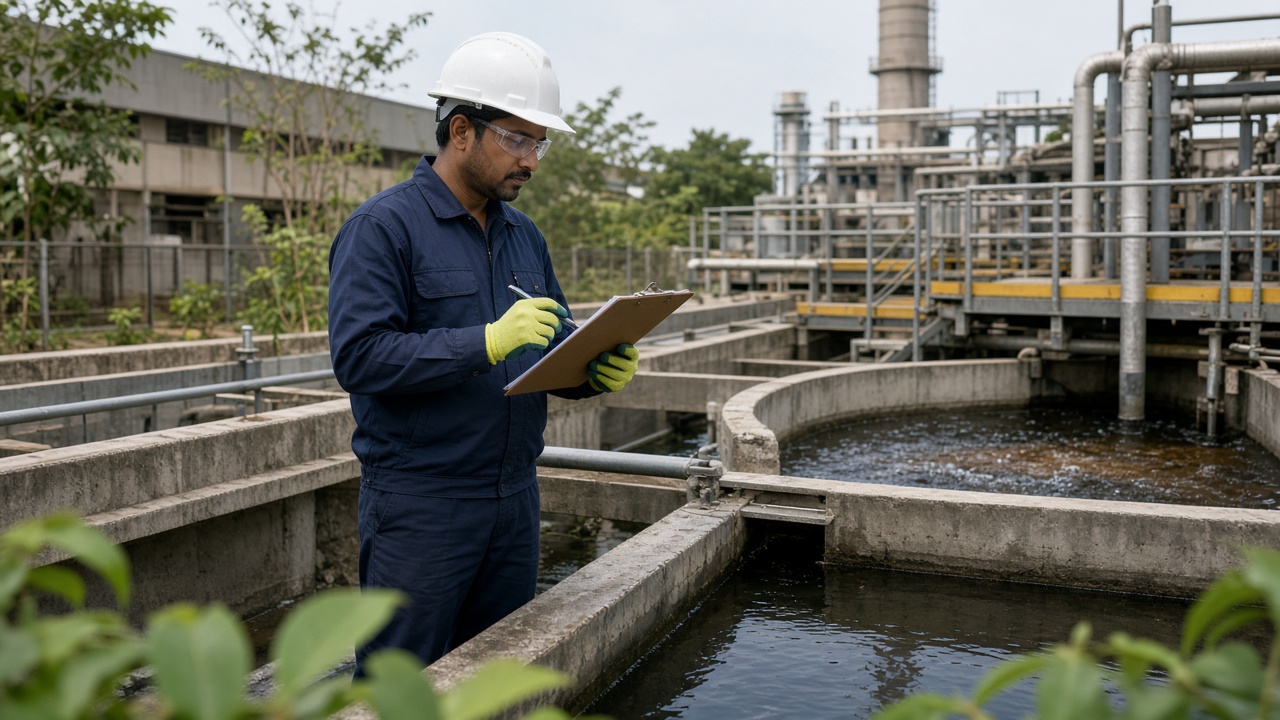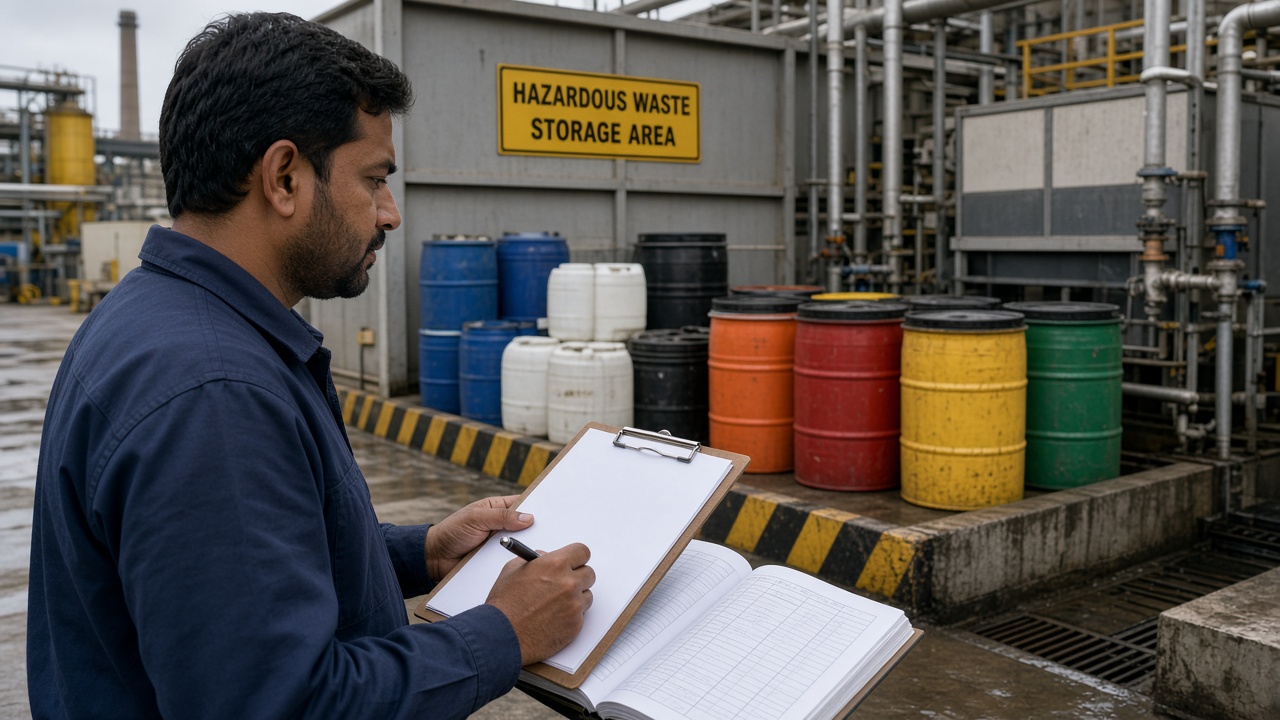

A show-cause notice from the Karnataka State Pollution Control Board (KSPCB) is a formal enforcement step. It sets out alleged facts — for example expired consent, monitoring exceedance, treatment bypass, waste violations, or misdeclaration — and asks why the board should not take further action. Ignoring deadlines or replying with vague promises usually worsens outcomes.
IE-RISE provides environmental compliance and engineering support for understanding the notice, assembling evidence, and planning corrective works. IE-RISE is not a law firm; where legal strategy, representation, or litigation risk is central, involve appropriate legal counsel.
What Is a KSPCB Show-Cause Notice?
It is a written communication requiring the occupier to explain, with facts, why proposed or contemplated regulatory action should not follow from stated observations or alleged contraventions. It typically references inspection findings, consent conditions, and applicable provisions under the Water Act, Air Act, Environment (Protection) Act framework, or related rules as cited in the notice itself — always read the specific citations in your copy.
What to Do Immediately After Receiving One
- Record the date of receipt and the reply deadline on a compliance calendar.
- Circulate the notice to management, environment, maintenance, and legal (as needed) — not only to one junior staff member.
- Preserve evidence from the alleged period (logs, SCADA, lab reports, photos). Do not destroy or “tidy away” records.
- Stop ongoing unsafe or non-compliant practices that the notice correctly identifies, with interim safeguards where needed.
- Decide whether you need environmental consultancy, legal support, or both.
How to analyse the allegations
Break the notice into numbered issues. For each issue, identify the alleged date, location, consent condition or rule cited, and the observation. Then fill a working table:
| Notice issue | Evidence to review | Corrective action |
|---|---|---|
| Expired consent | Consent order | Renewal |
| ETP non-compliance | Lab reports | Treatment correction |
| Excess pollution | Monitoring records | Root-cause correction |
| Waste issue | Manifests / registers | Correct storage / disposal |
| Bypass allegation | Flow records / photos | Investigation / remediation |
| Capacity / product mismatch vs consent | Production records, CFE/CFO conditions | Amendment or revised consent as required |
If an allegation is factually wrong, prove it with dated records — not adjectives.
Documents and evidence to attach
- Full show-cause notice and any annexed inspection report
- Current and prior CFE / CFO orders and amendments
- Monitoring data covering the alleged period
- Waste manifests and authorisations
- Maintenance and downtime logs for treatment systems
- Prior replies to KSPCB and closure evidence
- Photographs or videos with timestamps if available
- Correspondence that shows interim steps already taken
How to prepare the reply
Cover reference
Open with notice number, date, unit name and address, authorised signatory, and a one-paragraph acknowledgement that the notice was received and is being answered point-by-point. Keep tone respectful and precise.
Point-by-point replies
Mirror the notice numbering. For each point:
- Restate the allegation briefly
- State facts with dates and locations
- Attach annexure references (e.g. Annexure A-3)
- Admit gaps honestly where true; do not invent defences
- Separate facts about the past from corrective actions going forward
Factual narrative vs corrective plan
Do not bury engineering fixes inside legal rhetoric. Use a short factual narrative for what happened, then a corrective action table:
| Action | Owner | Target date | Interim control | Evidence on completion |
|---|---|---|---|---|
| e.g. Restore ETP aeration | Maintenance | Credible date | Reduce load / stop line if needed | Photos + outlet lab |
| e.g. File renewal / amendment | Compliance | Credible date | Operating status clarified | Portal acknowledgement |
Indexed annexures
Tab annexures so a reviewer can find them. Use consistent filenames, page numbers, and a contents list. Every claim in the letter should point to an annexure. Avoid dumping unsorted PDFs.
Undertaking and dates
Undertakings should be realistic. Over-promising dates you cannot meet damages credibility at follow-up inspection. Where engineering takes time, describe interim risk controls (line stoppage, tanker removal, temporary bunding) that show good faith.
Hearing request (where appropriate)
Where appropriate and permitted, request a personal hearing in measured language, and prepare the same evidence pack for the hearing as for the written reply.
What not to write in a KSPCB reply
- Vague apologies without facts or annexures
- Guaranteed future compliance dates you cannot meet
- Blame without evidence
- Denial of sampling results without chain-of-custody or lab challenges that you can document
- Silence on open consent expiry or capacity mismatch
How to respond to different types of violations
Map each allegation type in the evidence table above to a corrective pathway: renewal/amendment for consent gaps; treatment and monitoring fixes for exceedances; restoration and removal of illegal connections for bypass; authorised disposal catch-up for waste; honest amendment for capacity/product mismatch.
Corrective Action and Compliance Evidence
Corrective action plans should name the task, owner, and completion date. Examples:
- Hydraulic review and ETP upgrade scope if capacity is inadequate
- Calibration and SOP rewrite if monitoring failed
- Consent renewal / amendment status if validity or capacity is the issue
- Waste storage redesign and authorised disposal catch-up
After submission, implement the plan even while awaiting orders. Follow-up inspections compare promises to reality. Photograph and lab-verify completions.
What happens after submitting the reply?
Outcomes vary with the facts and history: further queries, personal hearing, directions to complete corrective works, inspection verification, or escalation. Do not treat submission as closure — keep implementing the corrective tracker and retain acknowledgement of filing. Soft and hard copies of the reply pack should stay inspection-ready.
When should you involve an environmental consultant?
Environmental consultancy helps when the notice turns on treatment performance, sampling interpretation, water balance errors, or condition-wise engineering fixes — and when you need a coherent evidence pack.
Legal support is important when the notice threatens serious coercive action, raises contested legal interpretation, involves overlapping court matters, or when you need counsel for hearings and formal legal strategy.
Many facilities use both: consultants assemble technical annexures; counsel reviews legal framing. See also the KSPCB inspection process for how findings arise.
KSPCB Show-Cause Response Checklist
- Deadline diarised; draft owner named
- Each allegation mapped to evidence or admitted gap
- Interim safeguards for ongoing risk implemented
- Cover reference + point-by-point reply drafted
- Facts separated from corrective action plan
- Annexures indexed and consistent with text
- Undertaking dates realistic
- Legal review completed where escalation risk is high
- Soft and hard copies retained; acknowledgement of filing preserved
- Implementation tracker started for promised actions
- Site briefed for possible follow-up inspection
Related: Consent renewal · CFE vs CFO · Environmental audit checklist
Received a KSPCB show-cause notice? Share it for a compliance assessment via KSPCB show-cause notice response.
Common questions
Should we ignore a show-cause notice?
No. Acknowledge receipt, gather facts, and respond within the stated timeline with evidence — not only assertions. Involve legal counsel where prosecution risk or complex liability is involved.
Can a consultant draft the whole reply alone?
Technical annexures and evidence packaging are often consultancy work; legal framing of admissions and remedies should involve appropriate counsel when stakes are high.
Official sources
Karnataka State Pollution Control Board (KSPCB)
consent, inspection and compliance communications
Central Pollution Control Board (CPCB)
industry categorisation and national guidance referenced by state boards
Water (Prevention and Control of Pollution) Act, 1974 and Air (Prevention and Control of Pollution) Act, 1981
primary statutory frameworks for consent (verify current text and rules)
Environment (Protection) Act, 1986
umbrella framework for related rules where cited
Always verify current application fields, fees and checklists on the live KSPCB portal for your category