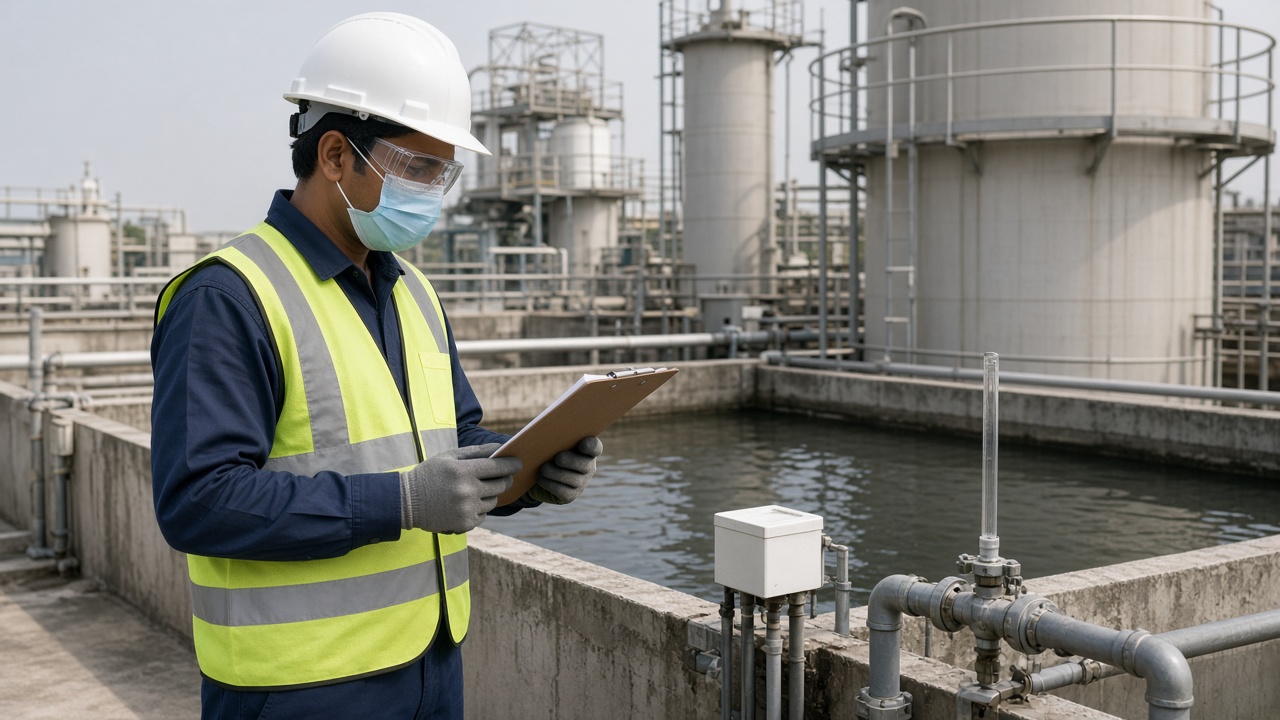
An industrial environmental audit is a structured check of whether a facility’s environmental obligations — consent conditions, clearance requirements where applicable, treatment performance, waste trails and monitoring — match what can be verified on the ground. It is evidence work, not a stamp at the end of a checklist.
This article describes the audit service as industries experience it: what gets checked, how the process usually runs, and what happens after findings. It is not a career guide for becoming an auditor.
What Is an Environmental Audit?
An environmental audit gathers documents, inspects the site, and maps observations to legal and consent requirements. Findings should be specific enough for a plant manager to act — location, evidence, obligation and recommended corrective action.
Audits may be driven by internal governance, lender due diligence, pre-renewal readiness, or a response to regulatory pressure. The depth varies; the core question does not: can you prove compliance?
Why Industries Conduct Environmental Audits
Facilities commission audits to:
- prepare for KSPCB inspection or consent renewal
- close gaps before Environmental Clearance compliance reporting
- support investment, insurance or customer due diligence
- verify that ETP, STP or air-control systems still match declared capacity
- turn scattered observations into a prioritised corrective-action plan
A weak audit produces adjectives. A useful audit produces a punch list with owners and evidence.
What an Environmental Auditor Checks
Scope depends on the site, but industrial audits commonly cover the areas below.
KSPCB consent
Valid Consent for Establishment / Consent for Operation copies, conditions register, amendments, expiry dates, and whether production capacity and pollution loads still match the order. See also CFE vs CFO.
Environmental Clearance
Where a project has EC, auditors check linkage to consent, EMP commitments, and whether post-clearance reporting and monitoring exist. Clearance and consent are related but not identical tracks.
Water and wastewater
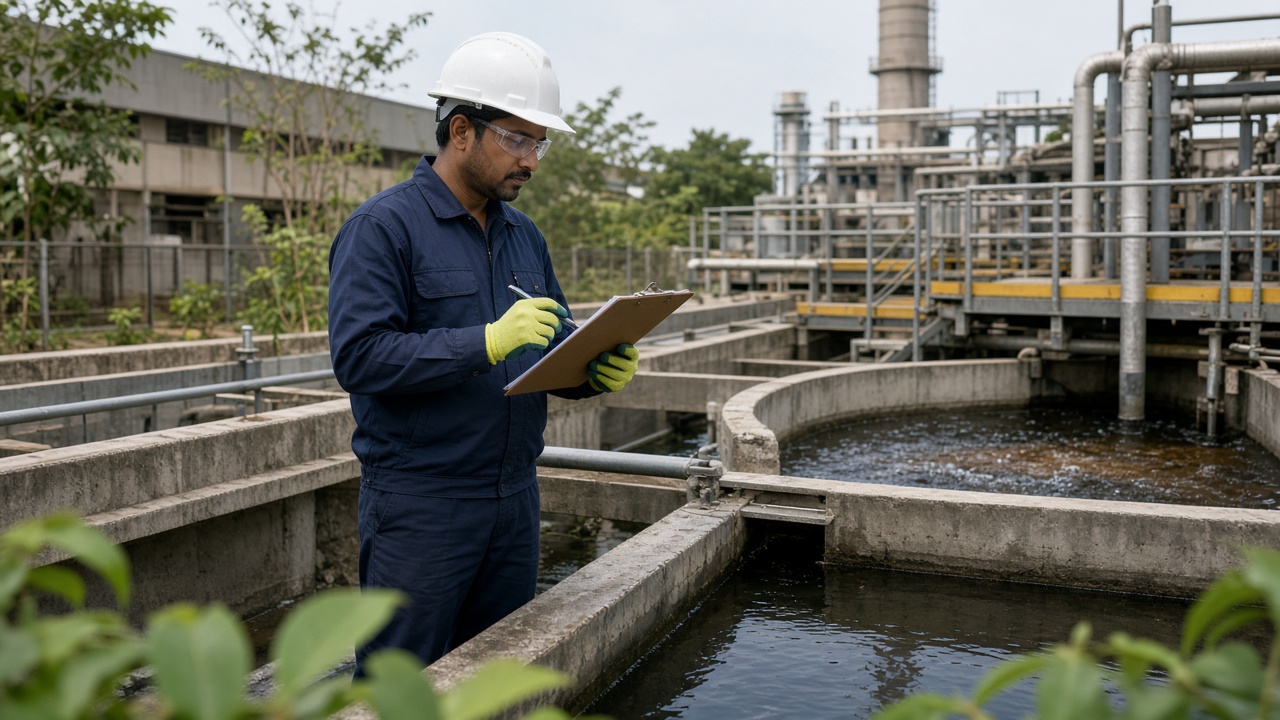
Source to outlet walk-through: equalisation, treatment stages, sludge handling, reuse or discharge points, and any bypass or storm connections. CETP members need membership proof and pre-treatment performance against inlet norms.
Air emissions
Stacks, control equipment, fuel records, fugitive sources, and DG-related conditions where relevant.
Hazardous waste
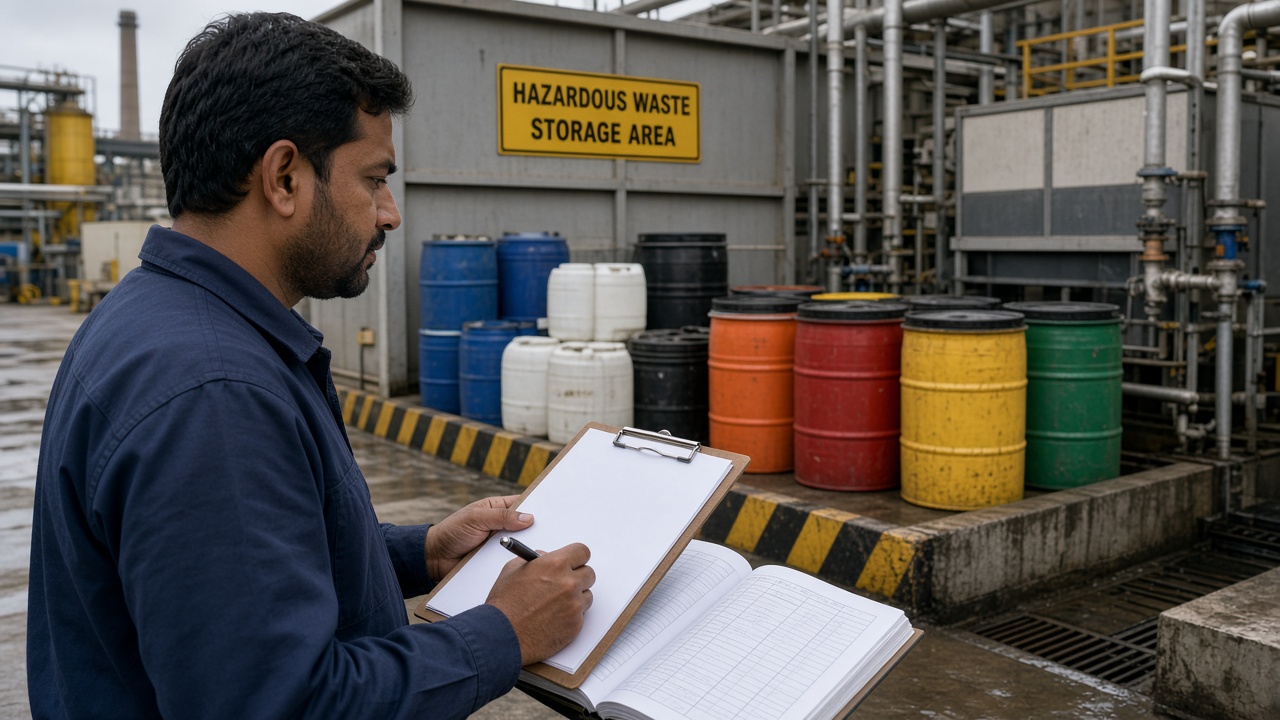
Generation points, segregation, labelling, storage duration, manifests, authorised disposal or recycling pathways, and spill readiness.
Solid waste
Non-hazardous streams, housekeeping, contractor arrangements, and records that match what the yard shows.
Chemical storage
Compatibility, containment, labelling, inventory discipline and emergency response materials.
Noise
Sources near boundaries or sensitive receptors, enclosure and timing conditions where specified.
Monitoring records
Schedules vs consent/EC, lab reports, chain of custody, online monitor calibration, and investigation notes for outliers.
Environmental Audit Process
A practical sequence looks like this:
- Scoping — industry type, consent/EC status, reason for audit, sampling needs
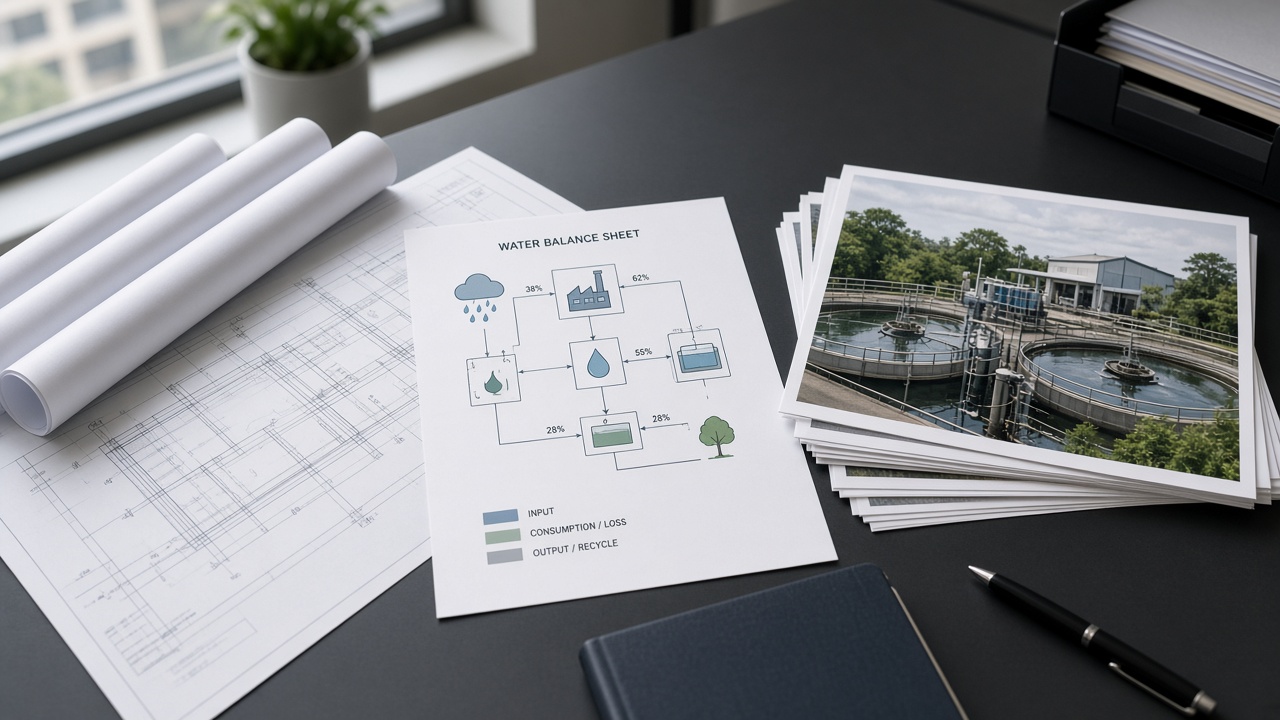
- Document pull — consents, previous reports, effluent registers, hazardous-waste manifests, calibration certificates, drawings
- Site walk-through — test whether paper matches drains, stacks, yards and control rooms
- Sampling and photographs where scoped — evidence that still makes sense months later
- Mapping to obligations — Water Act / Air Act / Environment (Protection) Act framing plus consent and EC conditions, not generic “good practice” alone
- Findings and draft report — non-compliances vs observations vs improvement opportunities, with corrective actions
The Water Act, Air Act and Environment (Protection) Act are the legal frame that tells you whether a gap is a recommendation or a non-compliance. Consent orders make that frame site-specific.
Industrial Environmental Audit Checklist
Use this as a readiness table. Adapt rows to your category and conditions.
| Area | Check | Status (Y/N/NA) | Evidence / note |
|---|---|---|---|
| Consent | Valid CFO/CFE on site; conditions listed | ||
| Consent | Capacity and product lines match order | ||
| EC | EC applicable? Conditions tracked | ||
| Water | No unexplained bypass; outlet identified | ||
| Wastewater | ETP/STP operating at representative load | ||
| Air | Stacks and APC maintained; fuel logged | ||
| Hazardous waste | Labels, storage time, manifests complete | ||
| Solid waste | Segregation and contractor records | ||
| Chemicals | Bunding, MSDS/access, spill kits | ||
| Noise | Boundary sources controlled as required | ||
| Monitoring | Schedule met; outliers investigated | ||
| Lab | Reports from appropriate facilities; CoC | ||
| Online systems | Calibration current where mandated | ||
| Training | Operators know sample points and shut-offs | ||
| Incidents | Register and corrective actions closed |
A fuller self-check list is available in Environmental Audit Checklist for Industries in Karnataka.
What Happens After an Audit?
Expect a findings register, evidence pack and corrective-action plan with priorities. Management should assign owners and due dates. Close actions with photographs, revised SOPs, lab results or amended applications — not verbal assurance alone.
If findings touch consent mismatch, expired orders or serious discharge issues, escalate to formal compliance support promptly. Waiting until the next inspection multiplies risk.
When Should a Facility Conduct an Audit?
Common triggers: approaching consent renewal, process change or expansion, lender or customer questionnaire, post-notice recovery, commissioning of new treatment units, or annual internal governance cycles. High-change plants benefit from more frequent focused walks than one annual heroic event.
For service framing in Bengaluru and Karnataka, see Environmental Audit Bangalore and related KSPCB compliance support.
Common questions
Is an audit the same as a KSPCB inspection?
No. Audits are typically management or third-party evidence reviews; inspections are statutory visits. Both reward the same discipline: records that match the plant.
Official sources
Karnataka State Pollution Control Board (KSPCB)
consent, inspection and compliance communications
Central Pollution Control Board (CPCB)
industry categorisation and national guidance referenced by state boards
Water (Prevention and Control of Pollution) Act, 1974 and Air (Prevention and Control of Pollution) Act, 1981
primary statutory frameworks for consent (verify current text and rules)
Environment (Protection) Act, 1986
umbrella framework for related rules where cited
Always verify current application fields, fees and checklists on the live KSPCB portal for your category