
Courses / Environment & Sustainability
Environment & SustainabilityPollution Monitoring Training Course
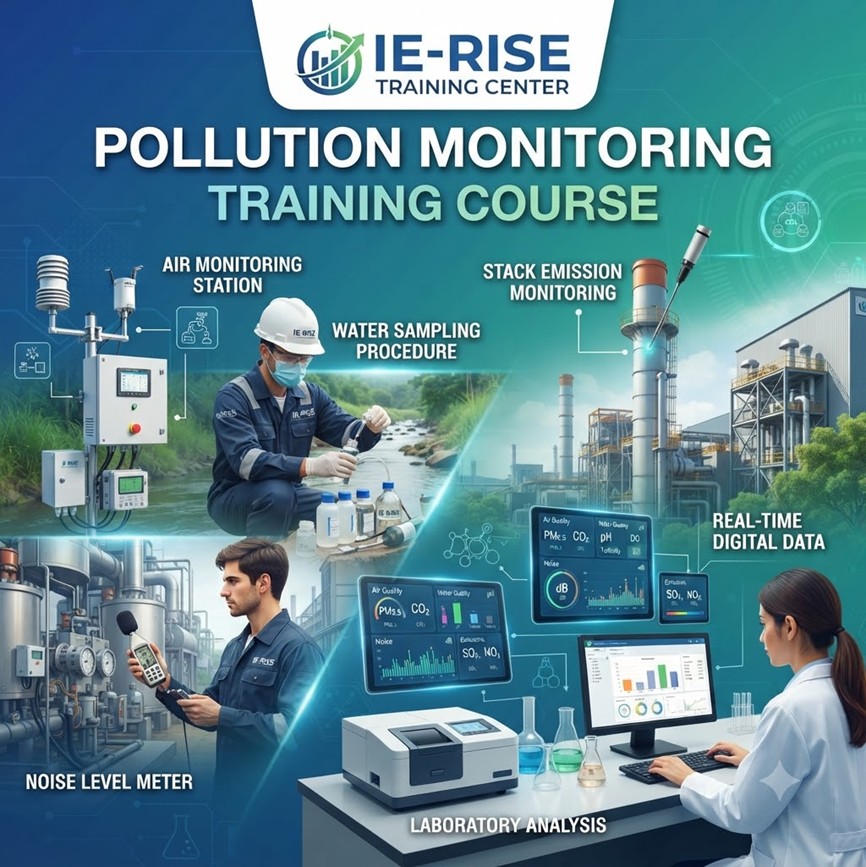
Air stations, water sampling, stack emissions, noise, laboratory analysis and real-time digital data.
Instructor: Dr. Ananya Mehta
₹14,200
Overview
Field-and-lab vocational course in pollution monitoring: ambient air stations, water sampling procedure, stack emission monitoring, noise level meters, laboratory analysis, and reading real-time dashboards (PM2.5, CO2, SO2, NOx, pH, DO, dB).
What you'll learn
- •Describe an ambient air monitoring station and its meteorological sensors
- •Collect a legally defensible water sample with chain of custody
- •Outline stack-emission sampling at a chimney port
- •Take a noise reading that states location, time and dB(A)
- •Link field results to lab methods and a live dashboard
Who this is for
- •EHS and monitoring technicians
- •Laboratory analysts in training
- •Consultants doing compliance sampling
- •Plant staff who escort agencies
Prerequisites
- •Willingness to work outdoors and in labs
- •Basic chemistry helpful but not required
Curriculum
Module 01 — Air, water and stack in the field
- Air monitoring stationstext
- Water sampling proceduretext
- Stack emission monitoringtext
Module 02 — Noise, laboratory and digital data
- Noise level meter in industrytext
- Laboratory analysis and real-time datatext
Module 03 — Assessment
- Knowledge checkquiz
- Six-point monitoring planassignment
Tools & skills
- •Ambient air
- •Water sampling
- •Stack monitoring
- •Noise survey
- •Lab QA
- •Sampling bottles and preservatives
- •Noise meter SOP
- •Stack port checklist
- •Chain-of-custody form
FAQs
Is this an accredited government certification?
No. IE-RISE / E-RISE programme certificates are institutional credentials for professional development. They are not government accreditations unless a specific statutory body is named for that batch.
Who should take this programme?
Plant operators, EHS officers, auditors, consultants, engineers and graduates entering water, waste and environmental compliance roles.
Related programmes
Environment & Sustainability
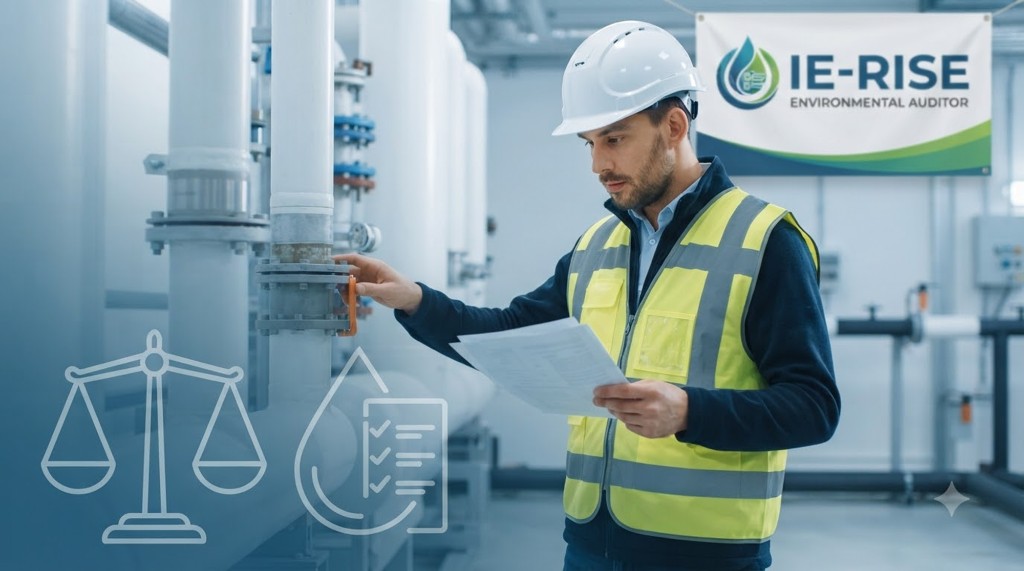
Environmental Audit & Compliance
Conduct audits and navigate environmental compliance frameworks effectively.
₹13,900
professional · 6 weeks
Environment & Sustainability
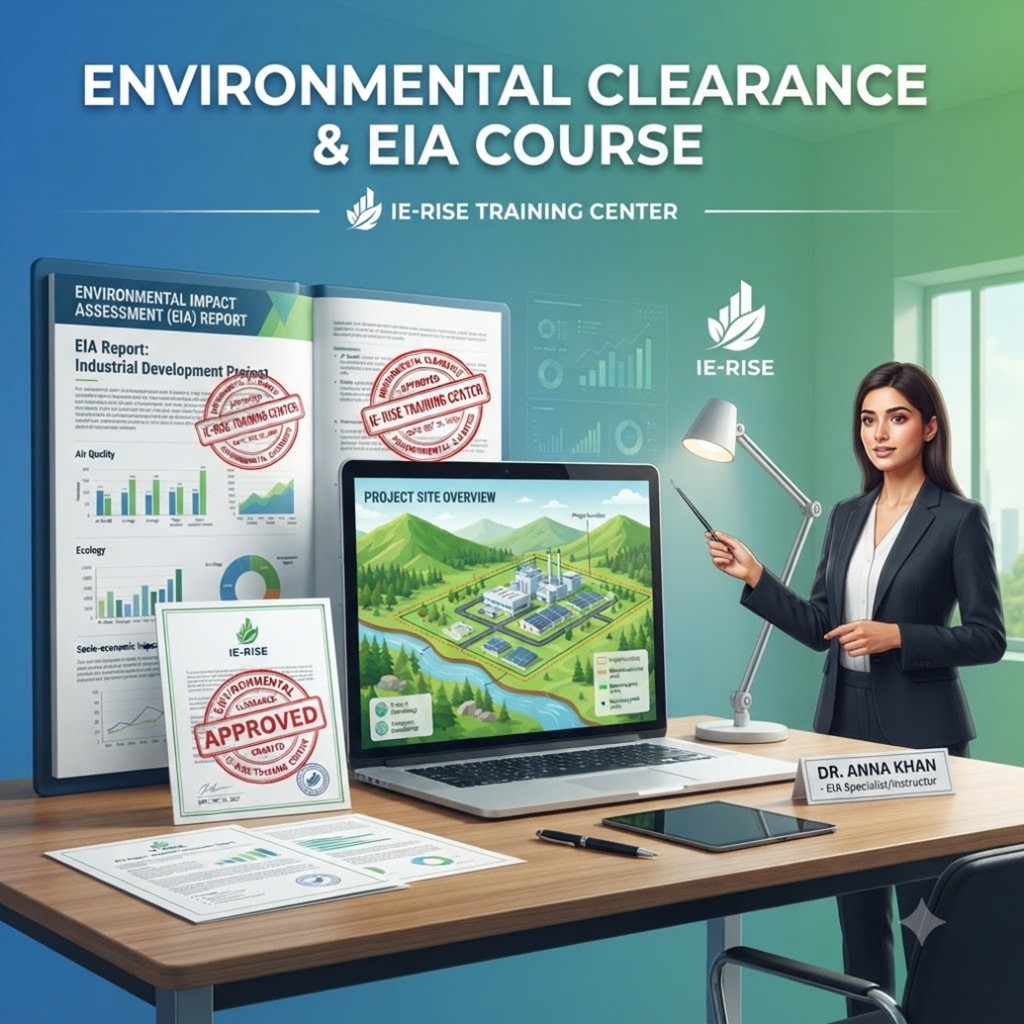
Environmental Impact Assessment
Plan, assess and report environmental impacts for projects and approvals.
₹14,500
advanced · 8 weeks
Environment & Sustainability
ESG & Sustainability Reporting
Build ESG metrics, disclosures and sustainability reporting capability.
₹12,900
intermediate · 5 weeks
Environment & Sustainability
IE-RISE Environmental Auditor
Training programme to inspect treatment plants, verify water-quality evidence and write audit findings—distinct from hiring IE-RISE for a facility audit service.
₹14,900
professional · 6 weeks